

Therapy for Work Stress
Therapy for work stress is one of the most effective ways to recover from burnout, reduce anxiety, and build lasting coping skills so you can function well at work and in life.
Here is a quick overview of what works:
- Cognitive Behavioral Therapy (CBT): Helps you identify and change negative thought patterns that fuel stress
- Acceptance and Commitment Therapy (ACT): Builds psychological flexibility so stress does not control your actions
- Dialectical Behavior Therapy (DBT): Teaches emotional regulation and distress tolerance skills
- Interpersonal Psychotherapy (IPT): Addresses workplace relationship dynamics and role conflicts
- Metacognitive Therapy (MCT): Targets the worry and rumination cycles that keep stress going
- Mindfulness Based approaches: Calm the nervous system and improve focus under pressure
Any of these can be delivered in person or via teletherapy, and many are covered by insurance.
Work is one of the biggest sources of stress for adults. According to the American Psychological Association’s workplace stress guidance, a large majority of Americans consistently cite work as a significant stressor. Research puts that figure even higher for some groups, with over 30% of working Americans reporting that their job has a negative effect on their mental health.
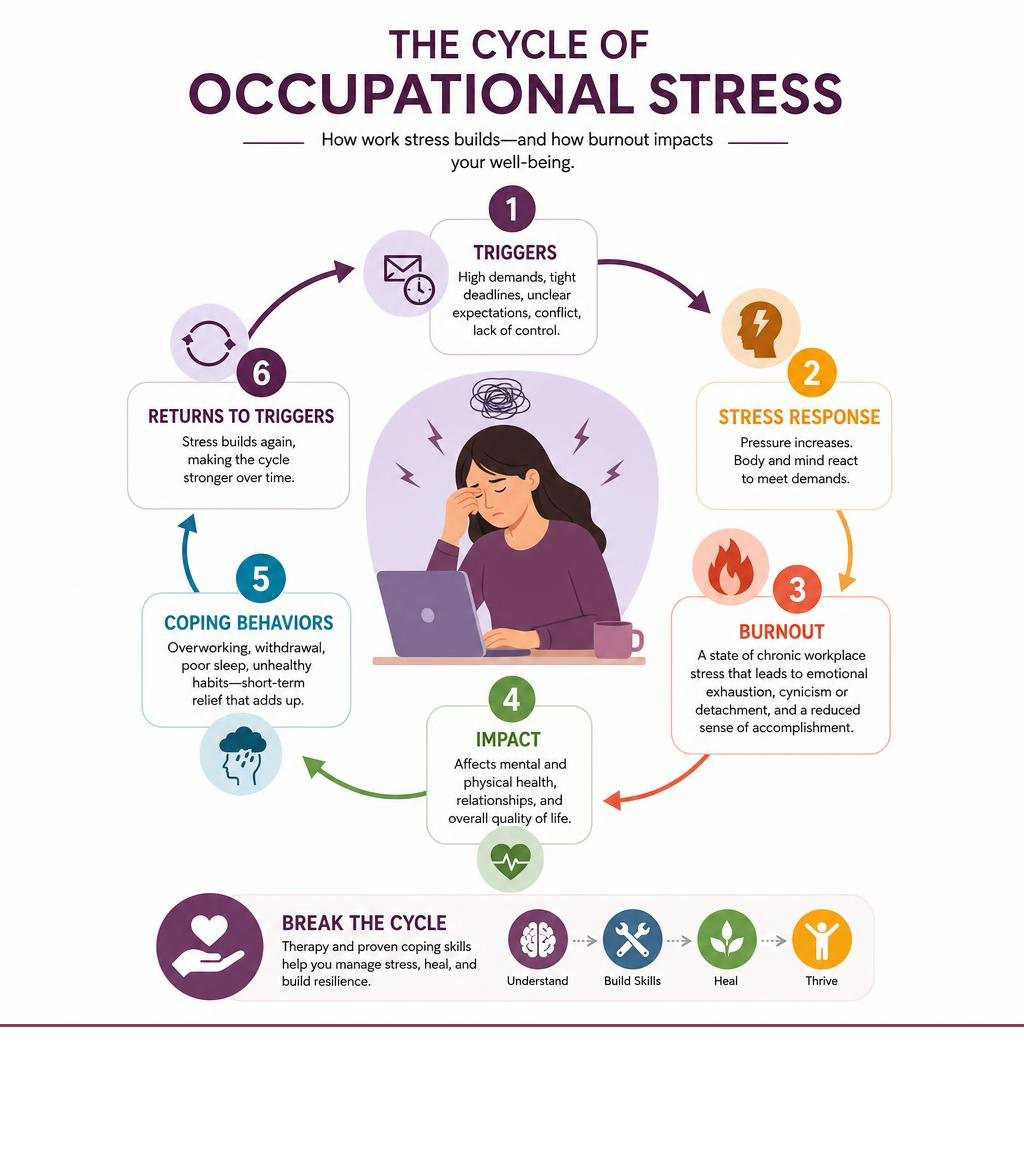
That pressure adds up fast. Deadlines, difficult colleagues, unclear expectations, and the pressure to always perform can leave you feeling drained before the week is even half over. And for many people, the stress does not stay at the office. It follows them home, disrupts their sleep, and quietly chips away at their relationships and physical health.
The good news is that this is not something you have to push through alone. Therapy gives you real tools to manage what you are dealing with, not just generic advice to “take a break.”
Terms related to therapy for work stress:
- job stress counseling services
- counseling for stress management
- licensed therapist stress management
Defining Work Stress and Burnout
It is common to hear the terms work stress and burnout used interchangeably, but they are actually quite different. Understanding where you land on this spectrum is the first step toward getting the right kind of support.
Work stress is generally characterized by over engagement. When you are stressed, you feel a sense of urgency. You might have too much on your plate, but you still believe that if you can just get everything under control, you will feel better. Stress involves hyperactive hormones, physical tension, and an urgent drive to meet demands.
Burnout is different. It is a state of quiet depletion that occurs after prolonged, unmanaged workplace stress. Instead of feeling too much, you begin to feel too little. You feel empty, devoid of motivation, and completely exhausted. The World Health Organization defines burnout specifically as an occupational phenomenon rather than a medical condition, characterized by deep exhaustion, mental distance or cynicism toward your job, and a sense of reduced professional efficacy.

When you are burned out, you do not see a light at the end of the tunnel. You might drag yourself to your desk, struggle to concentrate, and find yourself feeling irritable or impatient with coworkers or clients. You might also notice a drop in your job satisfaction and begin using food, alcohol, or other distractions to numb the dread. If you want to explore where you stand, you can read more about stress vs burnout knowing when to seek help.
Causes and Consequences of Untreated Job Pressure
Burnout and chronic work stress do not happen in a vacuum. They are driven by a combination of external workplace conditions and internal personal patterns.
On the environmental side, major drivers include an excessive workload, a lack of control over your daily decisions, unclear job expectations, and dysfunctional office dynamics such as micromanagement or workplace bullying. When you feel a mismatch between the effort you put in and the reward or recognition you receive, stress levels skyrocket.
On the personal side, traits like perfectionism, people pleasing, and poor boundary setting make you highly vulnerable to overworking. You might feel a constant pressure to prove your worth, leading you to say yes to every task even when your schedule is full.
Ignoring these warning signs can have serious consequences. Chronic work stress keeps your nervous system in a constant state of fight or flight, which can lead to long term physical health issues. Research shows that unmanaged stress is linked to cardiovascular risks like high blood pressure, weakened immune function, chronic fatigue, and gastrointestinal issues. Psychologically, it frequently snowballs into clinical anxiety and depression. To understand how this constant pressure affects your mind and body over time, you can find more info about chronic stress.
Therapy for Work Stress Recovery
Many people try to cure their work stress by taking a long weekend or a vacation. While a break is nice, it rarely solves the underlying problem. When you return, the same workload, the same difficult dynamics, and your same personal habits are waiting for you.
This is where professional therapy makes a difference. Rather than just offering a temporary escape, therapy helps you build lasting emotional resilience and practical coping mechanisms. A licensed therapist provides a supportive space to explore why work is causing you so much distress and helps you build the skills needed to protect your mental health.

Therapy helps you identify your specific stress triggers and understand your emotional reactions. It teaches you how to quiet your nervous system when you feel overwhelmed and helps you look at your professional life through a healthier lens. If you are ready to explore how professional support can help you regain control, you can read more info about work stress therapy.
Evidence Based Modalities and Therapy for Work Stress
Therapists use several proven, evidence based therapeutic approaches to help professionals manage workplace pressure:
- Cognitive Behavioral Therapy (CBT): This approach helps you recognize the connection between your thoughts, feelings, and actions. If you find yourself thinking catastrophically after a difficult meeting, CBT teaches you to challenge those thoughts and replace them with more balanced perspectives.
- Acceptance and Commitment Therapy (ACT): Instead of fighting or avoiding uncomfortable thoughts and feelings, ACT teaches you to accept them and commit to actions that align with your personal values. This builds psychological flexibility, helping you stay grounded even in a chaotic work environment.
- Dialectical Behavior Therapy (DBT): DBT is highly effective for building distress tolerance and emotional regulation. It is especially useful for professionals in high stakes, fast paced environments who need to manage intense emotions on the spot.
- Interpersonal Psychotherapy (IPT): This modality focuses on your relationships and social roles. In a work context, IPT helps you navigate conflicts with colleagues, adapt to difficult role transitions like a promotion, and improve your professional communication.
- Metacognitive Therapy (MCT): MCT shifts the focus away from the content of your thoughts and looks at how you relate to them. It targets the Cognitive Attentional Syndrome, which is a pattern of repetitive worrying and rumination.
The power of MCT is backed by fascinating clinical research. For example, a feasibility study published in Frontiers in Psychiatry investigated scientific research on metacognitive therapy for work related stress. The study showed that when participants learned to leave their stressful thoughts alone rather than ruminating on them, their general mental health and perceived stress improved dramatically. Remarkably, the therapy also led to objective physical improvements, with participants experiencing a significant, lasting drop in both systolic and diastolic blood pressure.
Work Focused Therapy versus Generic Counseling
While general talk therapy is wonderful for overall self discovery, work focused therapy is specifically tailored to improve your professional functioning and help you stay at work or successfully return after a period of sick leave.
Work focused therapy directly addresses the workplace environment. It involves analyzing your specific job demands, identifying resources, creating workplace adjustment plans, and practicing communication strategies to use with your supervisor or Human Resources.
Research highlights the unique value of this targeted approach. A randomized controlled trial published in the Journal of Medical Internet Research compared work focused internet based CBT to generic internet based therapy. You can read the details in the scientific research on work focused therapy.
The study found that while both types of therapy were highly effective at reducing burnout symptoms, the work focused approach was significantly better at improving work ability and reducing sickness absence. In fact, those who received the work focused intervention had 324 fewer days of short term sickness absence compared to those who received generic therapy.
To help you visualize how these two approaches compare, review the comparison below:
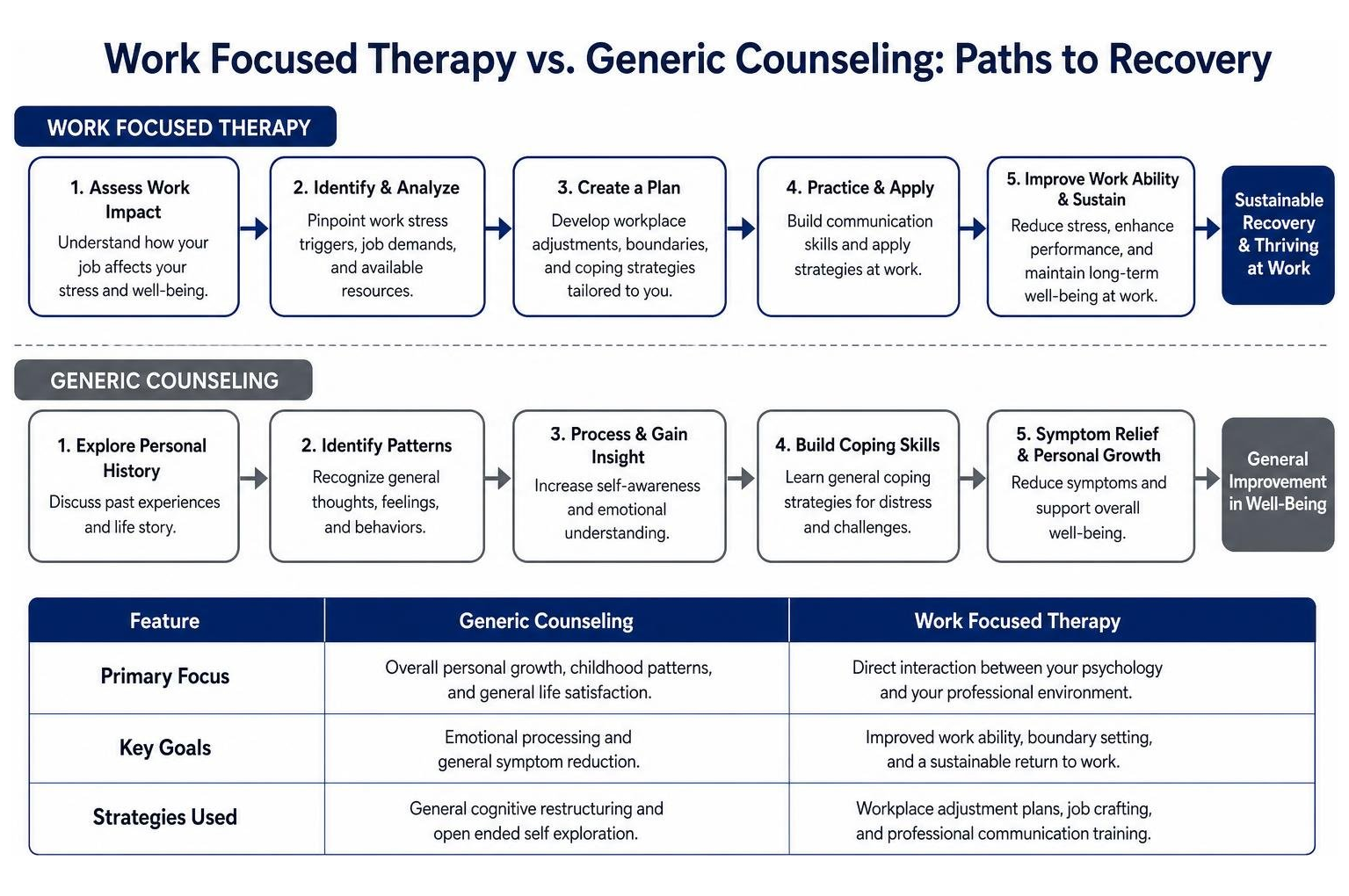
| Feature | Generic Counseling | Work Focused Therapy |
|---|---|---|
| Primary Focus | Overall personal growth, childhood patterns, and general life satisfaction. | Direct interaction between your psychology and your professional environment. |
| Key Goals | Emotional processing and general symptom reduction. | Improved work ability, boundary setting, and a sustainable return to work. |
| Strategies Used | General cognitive restructuring and open ended self exploration. | Workplace adjustment plans, job crafting, and professional communication training. |
| Sickness Absence | May help indirectly over time as overall mental health improves. | Proven to significantly reduce short term sick leave and accelerate recovery. |
Practical Strategies for Stress Relief
While working with a therapist is incredibly valuable, there are many practical strategies you can use on your own to manage daily pressure. Combining professional therapy with proactive self care is the fastest way to find relief.
Taking care of your body is a fundamental part of stress resilience. Regular physical activity, a nutritious diet, and good sleep hygiene give your brain and body the resources they need to handle pressure. It is also vital to practice psychological detachment, which means fully switching off your thoughts about work once your shift is over. If you want to build a healthier foundation, you can learn how to manage stress in the workplace.
Practical Techniques Used in Therapy for Work Stress
Therapists often teach specific, actionable techniques that you can practice at your desk or during your commute to calm your nervous system:
- Cognitive Restructuring: When you feel a wave of anxiety, stop and write down your thoughts. Are you assuming the worst? Are you expecting perfection from yourself? Gently challenge these thoughts and reframe them. For example, change “I have to get this perfect or I will be fired” to “I will do my best on this project, and it is okay to ask for feedback.”
- Mindfulness and Grounding: When work feels overwhelming, bring your focus back to the present moment. Try a simple grounding exercise like the 5, 4, 3, 2, 1 technique, where you name five things you can see, four you can touch, three you can hear, two you can smell, and one you can taste.
- Deep Breathing: Slow, deep breathing signals your brain that you are safe, instantly lowering your heart rate. Try box breathing, where you inhale for four seconds, hold for four, exhale for four, and hold for another four.
- Progressive Muscle Relaxation (PMR): Tense a specific muscle group, such as your shoulders, for five seconds, then release the tension completely. Work your way through your body to release physical stress.
The effectiveness of these cognitive and physical techniques is well documented. A study published in Frontiers in Psychology explored scientific research on stress management training for employees. The researchers found that the perceived mastery of changing your cognitions, meaning your ability to stop, examine, and reframe your thoughts, was the primary mechanism that drove improvements in vital exhaustion and job satisfaction. Training your mind to think differently is the most powerful tool you have.
Boundary Setting and Job Crafting
Two of the most effective ways to reduce work stress are setting healthy boundaries and practicing job crafting.
Boundary setting is about protecting your personal time and energy. This might mean establishing a rule that you do not check work emails after seven in the evening, or learning to say no to extra projects when your current workload is already at capacity. It involves communicating your limits calmly, clearly, and professionally.
Job crafting is a proactive approach where you make small, intentional changes to your job to better align it with your needs, strengths, and values. This concept comes from the Job Demands and Resources theory, which suggests that stress occurs when job demands outpace your resources. You can read more about this in the Springer Link publication on job crafting.
Here are the three main types of job crafting you can use:
- Task Crafting: This involves changing the number, scope, or type of tasks you do. For example, you might look for ways to automate a repetitive administrative task that drains your energy, or volunteer for a project that allows you to use a skill you enjoy.
- Relational Crafting: This is about adjusting the quality and frequency of your social interactions at work. You might choose to spend more time collaborating with supportive, positive colleagues and set polite but firm limits on your interactions with peers who drain your energy.
- Cognitive Crafting: This involves shifting how you perceive your job. Instead of seeing your work as a disconnected list of tasks, you consciously connect what you do to a larger purpose. For example, a medical billing specialist might remind themselves that their work helps patients receive the care they need.
Frequently Asked Questions
Navigating professional stress can be confusing, and it is completely normal to have questions about when to seek help and how to get started.
What is the difference between stress and burnout?
Stress is a reaction to temporary pressure and is characterized by overactivity and a sense of urgency. When you are stressed, you feel like you have too much to do, but you still believe that if you can just get it done, you will feel better.
Burnout is a state of chronic exhaustion and detachment that occurs after prolonged, unmanaged stress. When you are burned out, you feel empty, completely unmotivated, and cynical about your job. You feel like you have nothing left to give, and taking a short break or a vacation is no longer enough to help you recover. If you feel like you have reached this stage, you can find specialized support by exploring therapy for stress burnout.
How do I find a therapist who accepts my insurance?
Finding the right therapist should not be an exhausting process, especially when you are already dealing with work stress.
To start, you can use specialized provider directories that allow you to filter therapists by their areas of expertise and the insurance plans they accept. Once you find a potential match, it is always a good idea to verify your benefits directly. Many practices offer a simple online verification process to help you understand your in network benefits and any co pays before your first session. If you are ready to take this step, read through this guide on finding a therapist for stress things to consider.
Can therapy help if my workplace is toxic?
Yes, absolutely. A therapist cannot change your company culture, your boss, or your coworkers, but they can change how you respond to them.
Therapy helps you build strong emotional protection so that the toxicity around you does not dictate your mental well being. You will learn how to enforce firm boundaries, communicate assertively, and avoid taking workplace dysfunction personally. If you decide that the environment is fundamentally unhealthy and cannot be resolved, a therapist can also support you through a healthy career transition, helping you clarify your values and find a professional path that truly fits your life.
Conclusion
Work is a major part of life, but it should never come at the cost of your mental and physical health. If you are struggling with constant worry, feeling exhausted, or dreading the start of every workweek, please know that you do not have to navigate this alone.
Collective Counseling Solutions is here to simplify your path to healing. We connect you with highly skilled, licensed therapists who accept insurance, making professional support accessible and stress free. Whether you prefer the convenience of teletherapy from the comfort of your home or the personal connection of in person sessions, our goal is to help you find the right fit for your unique needs.
Take the first step toward a healthier, more balanced professional life today. To learn more about our specialized support and find a therapist who can help you thrive, visit our therapy for stress page.