

When Stress Takes Over: Why Counseling Is the Answer
Counseling sessions for stress are structured, one-on-one meetings with a licensed therapist that help you identify your stress triggers, build coping skills, and feel better — often within weeks.
Here’s what you need to know right away:
- What they are: Professional sessions using proven methods like CBT and mindfulness to reduce stress
- Who they’re for: Anyone feeling overwhelmed, burned out, or stuck in a cycle of anxiety
- How long it takes: Many people see real improvement in 8–12 weeks
- Where to access them: In-person or online (teletherapy), often covered by insurance
- First step: Contact a licensed therapist for an initial intake session
Stress is everywhere right now. According to the American Psychological Association, 73% of people say stress has significantly impacted their mental health — and 77% experience real physical symptoms because of it. That’s not a personal failing. That’s a public health reality.
For busy professionals especially, stress doesn’t announce itself loudly. It shows up as a tight chest before a Monday morning meeting. It’s the racing mind that won’t let you sleep. It’s snapping at someone you care about for no good reason.
The problem isn’t that you’re weak. The problem is that stress compounds quietly — until it doesn’t.
And that’s exactly the point where professional support makes the biggest difference. Therapy doesn’t erase your stressors. It changes how you respond to them, so they stop running your life.
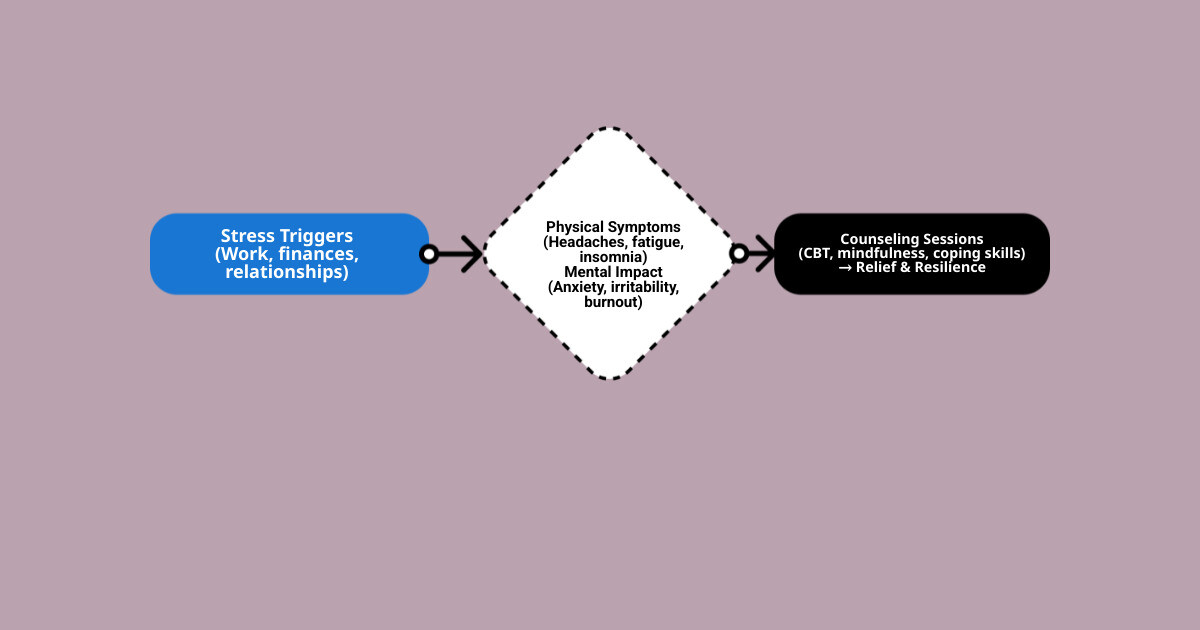
The Physical and Mental Toll of Chronic Stress

To understand why counseling sessions for stress are so effective, we first have to look at what stress actually does to the human machine. In May 2026, we are living in a world that moves faster than our biology was designed to handle.
Biologically, stress is an “alarm” system. When you face a threat, your body releases a flood of cortisol and adrenaline. This fight-or-flight response is great if you’re being chased by a predator, but it’s destructive when it’s triggered by an overflowing inbox or a difficult conversation with a partner.
There are three main “flavors” of stress:
- Acute Stress: This is the short-term burst. Think of a “close call” while driving. It passes quickly, and your body returns to baseline.
- Chronic Stress: This is the most dangerous type. It’s the constant, grinding pressure from a toxic job or long-term financial strain. Your nervous system gets “stuck” in overdrive.
- Traumatic Stress: This occurs after a major event, like a natural disaster or a personal loss. It often requires specialized care to “unlock” the physical stress response.
Research shows that nearly 80% of adults find the lingering effects of the pandemic to be a significant source of stress. When this stress becomes chronic, it stops being a motivator and starts being a health risk. You can learn more about this in The Science of Stress: Understanding How It Affects Your Body and Mind. If you’re feeling these effects, Therapy for Stress can provide the necessary intervention.
Understanding Stress Triggers
Triggers are the “sparks” that set off the stress response. They are as unique as the individuals experiencing them. For many, work pressure is the primary culprit—deadlines, difficult colleagues, or the fear of layoffs. For others, financial strain or relationship conflicts create a constant background noise of worry.
Identifying these triggers is the first step in Understanding Stress Triggers and How to Address Them. Without identifying the “why” behind your tension, it’s difficult to apply the “how” of relief.
Stress vs. Burnout
It is important to distinguish between “being stressed” and “being burned out.” While stress involves “too much” (too many pressures, too much to do), burnout is about “not enough.” It is a state of emotional exhaustion where you feel depleted, devoid of motivation, and beyond caring.
If you find yourself experiencing decreased productivity and a sense of hopelessness, you may have crossed the line into burnout. Recognizing this distinction is vital for knowing when to seek help.
What to Expect During Counseling Sessions for Stress

Walking into your first session can feel intimidating, but the process is designed to be supportive, not a test. Counseling sessions for stress follow a professional structure to ensure you get the most out of your time.
Initially, your therapist will guide you through an intake process. This isn’t just paperwork; it’s a way for the therapist to understand your history and current challenges. They use validated assessment tools to measure your stress levels and identify whether you are dealing with acute pressure or a more chronic condition.
Key elements of these sessions include:
- Goal Setting: You and your therapist decide what “success” looks like for you.
- Therapeutic Rapport: This is the most critical factor. It’s the trust and connection you build with your provider.
- SOAP Notes: This is the industry standard (Subjective, Objective, Assessment, Plan) used to track your progress over time.
For a deeper dive into the structure of these meetings, visit Therapy for Stress.
Preparing for Your First Counseling Session for Stress
Preparation can significantly lower the “barrier stress” of starting therapy. Most therapists will ask you to complete intake forms ahead of time. It’s also helpful to jot down specific challenges or “boiling point” moments you’ve had recently.
Honest communication is the engine of therapy. It’s okay to tell your therapist if you’re nervous or if you aren’t ready to talk about a certain topic yet. For more tips on getting started, check out Finding a Therapist for Stress: Things to Consider.
The Five Stages of the Counseling Process
Most successful counseling sessions for stress move through five distinct phases:
- Relationship Building: Establishing a safe space and rapport.
- Exploration: Digging into triggers, thought patterns, and history.
- Intervention: Applying techniques like CBT or mindfulness.
- Evaluation: Checking in to see if the strategies are working in the real world.
- Termination or Referral: Ending the sessions once goals are met or moving to a different specialist if needed.
Evidence-Based Therapy Modalities for Relief
Therapy isn’t just “venting.” It involves specific, evidence-based tools that change how your brain and body process pressure. Counselors often use a “holistic” approach, treating the mind and body as one connected system. You can explore how these methods work in How Therapy Helps with Chronic Stress.
Cognitive Behavioral Therapy (CBT) for Stress Management
CBT is widely considered the “gold standard” for stress. It focuses on cognitive reframing—the process of identifying distorted thought patterns (like “I have to be perfect” or “Everything is going to go wrong”) and replacing them with more balanced, realistic thoughts.
Typically, CBT is short-term, ranging from 5 to 20 sessions. It’s highly practical and often includes “homework” to help you practice new skills between sessions. These 4 stress management techniques are often core components of a CBT plan.
Mindfulness and Relaxation Techniques
While CBT addresses the mind, mindfulness addresses the nervous system. Techniques like deep breathing, meditation, and progressive muscle relaxation are designed to trigger the “rest and digest” response in the body.
One popular method is the 4-7-8 breathing technique:
- Inhale for 4 seconds.
- Hold for 7 seconds.
- Exhale slowly for 8 seconds.
This simple act sends a signal to your brain that you are safe, effectively “resetting” your alarm system. Incorporating these 5 effective strategies for stress management can provide immediate relief.
Navigating Logistics: Insurance, Cost, and Online Options
In 2026, accessing counseling sessions for stress is more convenient than ever. Many people worry about the “stress of getting to therapy” adding to their burden, but modern options have removed many of these barriers.
Most professional counseling services prioritize HIPAA compliance, ensuring your sessions are private and secure, whether in-person or online. Standard sessions typically last 45 to 60 minutes. While self-pay rates are an option, many people find that their insurance covers a significant portion of the cost. You can learn more about navigating this at Therapy for Stress: Insurance.
The Benefits of Online Counseling Sessions for Stress
Teletherapy has revolutionized mental health care. It offers:
- Accessibility: No need to fight traffic or find parking.
- Comfort: You can speak with a therapist from your own couch.
- Consistency: It’s easier to keep appointments when you don’t have a commute.
For many, especially those with busy schedules or social anxiety, Online Therapy for Stress is the most sustainable way to get help.
Choosing a Qualified Therapist
Not all therapists are the same. When searching, look for credentials like LPC (Licensed Professional Counselor), LCSW (Licensed Clinical Social Worker), or LMFT (Licensed Marriage and Family Therapist).
The most important factor is finding someone who specializes in stress and burnout. Don’t be afraid to “shop around” until you find a therapist who feels like a good fit. Use this guide on Finding a Therapist for Stress to help narrow your search.
Frequently Asked Questions about Stress Counseling
How many sessions are typically needed for stress?
There is no one-size-fits-all answer, as duration depends on your individual goals and the severity of your stress. However, many clients see a measurable reduction in symptoms within 8 to 12 weeks of consistent weekly sessions. Some choose short-term support for a specific crisis, while others prefer ongoing maintenance to build long-term resilience. Learn more about the long-term benefits of therapy.
Is stress management therapy covered by insurance?
In many cases, yes. Most major insurance plans recognize the impact of stress on overall health and provide coverage for therapy. You may be responsible for a co-pay or need to meet a deductible first. It is always a good idea to verify your benefits before your first session. See our insurance guide for more details.
When should I seek professional help for stress?
If you are experiencing persistent sleep disturbances, significant mood changes (like increased irritability or sadness), or if stress is causing functional impairment at work or home, it is time to seek help. You don’t have to wait for a total breakdown to benefit from therapy. Early intervention is the best way to prevent burnout. Read more about when work stress means it’s time for help.
Conclusion
Overcoming stress isn’t about working harder or “toughing it out.” It’s about building the resilience and toolkit necessary to navigate a demanding world. At Collective Counseling Solutions, we simplify the process by connecting you with skilled, licensed therapists who accept insurance and offer flexible options like teletherapy.
Whether you are dealing with a temporary crisis or years of chronic tension, personalized care is the most effective path to lasting wellness. You don’t have to carry the weight alone. Take the first step toward a calmer, more balanced life and Find a Therapist Today.