

Why Daily Stress Management Counseling Is the Smartest Step You Can Take in 2026
Daily stress management counseling is a short-term, skills-based form of therapy that helps you identify your stress triggers, learn practical coping tools, and build lasting resilience. It is typically over 8 to 12 weekly sessions with a licensed therapist.
Here’s a quick overview of what it involves:
- Who it’s for: Busy professionals, caregivers, students, and anyone feeling overwhelmed most days
- How long it takes: Most people see meaningful improvement within 8 to 12 sessions
- Key techniques used: Cognitive Behavioral Therapy (CBT), Mindfulness-Based Stress Reduction (MBSR), breathing exercises, and grounding techniques
- How to access it: In-person or via teletherapy, often covered by insurance
- How it differs from general therapy: It’s focused, goal-driven, and designed for symptom relief and not open-ended exploration
Stress is not a sign of weakness. It’s a built-in survival response. It’s your nervous system doing exactly what it evolved to do.
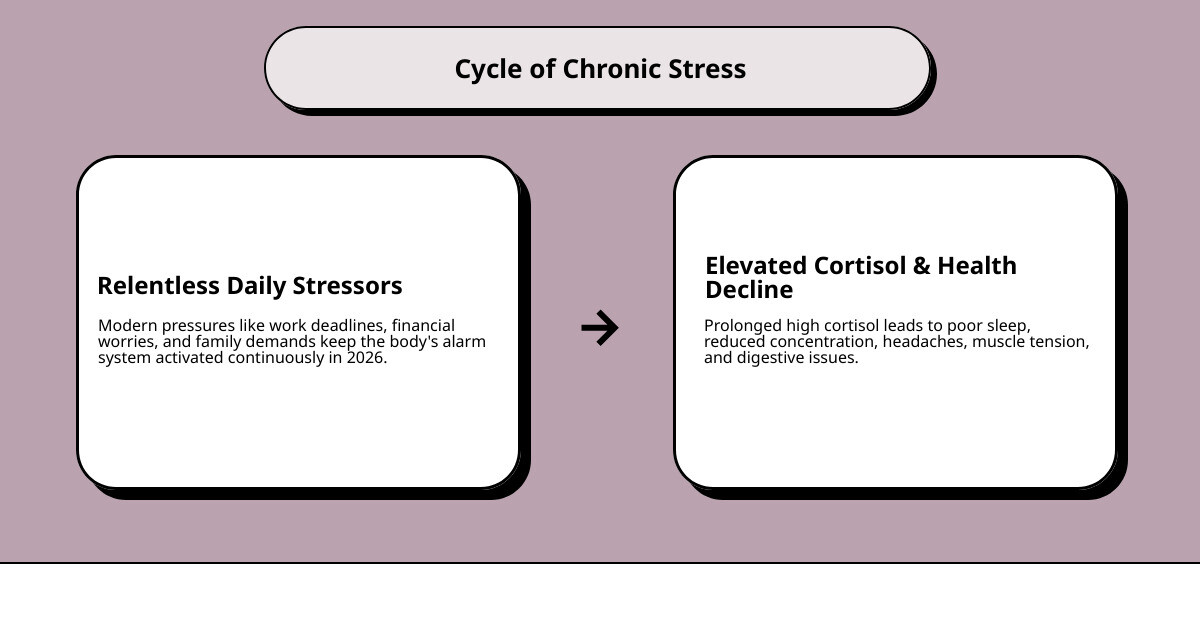
The problem? Modern life in 2026 keeps that alarm system switched on almost constantly. Work deadlines. Financial pressure. Family demands. The news cycle. It all piles up.
When stress becomes relentless, your body pays the price. Cortisol, the primary stress hormone, stays elevated. Sleep suffers. Concentration drops. Physical symptoms like headaches, muscle tension, and digestive issues start showing up. And the standard advice to “just relax” stops working.
That’s exactly where professional counseling makes the difference. Nearly 78% of adults identified the pandemic as a significant source of ongoing stress, and two in three reported their stress levels increasing during that period. Many are still feeling those effects today.
The good news: you don’t have to white-knuckle your way through it. With the right support, daily stress becomes manageable, and resilience becomes something you actually build, not just hope for.
Understanding Daily Stress Management Counseling and Its Core Techniques
When people hear the word “counseling,” they often imagine lying on a couch talking about their childhood for years. While traditional talk therapy has its place, daily stress management counseling is a different beast entirely. It is a structured, skills-based approach designed to help you thrive in a high-pressure environment.
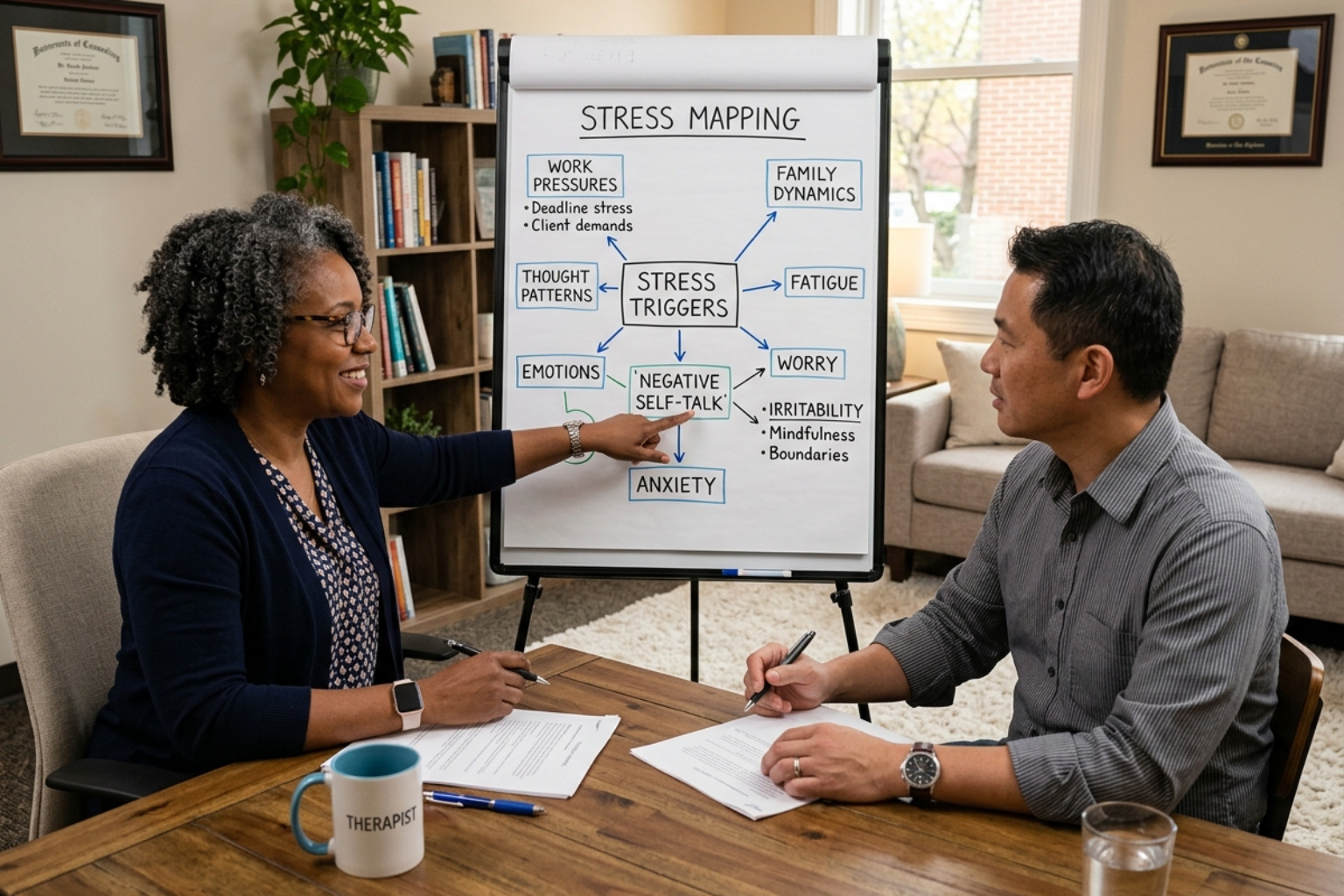
Think of it as “mental fitness training.” Instead of just venting, you work with a therapist to map out your specific stress cycles. This involves understanding stress triggers and how to address them by identifying the exact moment your “fight or flight” response kicks in. Is it the morning commute? The ping of a late-night email? The feeling of having too many people counting on you?
Counselors use a variety of 4 stress management techniques to help you regain control. One of the most effective is Cognitive Behavioral Therapy (CBT), which focuses on the link between your thoughts, feelings, and behaviors. By reframing unhelpful thoughts such as “If I don’t finish this perfectly, I’ll lose my job,” you can reduce your physiological stress response.
Another powerhouse in this field is Mindfulness-Based Stress Reduction (MBSR). Research has shown that MBSR programs can lead to a 38 percent reduction in stress-related symptoms over an eight-week course. These stress relievers aren’t just “woo-woo” fluff; they are evidence-based tools that physically change how your brain processes tension.
Evidence-Based Tools in Daily Stress Management Counseling
To see real changes, you need a toolkit that works in the heat of the moment. Counselors often teach 5 effective strategies for stress management that you can deploy anywhere, from a boardroom to a grocery store line.
- Grounding Techniques: The 5-4-3-2-1 method is a favorite. You identify five things you see, four you can touch, three you hear, two you smell, and one you can taste. This pulls your brain out of a “worry spiral” and back into the present moment.
- Progressive Muscle Relaxation (PMR): This involves tensing and then slowly releasing different muscle groups. It teaches your body the difference between tension and relaxation, which is vital for people who have been “clenched” for so long they no longer realize they are stressed.
- Cognitive Reframing: This is the “detective work” of counseling. You learn to challenge catastrophic thinking and replace it with more balanced perspectives. These strategies for stress management help you realize that while you can’t always change the stressor, you can always change your reaction to it.
How Daily Stress Management Counseling Differs from General Therapy
The biggest difference lies in the destination. General therapy might explore the “why” behind your personality, but therapy for stress focuses on the “how” of your daily survival and success.
It is solution-focused and short-term. While traditional therapy can last for years, stress counseling typically has a clear beginning, middle, and end. The goal isn’t to stay in therapy forever; it’s to graduate with a personalized “manual” for your own nervous system. You focus on immediate symptom relief, such as getting better sleep, lowering your heart rate, and reducing irritability that affects your relationships.
The Practical Roadmap: Session Structure and Duration

One of the most common questions people ask is: How long will this take? In the world of 2026, nobody wants a commitment that feels like a second job.
Most daily stress management counseling programs are designed to be efficient. You can typically expect an 8 to 12-week program, with sessions lasting between 45 and 60 minutes. This timeframe is backed by data; research shows that 84% of clients see a measurable reduction in symptoms within just two months of consistent work.
The roadmap usually looks like this:
- Initial Assessment: Your therapist learns about your history, but more importantly, your current “pain points.”
- Goal Setting: You decide what success looks like. Is it sleeping through the night? Is it not snapping at your partner after work?
- Core Skill Building: This is the “how-to” phase where you learn the breathing, cognitive, and boundary-setting tools.
- Practice and Review: You try the skills in the real world and report back.
- Maintenance Planning: You create a plan to handle future “stress spikes” without needing to return to weekly sessions.
Understanding how therapy helps with chronic stress requires recognizing that different types of stress require different timeframes.
| Feature | Acute Stress Management | Chronic Stress Management |
|---|---|---|
| Duration | Short-term (1-4 sessions) | Mid-term (8-12+ sessions) |
| Focus | Immediate crisis or event | Long-term patterns and lifestyle |
| Goal | Return to baseline | Rebuild the nervous system |
| Techniques | Quick resets, breathing | CBT, MBSR, deep boundary work |
Integrating Lifestyle Factors for Long-Term Resilience
Counseling doesn’t happen in a vacuum. Your therapist will likely act as a “lifestyle architect,” helping you realize that your physical habits are the foundation of your mental health. You can’t meditate your way out of a 4-hour sleep habit or a diet of pure caffeine and refined sugar.
The CDC emphasizes that managing stress requires a holistic approach. This includes:
- Sleep Hygiene: Adults need 7 to 9 hours of restful sleep. Sleep deprivation makes your brain’s emotional center (the amygdala) up to 60% more reactive to stress.
- The Mediterranean Diet: Emerging research, including animal studies, suggests that a diet rich in fruits, vegetables, grains, and healthy fats helps the body recover faster from cortisol spikes.
- The 2.5-Hour Rule: Aiming for 150 minutes of moderate exercise per week—even broken into 20-minute walks—can halve your perceived stress levels. Physical activity pumps up endorphins and gives your mind a much-needed break from ruminating.
- Social Support: We are social creatures. Having a network of friends or family who can offer practical help or a sympathetic ear is one of the strongest predictors of resilience.
Learning how to build a daily routine that reduces stress and boosts productivity is often a primary outcome of the counseling process.
Self-Care Strategies to Use Alongside Counseling
While you work with a professional, there are quick stress-busting activities you can do in under 10 minutes to keep your momentum going between sessions.
A major focus in 2026 is the digital detox. Constant connectivity is a primary driver of modern burnout. Learning why unplugging is key to your mental health helps you set boundaries with your devices. Other effective self-care tools include:
- Gratitude Journaling: Writing down three things you are grateful for each day can “rewire” your brain to look for the positive rather than the threatening.
- Nature Exposure: Spending just 10 to 20 minutes in green space (or even watching nature videos) has been shown to lower heart rate and blood pressure significantly.
- Laughter: Whether it’s a comedy special or “laughter yoga,” the act of laughing reduces cortisol and fires up your “rest and digest” system.
Virtual vs. In-Person: Choosing Your Path to Calm
In 2026, you have more choices than ever regarding where you receive counseling. Both in-person and teletherapy are highly effective, but they offer different advantages.
Virtual Counseling has become a gold standard for busy professionals. Over 100 clinical trials have shown that online therapy is just as effective as meeting with a therapist in person. It removes the “secondary stressors” of commuting, parking, and sitting in waiting rooms. Plus, it allows you to practice your new coping skills in the exact environment where you usually feel stressed- your home or office.
Some modern virtual platforms even incorporate Virtual Reality (VR) nature simulations, which have been used to help healthcare workers and military personnel manage high-pressure environments. The Cleveland Clinic notes that these immersive experiences can provide “on the spot” relief that traditional talk therapy might take longer to reach.
In-Person Counseling remains a great choice for those who need a physical “break” from their daily environment. Stepping into a dedicated, neutral space can help some people feel safer opening up and provides a clear boundary between “work/home life” and “healing time.”
Frequently Asked Questions about Stress Counseling
When should I seek professional help versus self-help?
Self-help is great for “normal” daily irritations, but you should seek a professional for daily stress management counseling if:
- Your sleep is consistently disrupted.
- You feel “trapped” or overwhelmed most days.
- You are snapping at loved ones or withdrawing from friends.
- You have physical symptoms (headaches, stomach issues) that doctors can’t explain.
- The tools you used to use (like exercise or hobbies) no longer seem to help.
Understanding the difference between stress vs. burnout is key; if you’ve reached the point of emotional exhaustion where you feel “numb,” professional intervention is necessary.
How long does it take to see results?
As mentioned, most people see 7 steps to manage stress yield results within 8 to 12 sessions. However, many clients report feeling a sense of relief after the very first session simply because they have a plan and a partner in their recovery. Incremental wins—like successfully using a breathing technique during a tense meeting—often happen within the first two or three weeks.
Can counseling prevent professional burnout?
Absolutely. Counseling isn’t just for fixing what’s broken; it’s a preventative measure. By focusing on the importance of saying no and setting boundaries, you protect your long-term capacity. For many, counseling also involves reaffirming their “calling” or “why,” which acts as a powerful shield against the cynicism that often precedes burnout.
Conclusion
Living in 2026 doesn’t have to mean living in a constant state of alarm. While stress is an unavoidable part of a full life, suffering from it is optional.
Collective Counseling Solutions simplifies your path to peace by connecting you with licensed, skilled therapists who accept your insurance. Whether you prefer the convenience of teletherapy or the presence of an in-person session, our clinicians are ready to help you build the resilience you need to thrive.
Don’t wait until you “hit a wall” to seek support. Taking the step toward daily stress management counseling today is an investment in your health, your career, and your relationships.
If you are ready to move from overwhelmed to grounded, find a therapist for stress management today and start building a life where you are in control—not your cortisol.