

Anxiety Management Tips to Feel More in Control
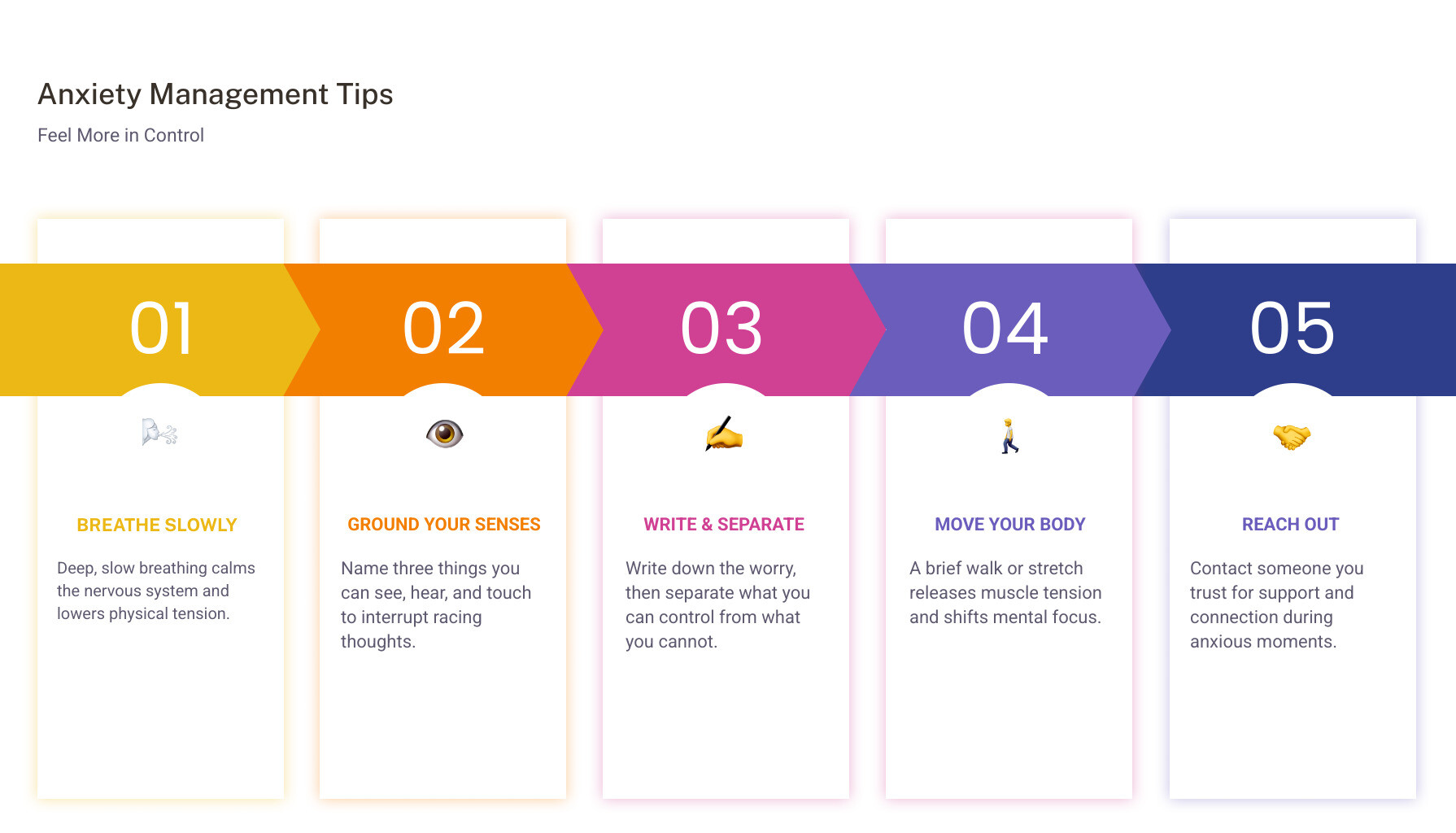
When anxiety rises, start small: slow your breathing, ground yourself in what you can see and feel, and take one manageable next step. These anxiety management tips can lower physical tension, interrupt racing thoughts, and help you regain focus during a busy day.
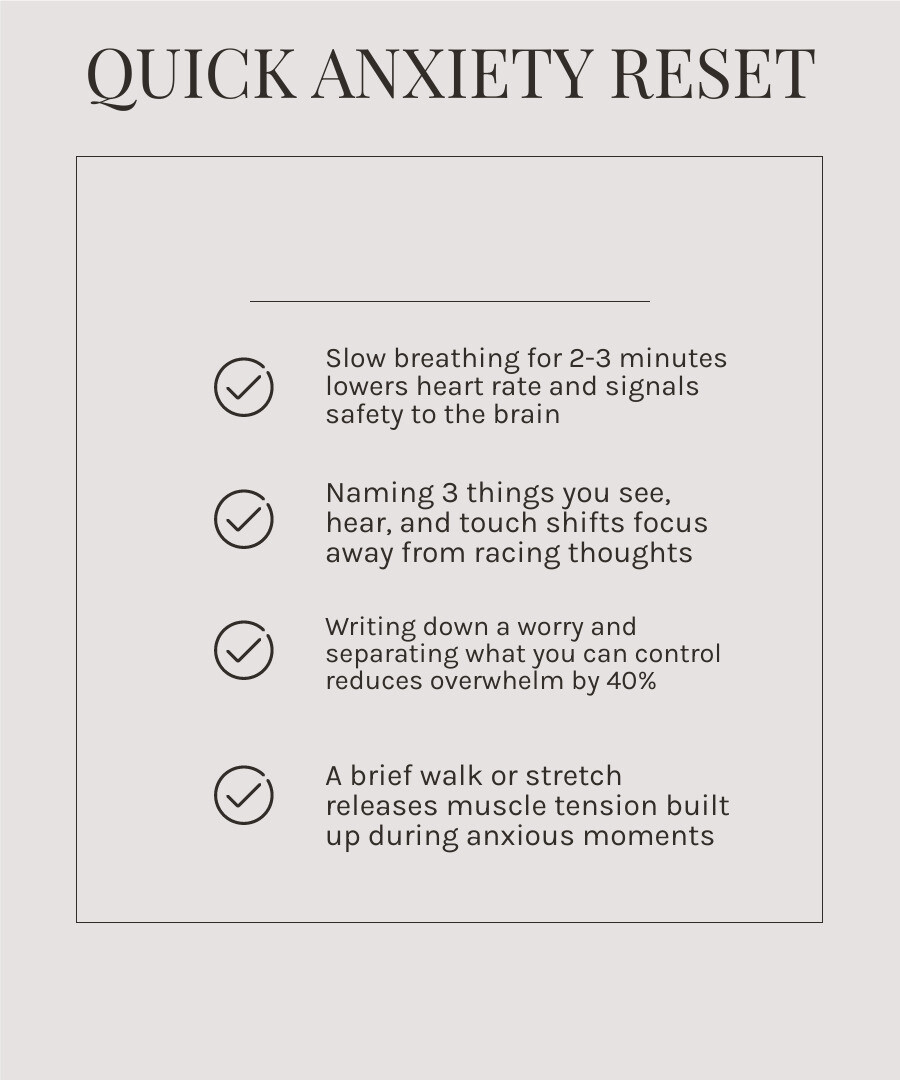
Try this simple reset:
- Breathe in and out slowly for a few minutes.
- Name three things you can see, hear, and touch.
- Write down the worry, then separate what you can control from what you cannot.
- Take a brief walk, stretch, or contact someone you trust.
Anxiety is a normal alert system, but it can become exhausting when worry, poor sleep, muscle tension, and avoidance start shaping daily life. Practical skills for coping with nervousness provide immediate relief, while steady habits and understanding how insurance covers therapy support lasting emotional wellness.
Introduction
Acute stress often arrives unannounced. A racing heart, shallow breaths, tight shoulders, and sudden mental fog are all hallmarks of physiological arousal. When the brain perceives a threat, whether that threat is an approaching work deadline, a difficult conversation, or an unexpected life challenge, the body activates its fight or flight response. This surge prepares muscles for action, but when it lingers unnecessarily, it clouds concentration and drains physical energy.
Understanding the root of this response makes it much easier to cultivate emotional regulation. When someone notices these physical signals early, they can apply evidence based interventions to dial back the nervous system before overwhelm takes hold.
Recognizing these symptoms is the first step toward reclaiming inner peace. Rather than viewing anxiety as a personal failing, it helps to understand it as an overactive protective alarm that simply needs gentle recalibration through proven techniques.
Immediate Anxiety Management Tips for Grounding and Relief

When worry spikes, cognitive reasoning often takes a backseat to bodily sensation. Grounding exercises and slow, controlled breathing can help regulate the body’s stress response and encourage relaxation during periods of heightened anxiety. Learning how to calm anxiety fast gives individuals reliable coping tools during sudden surges of panic or dread.
Sensory Grounding Techniques and the 333 Rule
Sensory grounding redirects attention away from catastrophic thoughts and anchors the mind in the physical environment. One widely practiced technique is the 5 4 3 2 1 method:
- Acknowledge five things you can see around you.
- Notice four things you can physically touch or feel.
- Listen for three distinct sounds in your environment.
- Identify two scents you can smell.
- Notice one taste in your mouth.
For times when memory feels foggy under stress, the simplified 333 sensory rule offers a quick alternative. Simply spot three objects, listen for three distinct sounds, and move three separate body parts such as wiggling toes, rotating wrists, or rolling shoulders. This tactile engagement reestablishes somatic awareness, breaking the loop of spiraling thoughts with actionable coping tips.
Controlled Breathing and Physical Soothing
Breathing patterns directly influence heart rate variability and blood pressure. When anxiety causes rapid, shallow breathing, slowing the breath may help reduce physical tension and promote a sense of calm.
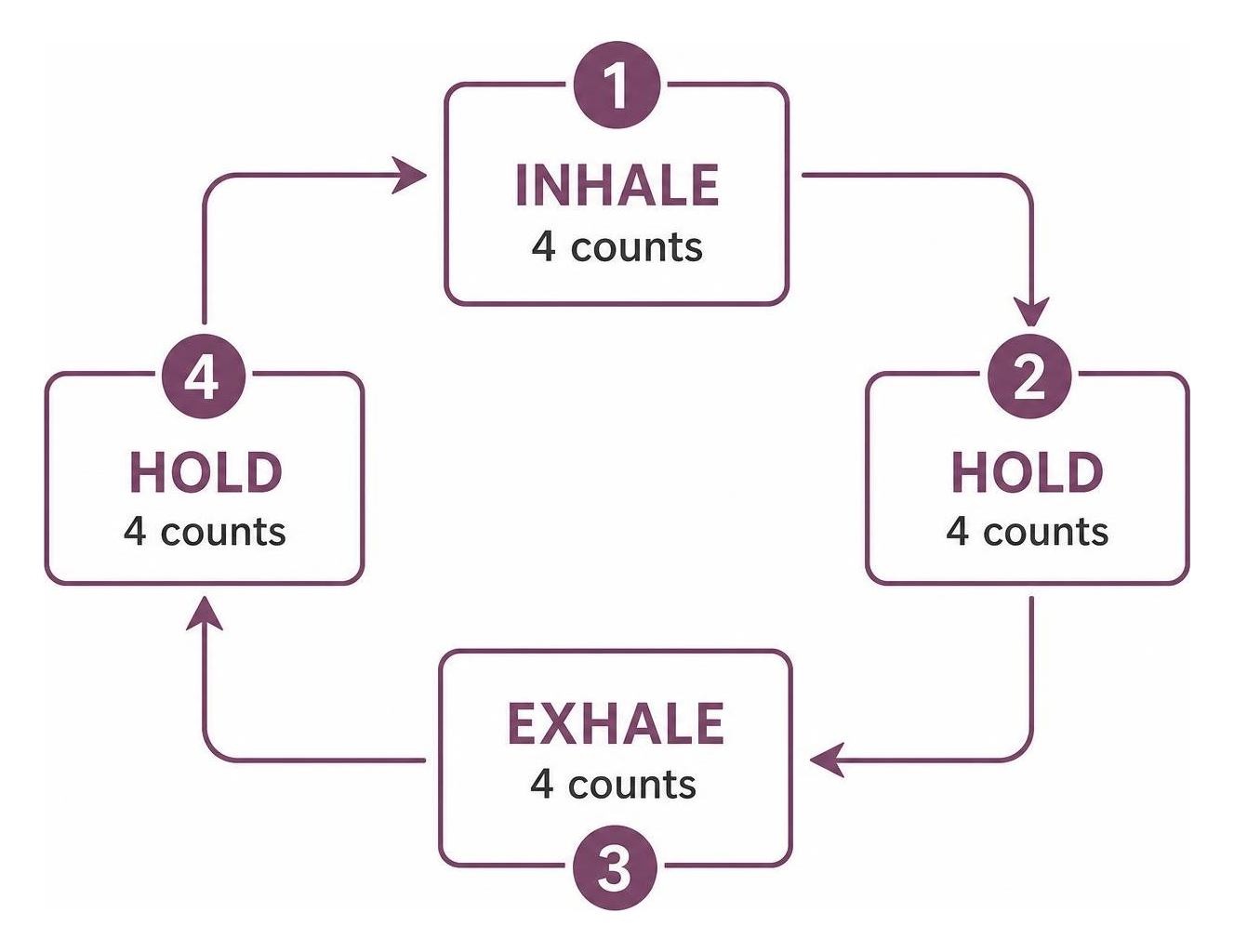
Box breathing is a popular technique used across high stress environments:
Another powerful tool is the 4-7-8 breathing method. Inhale through the nose for four counts, hold the breath gently for seven counts, and exhale slowly through the mouth for eight counts. Pair breathing exercises with a cooling sensation, such as placing a cool cloth on your forehead, to help redirect attention and encourage relaxation. Having an anxiety attack relief toolkit packed with physical soothing strategies ensures that rapid relief is always within reach when applying calming anxiety techniques.
Daily Cognitive and Behavioral Shifts
While immediate calming tools help during acute spikes, lasting mental wellness requires everyday adjustments to thought patterns and behavioral responses. Exploring how to identify anxiety triggers in therapy allows individuals to recognize cognitive loops before they escalate into persistent stress.
Essential Anxiety Management Tips for Challenging Intrusive Thoughts
Intrusive thoughts frequently take the form of catastrophizing, assuming the worst possible outcome will occur with total certainty. Cognitive defusion and thought labeling offer practical ways to step back from these distressing narratives.
Instead of accepting a thought like “Everything is going wrong” as absolute reality, reframe it internally: “I am noticing that my mind is having the thought that everything is going wrong.” This subtle shift creates psychological distance.
Practicing reality testing helps as well. Ask these constructive questions:
- What concrete evidence supports this worry?
- What evidence contradicts it?
- What is the most realistic outcome, rather than the worst case scenario?
- How would I support a close friend facing this exact concern?
Many people develop internalizing behaviors, keeping fears bottled up out of a desire to avoid burdening others. Consistently suppressing emotions may contribute to emotional distress and make it more difficult to process anxiety. Providing oneself with genuine emotional validation and communicating boundaries clearly allows authentic self-expression without unnecessary guilt.
Structuring Scheduled Worry Time
Attempting to forcefully eliminate anxious thoughts often causes them to return with greater intensity. A proven behavioral method is stimulus control through dedicated worry windows.
Set aside ten to fifteen minutes each day, preferably during the late afternoon, specifically for processing concerns. When an anxious thought surfaces during the workday or family time, briefly jot it down in a notebook and consciously postpone dwelling on it until the designated window.
During that scheduled time, review the list and categorize items into what is actionable versus what is outside personal control. For controllable problems, outline one concrete step. For uncontrollable uncertainties, practice cognitive containment by closing the notebook and shifting focus back to the present moment, building long term uncertainty tolerance and following self care guidance on how to manage anxiety and worry.
Long Term Lifestyle Habits to Build Emotional Resilience
Emotional resilience rests on a sturdy physiological foundation. Consistent healthy habits can support emotional well-being and may help reduce the frequency or intensity of anxiety symptoms. Adopting steady, long-term ways to manage anxiety creates sustainable stability and reinforces evidence-based tips and strategies to manage anxiety and stress.
Holistic Anxiety Management Tips for Sleep and Nutrition
The relationship between sleep, nutrition, and nervous system regulation is deeply intertwined. Chronic sleep disruption elevates baseline cortisol levels, making minor daily challenges feel overwhelming.
Supporting natural circadian rhythms starts with consistent habits:
- Wake up and go to sleep at the same time each day, even on weekends.
- Limit blue light exposure from screens during the hour before bed.
- Keep the bedroom cool, quiet, and comfortable.
Nutritional choices also influence mood stability. Spikes and crashes in blood sugar mimic the physical sensations of panic, including trembling, sweating, and rapid heartbeat. Eating balanced meals with complex carbohydrates, healthy fats, and adequate protein helps maintain steady energy. Additionally, moderating caffeine intake prevents unnecessary central nervous system stimulation, while practicing mindfulness for stress keeps awareness rooted in the present.
Consistent Physical Activity and Mindful Movement
Regular physical exertion serves as a natural outlet for accumulated stress hormones. Regular aerobic exercise can support mood regulation, improve sleep, and help the body manage its response to stress.
Aim for consistent, moderate movement rather than sporadic, intense workouts. Daily thirty minute walks, gentle swimming, cycling, or yoga sessions provide sustained mood benefits without overtaxing the body. For physical tension stored in specific areas, progressive muscle relaxation, systematically tensing and slowly releasing muscle groups from head to toe, offers reliable somatic relief.
| Coping Strategy Category | Primary Mechanism | Best Used For | Expected Benefit |
|---|---|---|---|
| Sensory Grounding (333 Rule) | Attentional redirection to physical senses | Sudden panic or racing thoughts | May provide short term relief |
| Controlled Breathing (Box or 4 7 8) | Supports slower, steadier breathing and physical relaxation | Rapid heart rate or shallow breathing | Effects vary by individual |
| Scheduled Worry Time | Stimulus control and cognitive containment | Persistent rumination or future focused worry | Supports a consistent daily practice |
| Consistent Aerobic Exercise | Mood regulation, improved sleep, and stress reduction | Ongoing muscle tension or low mood | Benefits may build with consistency |
| Sleep and Nutrition Hygiene | Supports regular sleep patterns and steady energy | General nervous system sensitivity | Benefits may build with consistency |
Professional Interventions and Therapeutic Modalities
Self care techniques provide meaningful daily relief, but chronic distress and functional impairment often require structured clinical support. Professional care offers individualized guidance to unravel deeply rooted behavioral patterns, representing the gold standard for anxiety relief.
Cognitive Behavioral Therapy and Gradual Exposure
Cognitive Behavioral Therapy (CBT) is one of the most extensively researched treatments for anxiety disorders. Depending on the individual’s needs, treatment may include cognitive restructuring, behavioral strategies, and gradual exposure to feared situations.
When people experience anxiety around specific triggers, places, or social interactions, their natural instinct is avoidance. While avoidance brings temporary relief, it ultimately reinforces the belief that the situation is dangerous.
Gradual exposure gently breaks this cycle:
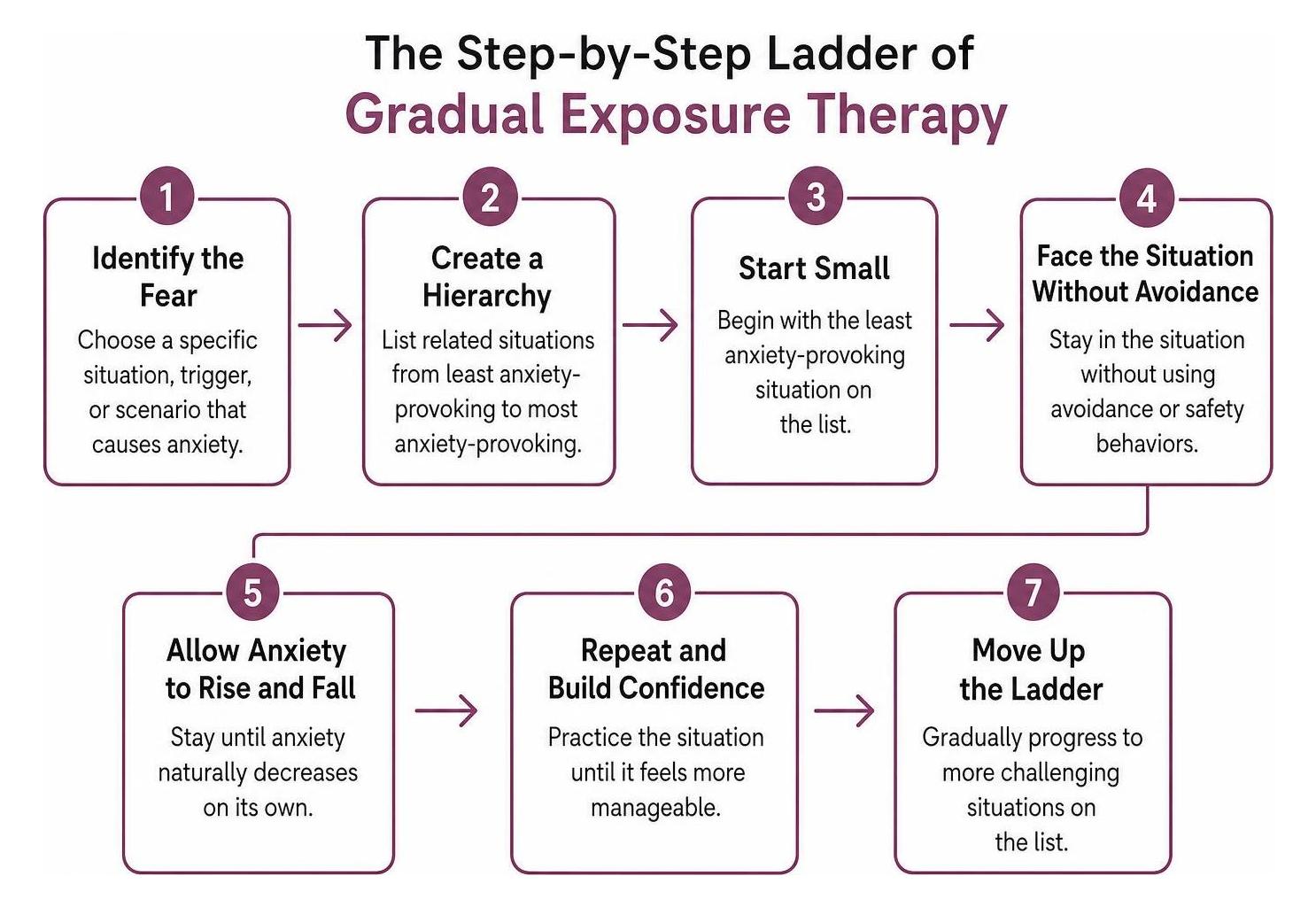
By facing feared scenarios in small, manageable increments without engaging in maladaptive avoidance, the brain learns through neuroplasticity that it can safely navigate discomfort. This process aligns with clinical best practices for anxiety disorder diagnosis and treatment.
When to Consider Clinical Support
It is wise to seek professional therapy when anxiety begins interfering with daily responsibilities, personal relationships, or overall quality of life. For individuals seeking care, Collective Counseling Solutions connects clients with licensed therapists who accept insurance, offering both in person appointments and teletherapy options. Navigating insurance coverage and scheduling can feel overwhelming when stress is already high, and having access to compassionate, licensed clinicians simplifies the path toward sustained wellness.
Frequently Asked Questions about Managing Anxiety
How quickly can grounding techniques reduce acute anxiety?
Grounding techniques may help reduce feelings of anxiety by redirecting attention to the present moment. Some people experience relief quickly, while others may need more time or different coping strategies. By engaging the senses and shifting focus away from internal worry, they interrupt acute distress and promote rapid mental stabilization.
What is the most effective therapy for long term stress?
Cognitive Behavioral Therapy and Acceptance and Commitment Therapy are widely regarded as highly effective therapeutic approaches for persistent stress. These modalities equip individuals with practical cognitive restructuring tools, mindfulness practices, and gradual exposure methods tailored to their specific lifestyle goals.
How does daily exercise help regulate anxiety symptoms?
Regular exercise can support neurotransmitter activity, improve sleep quality, and help regulate the body’s stress response. Over time, physical activity may reduce anxiety symptoms and improve emotional well-being. Regular physical activity reduces chronic muscle tightness and establishes a more resilient physiological baseline against daily stressors.
Conclusion
Managing anxiety is an ongoing practice of self compassion, nervous system regulation, and practical problem solving. By combining immediate grounding tools like sensory awareness and paced breathing with daily habits such as structured worry time, regular exercise, and balanced sleep, anyone can build a reliable buffer against life challenges.
When daily worries feel too heavy to navigate alone, compassionate professional guidance is readily available. Reaching out for professional care through therapy for anxiety provides the personalized support, evidence based tools, and clinical expertise needed to regain control and foster enduring peace of mind.