

Executive Stress Therapy Services for Sustainable Leadership
Executive stress therapy services help leaders manage chronic stress, anxiety, burnout, decision fatigue, and trouble disconnecting from work with a licensed mental health professional. The right therapist will assess what is driving the pressure, teach practical skills for emotional regulation and recovery, and help you build boundaries that protect both your health and your ability to lead.
Leadership can look successful from the outside while feeling isolating and exhausting in private. Many executives carry high-stakes decisions, emotional demands from their teams, and little room to admit they are struggling. Many leaders experience significant mental and emotional exhaustion as they navigate demanding responsibilities.
Therapy offers a confidential place to slow down, identify patterns beneath the stress, and make changes that last. It is not about lowering your ambition. It is about making success more sustainable.
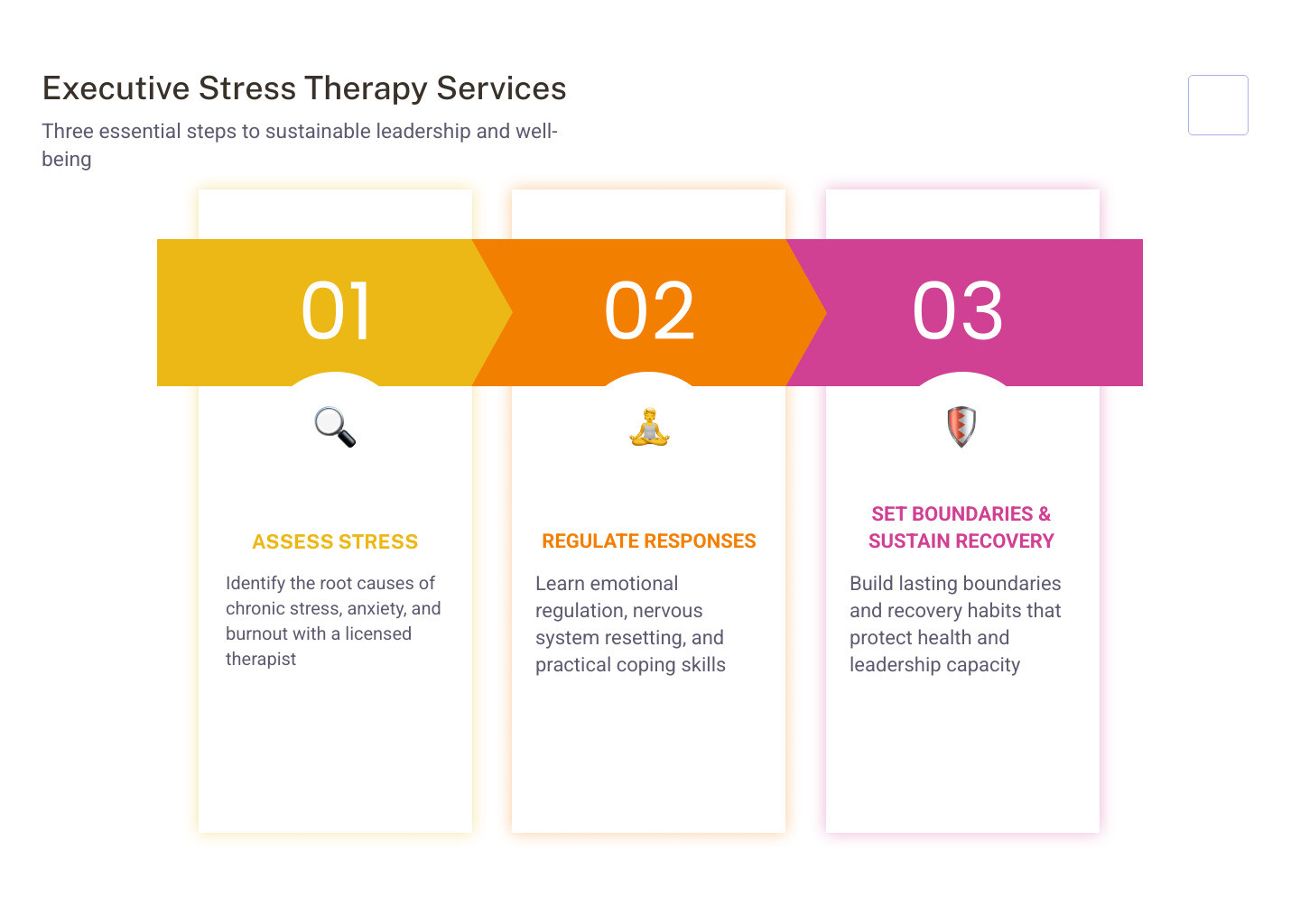
Basic executive stress therapy services glossary:
The Hidden Cost of Leadership: Why Executive Stress Is Distinct
Ascending into senior leadership alters the nature of psychological pressure. While operational employees often face localized stressors, leaders shoulder high stakes accountability across multiple business units, financial portfolios, and organizational systems. When things go well, credit is shared; when strategic initiatives fail, the weight rests solely on senior management. Specialized Work Stress Therapy addresses this specific form of persistent, systemic strain.

Executives operate in environments requiring continuous emotional containment. Leaders must project stability, optimism, and strategic direction to board members, investors, and direct reports, regardless of market volatility or internal uncertainty. Maintaining this external composure consumes substantial cognitive bandwidth, gradually increasing allostatic load, which is the cumulative physiological wear and tear on the body resulting from chronic stress exposure.
The Isolation and Accountability Gap in the C-Suite
One of the least discussed aspects of corporate advancement is leadership isolation. As professionals rise into executive roles, the circle of trusted peers shrinks dramatically. Leaders often discover they can no longer speak candidly with colleagues without inadvertently triggering anxiety across teams or influencing market perception.
This environment creates an acute psychological safety deficit. Leadership isolation can contribute to emotional exhaustion, reduced confidence, and difficulty managing workplace challenges. Without an outlet for candid discussion, leaders internalize doubt, strategic apprehension, and personal fatigue. Recognizing the tipping point where pressure becomes unsustainable is essential, as detailed in our guide on Stress vs Burnout: Knowing When to Seek Help.
Cognitive Overload, Overfunctioning, and Identity Depletion
Sustained leadership demand frequently fosters overfunctioning traits. High achieving individuals often internalize the belief that personal effort can compensate for systemic friction, organizational deficits, or unpredictable market shifts. This mindset drives chronic vigilance, where leaders remain perpetually connected to communication channels and strategic dilemmas.
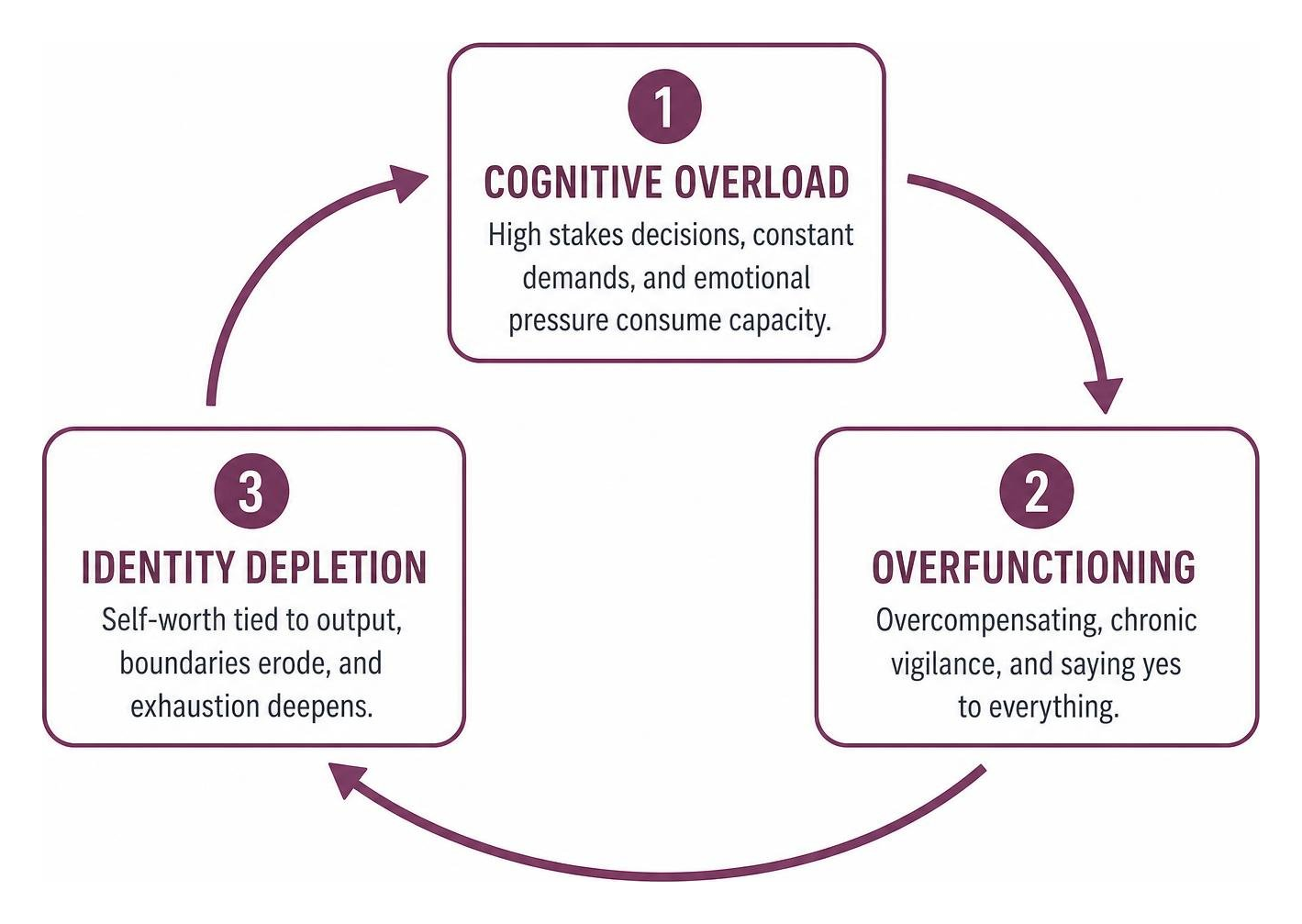
Over time, this pattern can cause leaders to tie their self-worth too closely to professional achievements, making it difficult to maintain a healthy identity outside of work. When work becomes the sole metric of value, personal boundaries dissolve, sleep architecture deteriorates, and decision fatigue sets in. When daily demands lead to persistent physical tension or emotional numbness, exploring When Work Stress Means It’s Time to Seek Help can provide a foundation for restoring balance.
Understanding the Clinical Scope of Executive Stress Therapy Services
Executive therapy differs significantly from standard corporate wellness initiatives or motivational programs. While general workplace perks provide short term comfort, specialized clinical care investigates the root causes of distress, targeting nervous system dysregulation, maladaptive perfectionism, and deep seated cognitive behavioral loops.
Engaging with High-Functioning Adults Stress Therapy allows leaders to unpack complex psychological dynamics with an objective, licensed clinician bound by strict confidentiality. This clinical setting provides a dedicated space where leaders do not need to manage the reactions, expectations, or emotional needs of others.

When to Seek Specialized Executive Stress Therapy
Recognizing the boundary between standard operational stress and clinical strain is critical for long term health. Leaders should seek clinical therapy when experiencing:
- Persistent cognitive fog or marked difficulty making routine strategic choices
- Physical manifestations of stress such as tension headaches, gastrointestinal upset, or chronic insomnia
- Emotional detachment, irritability, or cynicism toward colleagues and organizational missions
- Behavioral avoidance, including procrastinating on critical decisions or relying on unhealthy coping habits
- Unresolved historical trauma or anxiety patterns amplified by high pressure leadership demands
When leadership responsibilities begin undermining personal health and relationships, specialized support is necessary. As explored in Work Stress Therapy: Because Your Job Shouldn’t Cost Your Sanity, professional care helps restore psychological equilibrium without sacrificing professional competence.
Clinical Therapy vs. Non Clinical Support: Understanding the Difference
Leaders often weigh clinical therapy against non clinical modalities such as performance coaching. While coaching offers valuable tools for operational frameworks, goal achievement, and tactical communication, it is not designed to diagnose, treat, or resolve clinical mental health concerns.
| Dimension | Specialized Clinical Therapy | Non Clinical Performance Support |
|---|---|---|
| Primary Focus | Root cause psychological patterns, nervous system regulation, mental health conditions | Future oriented skill acquisition, tactical goals, professional milestones |
| Practitioner Credentials | Licensed mental health professionals (Psychologists, LCSWs, LPCs, LMFTs) | Certified professional coaches or organizational consultants |
| Confidentiality Scope | Professional confidentiality protections, subject to applicable legal and ethical exceptions | Contractual organizational agreements, which may involve corporate reporting |
| Intervention Depth | Evidence based psychological interventions, cognitive restructuring, and addressing underlying emotional and behavioral patterns | Behavioral habit adjustment, operational time management, leadership strategy |
| Treatment Modalities | Evidence based clinical methods (CBT, ACT, MBSR, Somatic therapies) | Motivational frameworks, 360 feedback reviews, performance metrics |
The Neuroscience of Executive Stress and Neuroplastic Recovery
Chronic stress can influence brain systems involved in emotional regulation, attention, and decision-making. Prolonged stress may make it more difficult to concentrate, manage emotions, and respond effectively to challenging situations.
Research on psychological stress and decision making indicates that effects can vary by the stressor, task, and individual factors. This evidence supports an individualized approach rather than assuming the same neurological response for every leader. The earlier brain connectivity and repetitive stress patterns discussion remains available as additional background, while the peer reviewed source above provides stronger evidence for this qualified claim. Understanding How Therapy Helps with Chronic Stress can help readers explore supportive clinical approaches to managing chronic stress.
Evidence Based Modalities in Executive Stress Therapy Services
Licensed clinicians utilize proven therapeutic frameworks tailored to the complex realities of senior leadership:
- Cognitive Behavioral Therapy (CBT) and Reframing: Identifies cognitive distortions, such as catastrophizing and black-and-white thinking, transforming rigid beliefs into adaptive mental models.
- Acceptance and Commitment Therapy (ACT): Helps executives untangle from unhelpful thoughts, accept difficult leadership realities, and align organizational actions with personal core values.
- Mindfulness-Based Stress Reduction (MBSR): Cultivates present moment awareness, reducing autonomic reactivity and improving cognitive focus under acute pressure.
- Somatic and Nervous System Regulation: Somatic and body-based techniques may help individuals recognize physical stress responses, practice relaxation, and develop strategies for managing physiological arousal.
Exploring The Ultimate Guide to Stress Management Therapy Techniques offers additional insights into how these therapeutic modalities dismantle entrenched stress responses.
Building Cognitive Resilience and Neurological Conditioning
Just as physical conditioning builds cardiovascular stamina, structured psychological conditioning builds emotional endurance. Through regular therapeutic practice, executives strengthen their capacity to navigate sudden market disruptions, interpersonal organizational friction, and strategic pivots without experiencing cognitive depletion.
Developing robust psychological capital, which encompasses resilience, optimism, self efficacy, and hope, allows leaders to maintain strategic clarity during turbulent periods. Leaders seeking greater balance can discover sustainable pathways through Finding Peace with Professional Stress Management Counseling.
The Clinical Process, Personal Recovery and Workplace Relationships
The downstream consequences of unmanaged executive strain extend far beyond the individual leader. When decision-makers experience burnout, organizational culture and operational efficacy suffer. Chronic stress and burnout may affect a leader’s concentration, communication, and ability to manage workplace challenges.
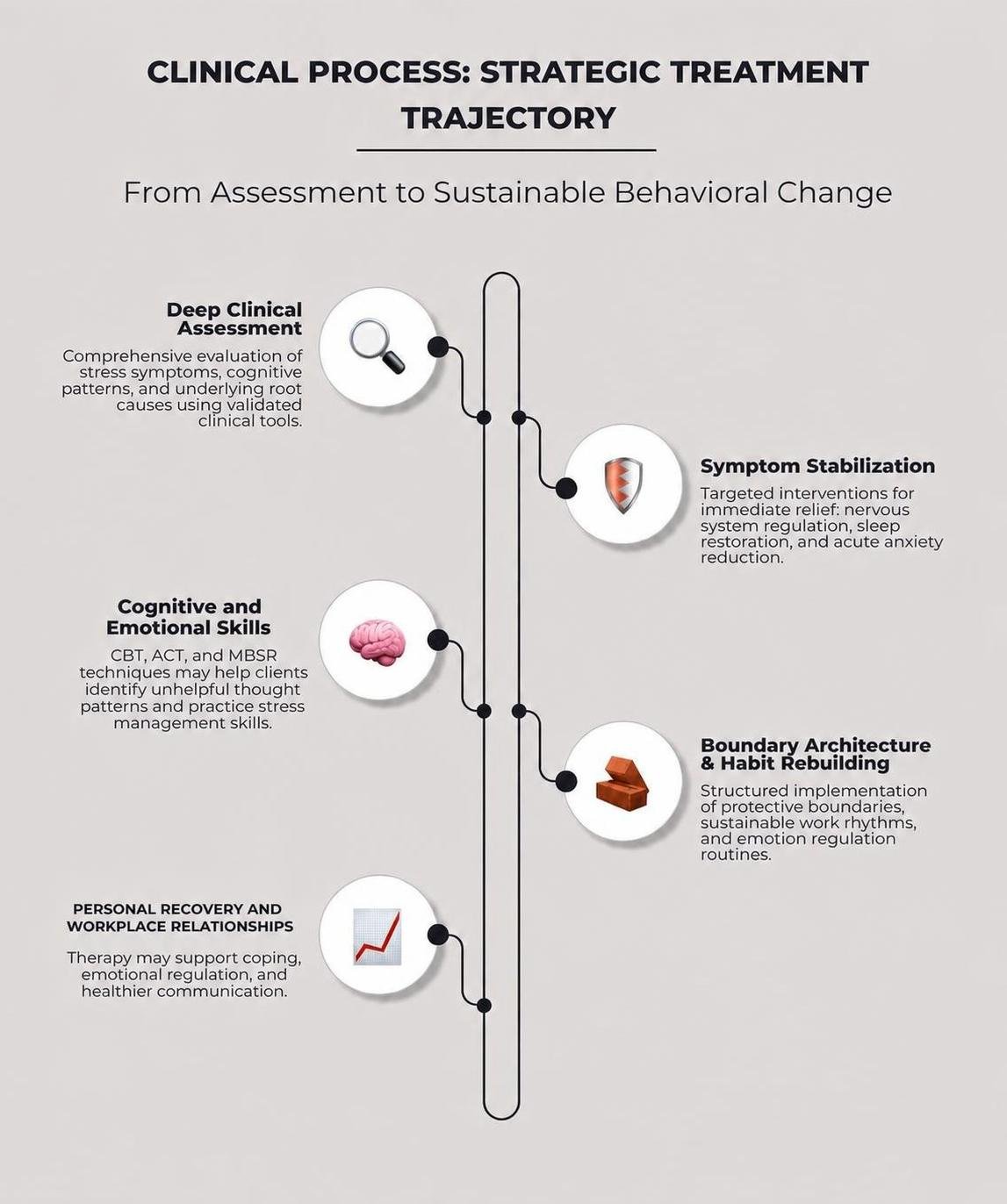
Clinical therapy can support personal coping and recovery from chronic stress. For executives experiencing acute career fatigue, engaging in specialized Burnout Therapy can provide appropriate clinical support.
Deep Assessment and Strategic Treatment Trajectory
A structured executive therapy process follows a clear clinical trajectory designed to deliver rapid symptom stabilization followed by sustainable behavioral change.
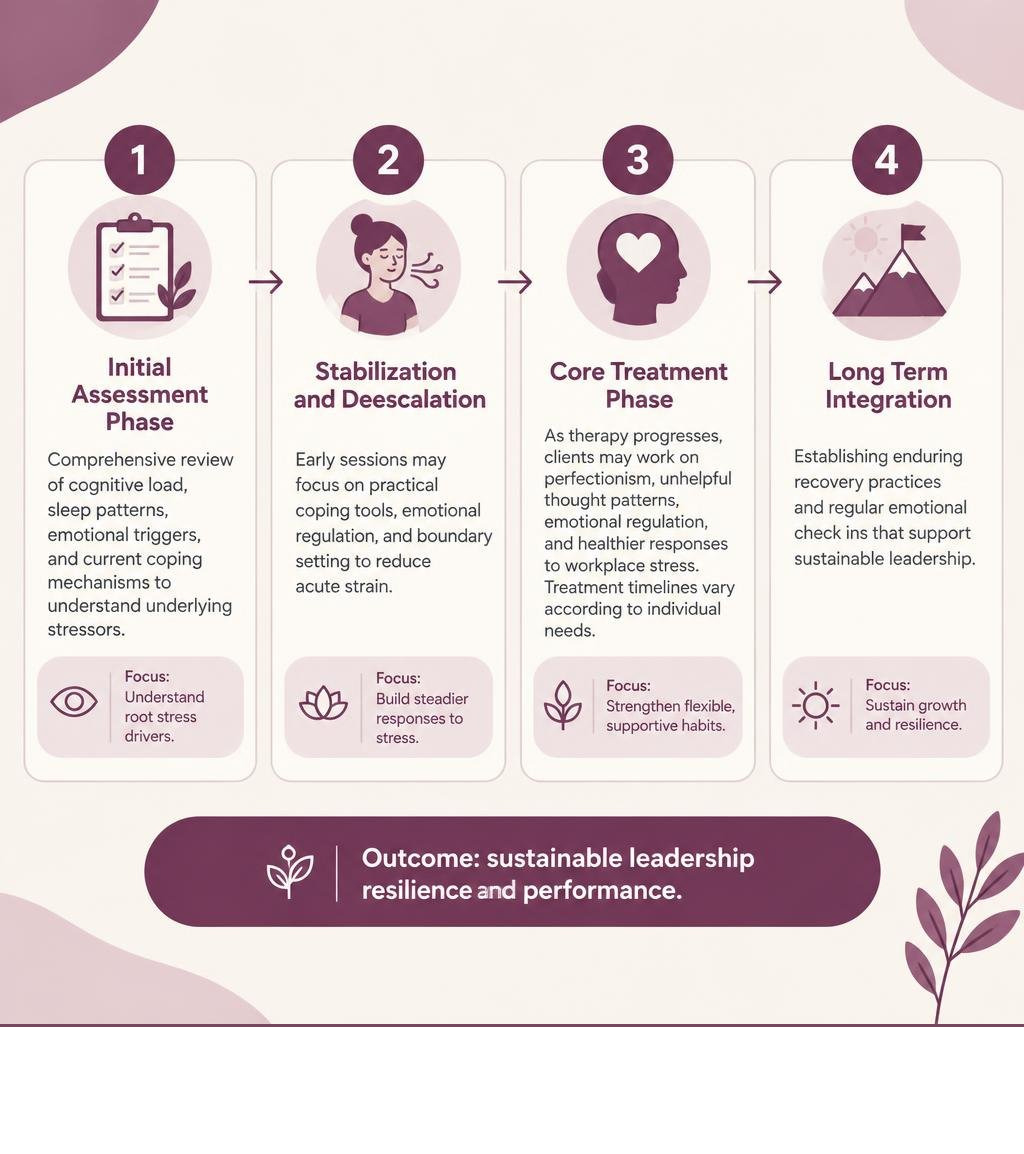
- Initial Assessment Phase: A comprehensive review of cognitive load, sleep patterns, emotional triggers, and current coping mechanisms to map underlying stressors.
- Stabilization and De-escalation: Immediate application of nervous system regulation tools, somatic interventions, and boundary architectures to reduce acute cognitive fatigue.
- Core Restructuring: Clinical studies highlight that targeted 5- to 8-week interventions produce the strongest mental health adaptations, dismantling perfectionist assumptions and reshaping work habits.
- Long-Term Integration: Establishing enduring behavioral recovery practices and emotional check-ins to ensure sustainable leadership longevity.
Executives managing demanding schedules can access seamless care via Online Stress Therapy, maintaining consistent clinical appointments from any location.
Measuring Downstream Organizational Value and Personal Recovery
Managing chronic stress may support individual wellbeing and healthier workplace interactions:
Managing chronic stress may improve concentration, emotional regulation, and decision making. These improvements can also support healthier communication and workplace relationships.
Implementing these practices fosters a healthier broader workplace culture, as discussed in How to Manage Stress in the Workplace.
How to Choose a Qualified Executive Stress Therapist
Selecting an effective therapist requires evaluating both clinical credentials and an understanding of high pressure corporate environments. A qualified practitioner should possess:
- Full State Licensure: Credentials such as Licensed Clinical Psychologist (PsyD or PhD), Licensed Clinical Social Worker (LCSW), Licensed Professional Counselor (LPC), or Licensed Marriage and Family Therapist (LMFT).
- Corporate and Executive Literacy: An understanding of corporate hierarchies, board dynamics, equity considerations, and high stakes organizational stress.
- Evidence Based Orientation: Clinical reliance on validated methods such as CBT, ACT, and somatic regulation rather than unstructured conversation.
- Uncompromising Discretion: Clear, robust protocols that ensure complete client privacy.
Finding appropriate care should be straightforward. Our guide on How to Find an Insured Stress Management Therapist Fast outlines how to connect with skilled practitioners who accept health insurance plans.
Frequently Asked Questions About Executive Stress Therapy
How does executive stress therapy differ from non clinical support?
Executive stress therapy is a clinical medical intervention conducted by state licensed mental health professionals. While non clinical support concentrates primarily on external career milestones and tactical skills, therapy treats the root psychological causes of chronic stress, anxiety, emotional depletion, and nervous system dysregulation. Therapy offers legally protected confidentiality and addresses mental health conditions, whereas non clinical services operate within a performance coaching framework. To understand these specific clinical interventions, explore Stress Management Therapy.
How long does it take to see results from executive stress therapy?
Some individuals notice improvements within the first several sessions, while others benefit from longer-term treatment. Progress depends on the severity of stress, individual goals, therapeutic approach, and consistency of care. Clinical research indicates that structured interventions lasting 5 to 8 weeks generate significant reductions in burnout markers, while lasting behavioral and neuroplastic changes typically consolidate over 3 to 6 months of consistent practice.
Is executive stress therapy confidential and covered by insurance?
Yes. Licensed mental health professionals adhere to strict legal and ethical privacy regulations that protect all client communications and clinical records. Furthermore, therapy services are frequently covered by health insurance policies. You can learn more about verifying coverage and finding the right clinical fit through our guide on Finding a Therapist for Stress: Things to Consider.
Conclusion: Protecting Your Health and Sustaining Your Leadership
Upward professional mobility should not demand the sacrifice of your mental, emotional, or physical health. Sustainable leadership requires building internal psychological resilience alongside external business achievements.
Collective Counseling Solutions simplifies your path to high quality care by connecting leaders with licensed, skilled therapists who accept insurance, offering both in person and teletherapy options. Protecting your health preserves your ability to lead with clarity and vision. Take the first step toward lasting balance and find a specialized stress therapist today.