

How Marriage Therapy for Depression Can Help
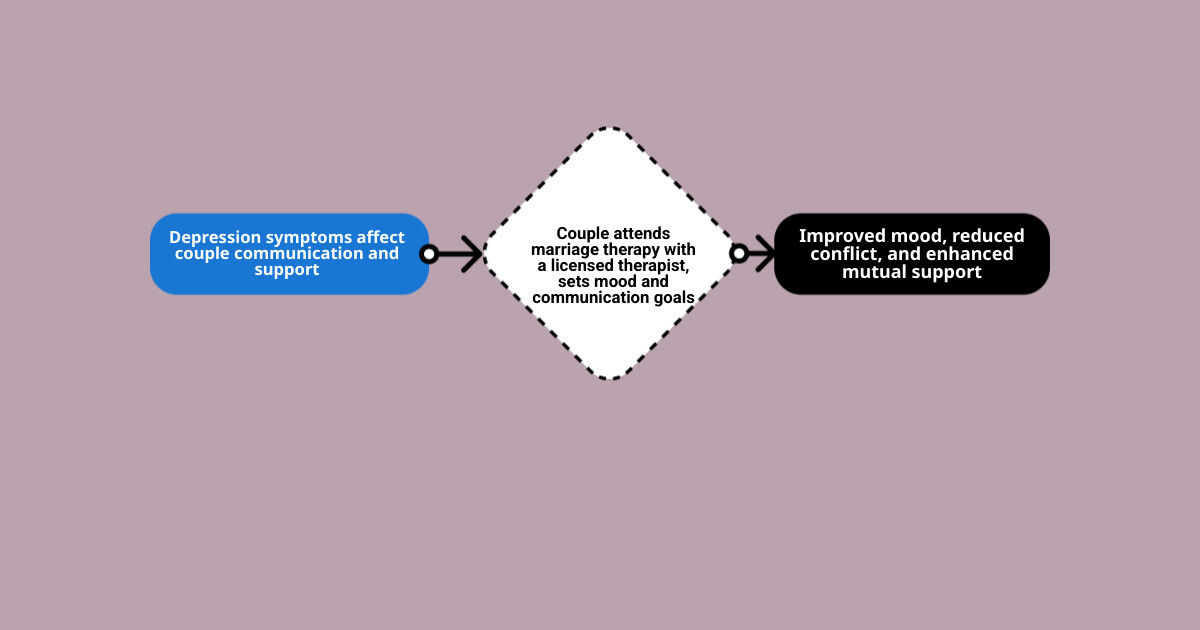
Marriage therapy for depression can help when one partner’s symptoms and relationship stress affect each other. A couple can begin by finding a licensed therapist with experience in depression, explaining how symptoms affect daily life, and setting goals for both mood and communication. The partner with depression may also need individual care.
Research suggests couple therapy can ease depressive symptoms about as much as individual therapy, though the evidence is limited. It may be especially helpful when the couple also wants to address conflict, distance, or a lack of support.
Discover more about marriage therapy for depression:
- marriage counseling for communication
- marriage relationship counseling
- individual relationship counseling
The Science and Evidence Behind Marriage Therapy for Depression
The connection between relational discord and mood disorders is well documented in clinical research. When one partner struggles with low mood, fatigue, and emotional withdrawal, the entire partnership experiences strain. Conversely, ongoing marital conflict often exacerbates or maintains depressive episodes. Clinical trials evaluating dyadic interventions show that treating both partners together can create a strong environment for healing.

A 2018 Cochrane review found that couples therapy may reduce depressive symptoms compared with no or minimal treatment, but the evidence for this comparison was very low quality.
| Treatment Modality | Primary Focus Area | Impact on Depressive Symptoms | Impact on Relationship Quality |
|---|---|---|---|
| Couple Therapy | Dyadic interactions, mutual support, emotional safety | Significant symptom reduction comparable to individual care | Substantial improvement in relationship satisfaction and lower conflict |
| Individual Psychotherapy | Personal cognitive patterns, coping mechanisms, individual behaviors | Significant symptom reduction | Minimal direct effect on relational discord |
| Integrated Relational Care | Combined relational repair and personal symptom management | Comprehensive symptom relief and lower relapse vulnerability | High improvements in partner connection and mutual coping |
How Marriage Therapy for Depression Compares to Individual Treatment
When exploring options for evidence-based treatment for depression, clinicians frequently compare individual psychotherapy with dyadic models. The review found no clear difference in depressive symptom outcomes between couple therapy and individual psychotherapy. However, low-quality evidence limits confidence in this comparison. (Barbato et al., 2018). The statistical difference in depressive symptom reduction between the two approaches is minimal, showing that both modalities successfully target mood stabilization.
While individual counseling focuses on personal cognitive distortions and individual behavioral activation, dyadic interventions address systemic factors. Recognizing negative interaction patterns can help partners address relationship stress that may contribute to depression. Depression also involves factors beyond the relationship. For couples experiencing both mood struggles and relational discord, dyadic therapy provides a dual advantage by fostering mutual understanding while relieving emotional distress.
Relational Benefits for Distressed Partnerships
The primary distinction between individual treatment and relational counseling lies in the measurable improvements to the partnership itself. Clinical reviews demonstrate that couple therapy produces superior outcomes in reducing relationship distress compared to individual psychotherapy alone (Barbato et al., 2018). For couples entering therapy with existing discord, the effect of joint sessions on relationship satisfaction is especially pronounced.
A brief problem focused couple therapy study revealed that structured dyadic sessions not only alleviated depressive symptoms in participating women but also produced secondary improvements in marital adjustment (Cohen et al., 2010). Furthermore, the non depressed spouses experienced significant reductions in their own emotional strain and caregiver burden. By restructuring day to day interactions, both partners gain emotional relief.
Key Therapeutic Modalities and How They Work
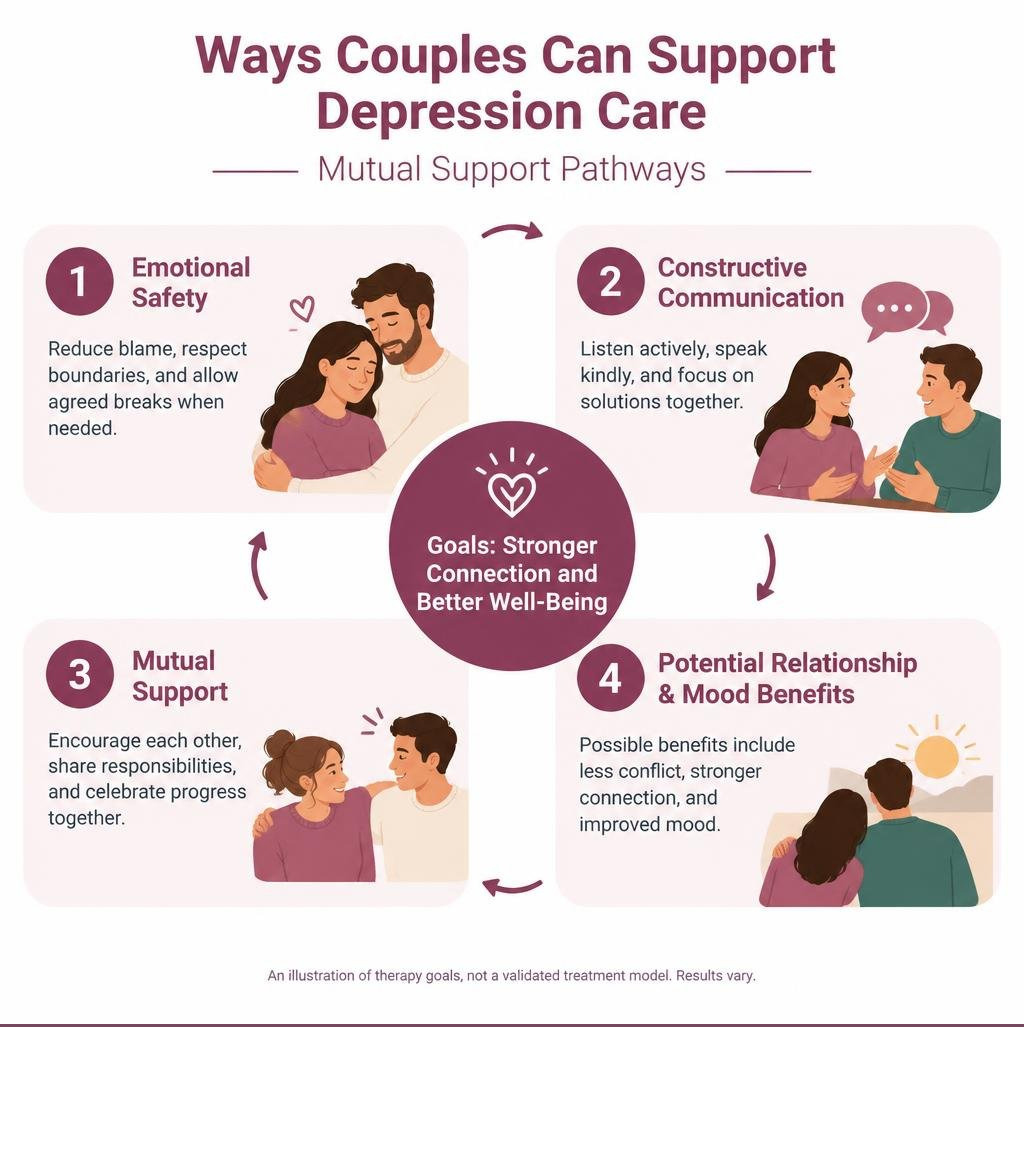
Couples therapy incorporates structured frameworks designed to help partners communicate constructive feedback, de escalate arguments, and build emotional safety. Learning specific communication techniques for couples allows partners to discuss depressive episodes without assigning blame or withdrawing into silence.

Core Modalities of Marriage Therapy for Depression
Therapists may use several approaches to address relationship distress alongside depression. The strength of depression-specific evidence varies by approach:
- Emotionally Focused Therapy (EFT): EFT aims to strengthen emotional connection and responsiveness between partners. A small pilot study found relationship benefits when EFT was added to antidepressant treatment, but it did not establish that EFT prevents depression relapse.
- Behavioral Couples Therapy (BCT): This modality focuses on increasing positive exchanges, scheduling shared rewarding activities, and improving communication. Partners may practice shared activities and supportive behaviors that encourage engagement, with goals adjusted to the person’s energy and symptoms.
- Cognitive Behavioral Couples Therapy (CBCT): CBCT targets unrealistic relational expectations and cognitive misattributions, helping partners view relationship challenges with mutual empathy rather than personal hostility.
Coordinating Relational Sessions with Other Depression Care
Couples therapy may be coordinated with individual psychotherapy, medication, or other depression care according to the person’s needs. In a randomized pilot study of 24 women with depression and relationship discord, adding EFT to antidepressant management improved relationship quality more than medication management alone, but did not demonstrate an additional benefit for depressive symptoms.
Clinicians also emphasize the value of ongoing symptom monitoring. By coordinating relational counseling with individual care, couples build a reliable safety net that fosters sustained recovery.
How to Support a Depressed Partner Through Marriage Counseling
Living with a spouse who experiences clinical depression can feel confusing and exhausting. Knowing what happens in couples therapy helps both partners approach each session as a collaborative team rather than viewing therapy as a place for criticism.
Recognizing When Depressive Symptoms Strain the Relationship
Depression does not just affect internal feelings; it changes behavior, conversation, and energy levels. Identifying signs and symptoms of depression early allows couples to separate the condition from the person.
Common ways depressive episodes manifest within a marriage include:
- Emotional Withdrawal: The depressed partner becomes quiet, retreats from physical intimacy, and spends extended time alone.
- Irritability and Low Frustration Tolerance: Rather than looking like pure sadness, depressive distress often presents as sudden annoyance, short responses, or chronic pessimism.
- Cognitive Fatigue and Indecision: Simple household decisions, such as meal planning or scheduling, become overwhelming.
- Perceived Rejection: The supporting partner may interpret withdrawal as emotional neglect, responding with frustration that further isolates the depressed spouse.
Actionable Steps for Partners During Weekly Sessions
Active participation in weekly sessions reinforces healthy habits outside the clinic. Partners can implement several supportive steps between appointments:
- Ask Clarifying Questions: Use structured questions to ask in couples therapy to explore how depression influences daily interactions.
- Establish Neutral Dialogue Times: Schedule short daily conversations where discussions about chores, schedules, or mental health struggles are paused in favor of relaxing topics.
- Practice Reflective Listening: Validate the depressed partner’s internal experience without immediately offering unsolicited advice or attempts to fix the situation.
- Complete Assigned Behavioral Exercises: Engage in shared positive activities designed to rebuild warmth and companionship.
Practical Considerations and Navigating Care
Deciding to start therapy requires practical planning. Many partners wonder is it healthy to go to couples therapy when distress is present. Seeking professional guidance early prevents destructive patterns from becoming entrenched habits.
Finding the Right Provider and Verifying Benefits
Working with a qualified clinician ensures both partners receive balanced support. When selecting a mental health provider, look for licensed professionals with dedicated experience in dyadic counseling and mood disorders.
Navigating health insurance is a vital step in accessing consistent care. Using comprehensive guides to verify insurance coverage for therapy helps couples understand mental health benefits, confirm provider network status, and schedule appointments smoothly.
Confirm coverage for the specific service being proposed. A therapist accepting your insurance does not guarantee that marriage counseling is covered. Coverage may depend on whether sessions treat a diagnosed mental health condition and meet your plan’s requirements.
Frequently Asked Questions About Couples Counseling and Mood Disorders
Is couple counseling as effective as individual counseling for depressive symptoms?
Possibly. Research suggests similar benefits for depressive symptoms, but limited evidence prevents firm conclusions. Couples therapy may also help address relationship distress.
Can relationship counseling help if only one spouse experiences mood struggles?
Yes. Even when only one partner meets the criteria for clinical depression, the condition affects both individuals. Couple therapy educates the non depressed partner about the nature of mood disorders, reduces caregiver burden, and provides concrete tools to offer effective support without burning out (Cohen et al., 2010).
What should couples expect during their first joint session?
During an initial intake session, the therapist gathers background history regarding the relationship and the progression of depressive symptoms. The clinician works collaboratively with both individuals to establish clear goals for communication, emotional connection, and symptom management.
Conclusion
Depression can place immense strain on a marriage, but partners do not have to navigate recovery in isolation. By addressing mood struggles within the context of the partnership, couples build emotional resilience, dismantle destructive communication cycles, and create a caring home environment.
Collective Counseling Solutions simplifies the journey by connecting clients with licensed therapists who accept insurance, offering both in person care and teletherapy. If you and your spouse are ready to restore connection and address mood challenges together, explore evidence based couples therapy to begin your shared path toward healing.
References
Barbato A, D’Avanzo B, Parabiaghi A. “Couple therapy for depression..” The Cochrane database of systematic reviews, 2018. PMCID PMC6513419. Cohen S, O’Leary KD, Foran H. “A randomized clinical trial of a brief, problem-focused couple therapy for depression..” Behavior therapy, 2010. PMCID PMC3536531. Denton WH, Wittenborn AK, Golden RN. “Augmenting antidepressant medication treatment of depressed women with emotionally focused therapy for couples: a randomized pilot study..” Journal of marital and family therapy, 2012. PMCID PMC4103029.