
Understanding Marriage Relationship Counseling and How It Works
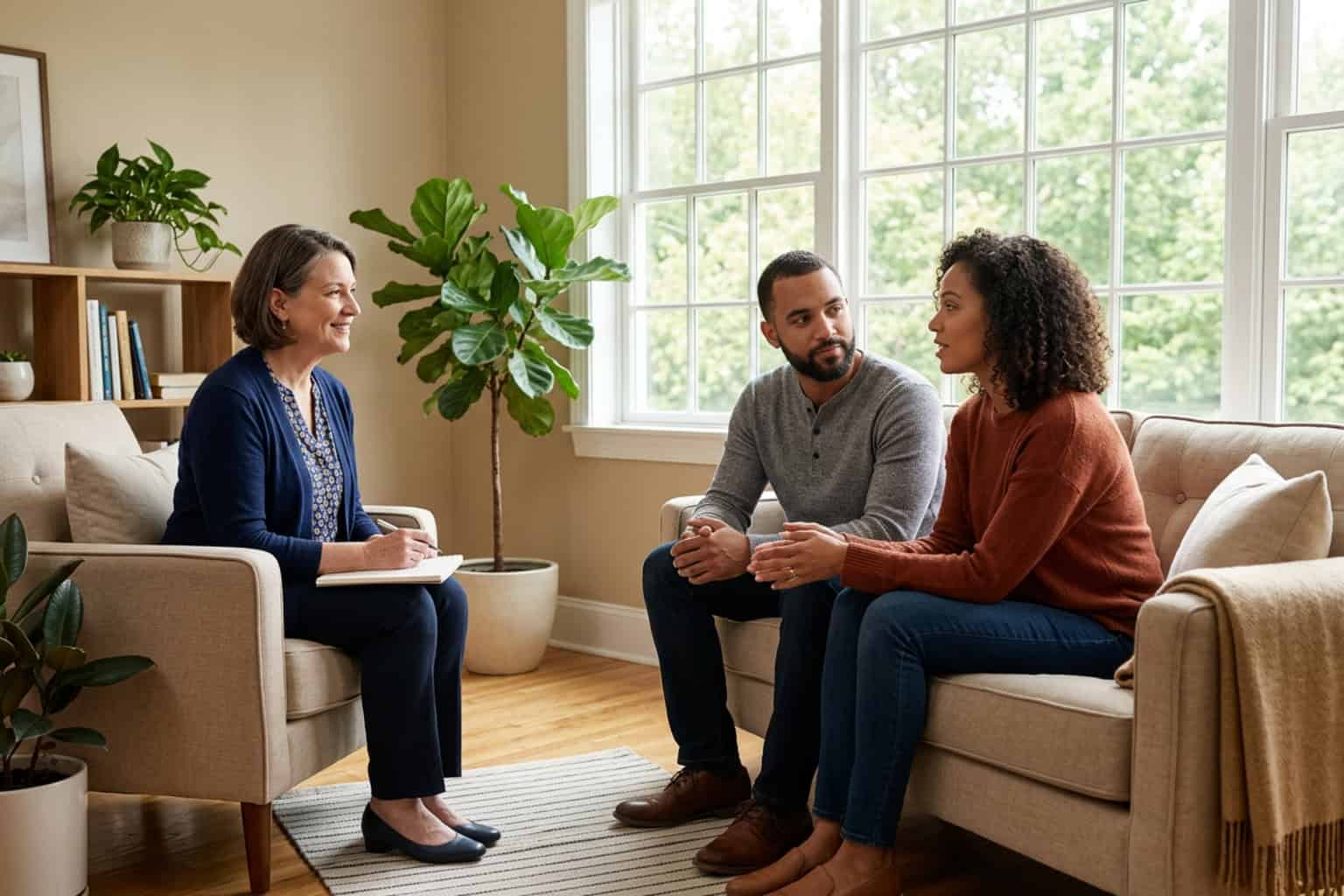
Marriage relationship counseling is a specialized branch of psychotherapy focused on the partnership as a whole. While individual therapy looks inward at personal history, personal goals, and individual emotional patterns, couples therapy treats the relationship itself as the client.
During therapy, a licensed professional examines the interactive cycle between two people. Relationship distress rarely stems from one person acting alone. Instead, it develops through repetitive, negative interaction loops where one partner’s reaction triggers the other partner’s defense mechanism. Over time, these patterns erode emotional connection and leave both individuals feeling isolated, misunderstood, or resentful.
A core component of this process is therapist neutrality. A skilled counselor does not act as a judge, referee, or jury. They do not decide who is right or wrong. Instead, they provide an objective viewpoint, helping both partners see their shared cycle clearly. When exploring what do couples do in therapy, partners learn that sessions focus on identifying root causes of distress, developing healthy communication frameworks, and creating emotionally secure bonds that sustain the relationship over the long term.
What to Expect During Marriage Relationship Counseling Sessions
Entering therapy can feel unfamiliar, but knowing what lies ahead can ease early hesitation. Understanding what happens in couples therapy begins with the initial assessment stage. The first one to three sessions usually involve an intake evaluation where the therapist gathers background information regarding relationship history, family backgrounds, and current challenges.
After the initial evaluation, the counselor works collaboratively with both partners to establish therapeutic goals and safety parameters. These parameters ensure that discussions remain respectful, constructive, and emotionally safe.
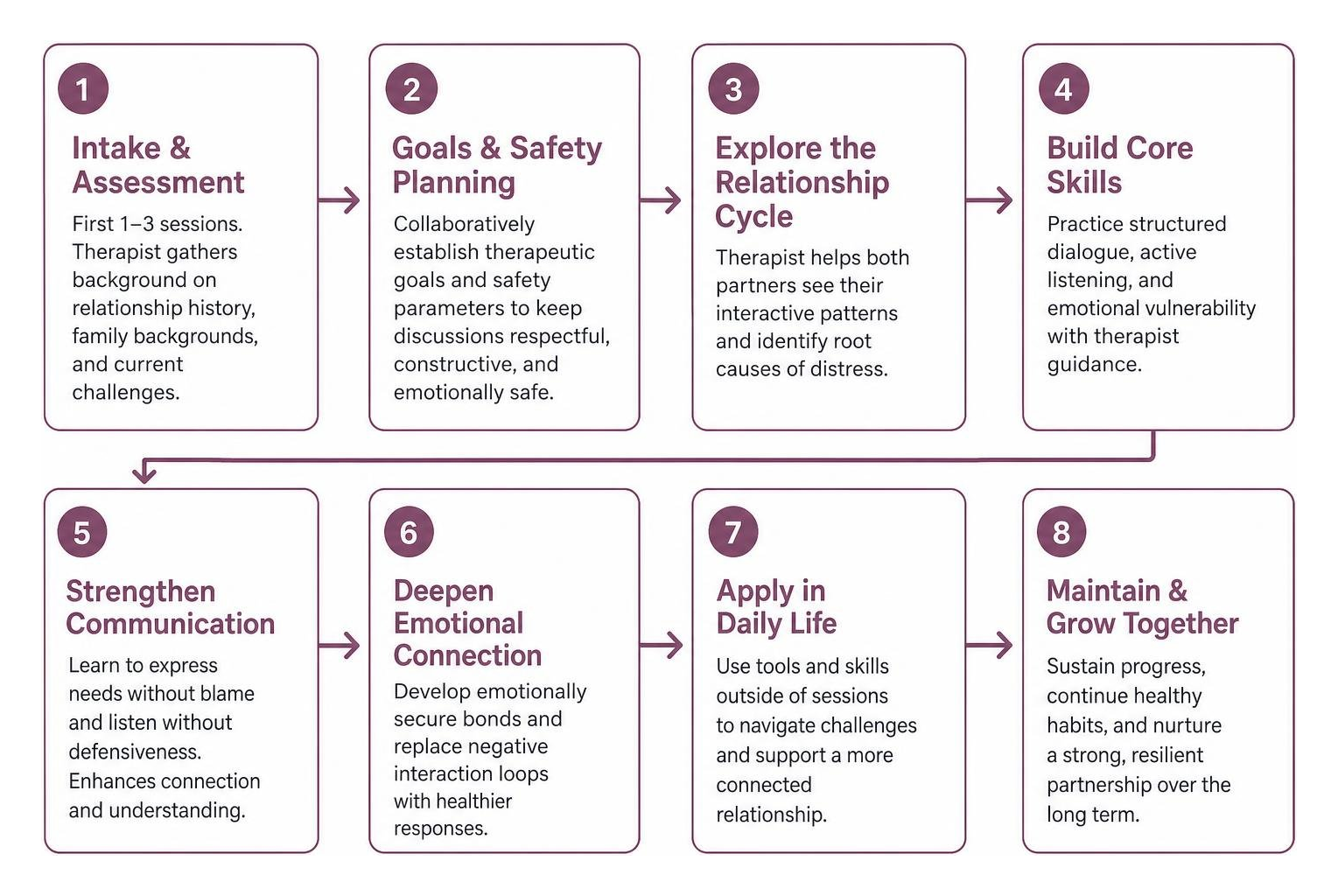
As treatment progresses, sessions move into deeper exploration and skill building. Partners practice structured dialogue, active listening, and emotional vulnerability under the guidance of the therapist. This work directly enhances couples therapy communication, teaching couples how to express needs without blame and listen without defensiveness.
Does Relationship Therapy Actually Work?
Extensive clinical research demonstrates that marriage relationship counseling produces significant, lasting improvements for couples who engage fully in the process. According to research from the American Association for Marriage and Family Therapy, couples who participate in marriage counseling report a 70% improvement in relationship satisfaction. Furthermore, approximately 97% of surveyed couples report that they received the help they needed.
Broader mental health data aligns with these findings. In a survey by the American Psychological Association, 93% of clients who sought therapy for relationship issues stated it was effective in helping them navigate their challenges.
The success of relationship therapy depends heavily on specific clinical and personal factors:
- Both partners demonstrate an active willingness to reflect on their own contributions to relationship distress.
- The couple commits to practicing communication tools and exercises outside the therapy room.
- The partners address relationship challenges early rather than waiting until resentment becomes deeply entrenched.
- A strong therapeutic alliance is formed with a qualified, licensed clinician.
Engaging in this work fosters personal growth and emotional resilience, proving why it is healthy to go to couples therapy at any stage of a partnership.
Proven Approaches and Modalities in Couples Therapy
Licensed marriage and family therapists utilize evidence based frameworks to structure their care. Rather than relying on unstructured conversations, clinicians apply specific modalities to address core issues such as trust breakdown, emotional distance, and repetitive fighting. Learning how to navigate couples therapy conflict involves finding a framework that matches a couple’s unique dynamic.
| Modality | Core Philosophy | Primary Focus Area | Best Suited For |
|---|---|---|---|
| The Gottman Method | Building the Sound Relationship House through positive interactions and shared meaning. | Disarming verbal conflict, increasing intimacy, and building friendship. | Couples stuck in repetitive gridlock or high conflict interaction cycles. |
| Imago Relationship Therapy | Connecting adult relationship conflict to unresolved childhood attachment wounds. | Structured dialogue, empathy expansion, and healing past emotional injuries. | Partners seeking deeper emotional insight into mutual triggers. |
| Emotionally Focused Therapy (EFT) | Viewing relationship distress through the lens of adult attachment security. | Calming negative cycles and establishing safe emotional responsiveness. | Couples experiencing emotional detachment, loneliness, or distress. |
| Narrative Therapy | Separating the individual identity of each partner from the relationship problem. | Externalizing issues and coauthoring new, healthy relationship stories. | Partners feeling burdened by blame or rigid negative labels. |
The Gottman Method
Developed through decades of empirical research by Drs. John and Julie Gottman, this modality emphasizes measurable, practical tools. A study published in the Journal of Marital and Family Therapy found that 75% of couples who completed the Gottman Method reported significant improvements in their relationship quality.
The Gottman Method focuses on eliminating destructive communication habits, known as the Four Horsemen: criticism, contempt, defensiveness, and stonewalling. Therapists replace these behaviors with constructive alternatives, helping couples enhance intimacy, deepen mutual respect, and create shared life goals.
Imago Relationship Therapy
Imago Relationship Therapy operates on the principle that adult romantic selections are unconsciously influenced by childhood experiences and caregivers. Conflict is not viewed as proof of incompatibility, but as an opportunity for mutual healing and psychological growth.
Through the structured Imago Dialogue process, partners take turns mirroring, validating, and empathizing with one another. This technique removes criticism and creates a safe emotional environment where both individuals can understand past wounds and build conscious, supportive connections.
Emotionally Focused and Narrative Therapy
Emotionally Focused Therapy centers on adult attachment theory. It helps partners recognize when they are caught in cycles of pursuit and withdrawal. By uncovering the vulnerable emotions beneath surface anger or silence, EFT helps partners express fundamental needs for safety, connection, and reassurance.
Narrative Therapy complements this work by helping couples externalize their difficulties. Instead of viewing a spouse as the problem, the counselor guides the couple to see the issue as an external influence affecting them both. This shift reduces defensiveness, minimizes blame, and unites partners as a collaborative team working toward a common solution.
Key Signs It Is Time to Seek Professional Guidance

Many couples wait years before seeking professional support, often allowing minor misunderstandings to harden into deep seated resentment. Recognizing the early warning signs of relational distress allows couples to intervene before patterns become overwhelming.
Couples should consider seeking professional guidance when they notice:
- Daily interactions feel like walking on eggshells, with minor topics escalating into intense arguments.
- Emotional intimacy has faded, leaving both individuals feeling more like roommates than romantic partners.
- Physical closeness and affection have significantly declined or stopped altogether.
- A major breach of trust has occurred, requiring structured guidance through couples therapy infidelity support to rebuild security.
- Important topics are avoided out of fear of sparking an explosive reaction.
Understanding how to know when it is time for couples therapy ensures that partners seek guidance when they are best positioned to make positive changes.
When to Consider Pre Marriage Relationship Counseling
Therapy is not solely a restorative measure for troubled relationships; it is also a powerful preventive tool. Engaging in couples therapy pre-marital counseling allows engaged couples to establish strong foundations before entering marriage.
Pre marriage counseling provides a dedicated space to discuss critical topics that are sometimes overlooked during wedding planning:
- Financial philosophies, debt management, and joint budgeting strategies.
- Long term career aspirations and work life balance expectations.
- Family planning, parenting styles, and boundaries with extended family.
- Core values, spiritual beliefs, and personal lifestyle preferences.
Addressing these subjects early equips partners with healthy communication habits and conflict resolution tools, minimizing future misunderstandings.
Managing External Stressors and Family Transitions
Relationships do not exist in a vacuum. External pressures such as career demands, financial shifts, health concerns, and parenting duties place immense strain on even the strongest partnerships.
When family dynamics shift, specialized counseling helps maintain relational balance. Exploring why family and couples stress management counseling is a game changer reveals how addressing external tension preserves emotional closeness. For couples navigating blended families or parenting challenges, learning the key ways your family can benefit from family therapy can foster unity across the entire household.
How to Choose the Right Counselor and Navigate Logistics
Selecting the right professional is essential for a successful therapeutic journey. The U.S. Bureau of Labor Statistics projects significant growth in employment for marriage and family therapists over the coming decade, reflecting an increasing availability of skilled clinicians.
When beginning the search, review the clinician’s educational background, licensure, and specific training in couples modalities. Reviewing a guide on how to choose a good therapist for you can help you evaluate potential candidates.
During an initial consultation, preparing specific questions to ask in couples therapy helps determine if the therapist’s style matches your expectations. Helpful questions include:
- What evidence based modalities do you use during sessions?
- How do you maintain balance and neutrality between both partners?
- What experience do you have with our specific relational concerns?
Many couples also appreciate the flexibility of couples therapy online, which allows partners to attend sessions from home or work without travel time.
Insurance Coverage and Affordable Therapy Options
Understanding the financial side of counseling helps make therapy accessible and sustainable. Many health plans offer mental health benefits that cover clinical counseling services.
To determine your options, review details regarding couples therapy insurance to understand how coverage works for relational care. Learning what you should know about insurance covering therapy ensures you can verify in network coverage, copays, and deductible requirements before your first appointment.
Frequently Asked Questions About Relationship Counseling
Will a marriage counselor take sides during our sessions?
A licensed and ethical marriage counselor will not take sides. Their role is to support the health of the relationship rather than validate one person at the expense of the other. Counselors maintain balanced facilitation, ensuring both partners have equal space to speak, feel heard, and understand their shared dynamic.
Can marriage counseling be effective if only one spouse attends?
Yes, marriage counseling can still be helpful even if only one spouse attends. When one individual learns healthy communication boundaries, emotional regulation, and constructive response patterns, it naturally alters the relational dynamic at home. Individual work often creates positive shifts that encourage the other partner to participate later.
How long does marriage counseling typically last?
The duration of marriage counseling varies depending on the couple’s specific goals, the complexity of their challenges, and their consistency in practicing skills outside of sessions. Many couples achieve meaningful progress within 12 to 20 sessions, while others choose ongoing periodic check ins to maintain long term relationship health.
Conclusion
Every relationship experiences periods of stress, miscommunication, and emotional distance. Choosing to participate in marriage relationship counseling is an investment in your shared future, offering a structured path toward renewed trust, deeper intimacy, and lasting mutual respect.
Collective Counseling Solutions simplifies the process of finding licensed, experienced therapists who accept insurance, offering both in person care and teletherapy. If you are ready to strengthen your partnership, explore our specialized couples therapy services and begin your journey toward lasting connection today.