

Find Marriage Counseling That Accepts Insurance
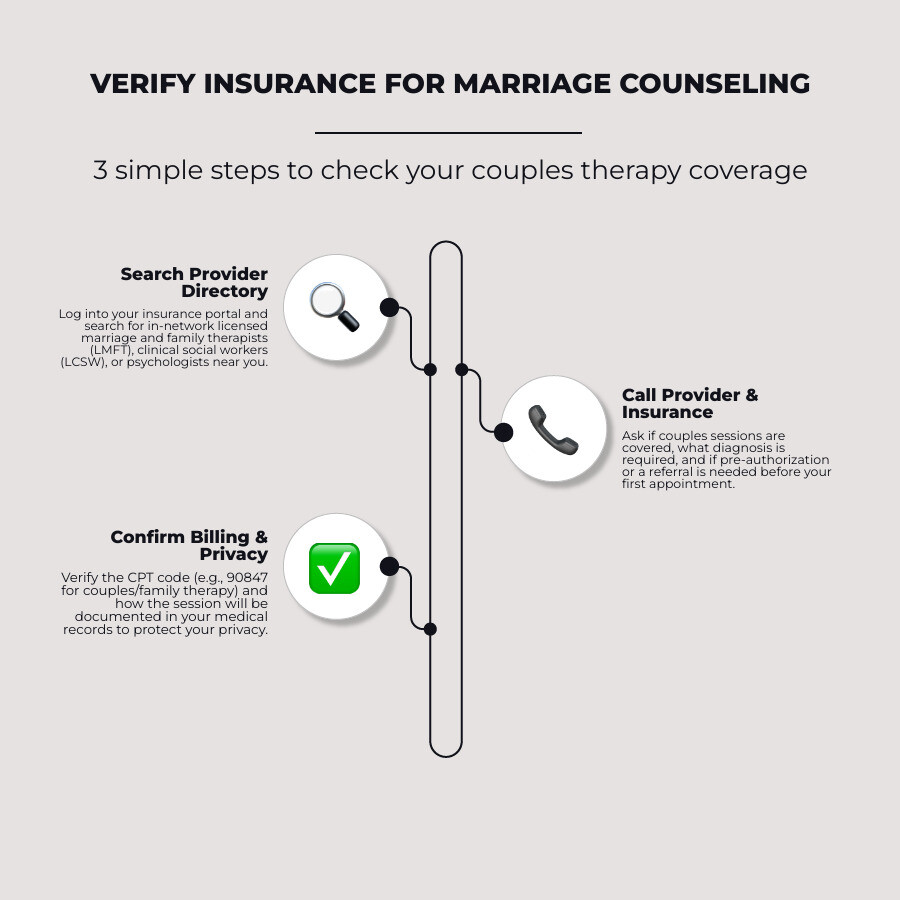
To find marriage counseling that insurance can help pay for, start with your insurer online provider directory and search for licensed marriage and family therapists, clinical social workers, or psychologists. Then call both the counselor and your insurance plan before booking. Ask whether the provider is in network, whether couples sessions are covered, and what approval or diagnosis the plan may require.
Insurance often covers couples therapy when it is part of treatment for a covered mental health condition. Coverage for general relationship support, communication concerns, or premarital counseling can be more limited. Your exact benefits depend on your plan, the provider license, and how the session is billed.
This guide explains how to check benefits, protect your privacy, compare payment options, and find a qualified relationship therapist without unnecessary surprises.
Helpful relationship counseling terms:
1. How Health Insurance Handles Couples and Marriage Therapy
Navigating health insurance for relationship counseling can feel overwhelming, but understanding the system empowers partners to make informed choices. Most commercial health insurance plans focus on the concept of medical necessity. This standard requires that any covered service must diagnose or treat an established medical or mental health condition.
When partners seek couples therapy, insurance plans evaluate whether the care fits their diagnostic criteria. A licensed marriage and family therapist, licensed clinical social worker, or licensed professional counselor must assess the situation and determine appropriate treatment goals. Understanding provider credentials ensures that your chosen professional meets your plan requirements.
Marriage Counseling vs. Couples Therapy: The Insurance Distinction
Insurance coverage for marriage counseling or couples therapy depends on the services provided, whether treatment is medically necessary, and the specific benefits of the health insurance plan. Relationship distress Z codes may document a relational concern, but they generally do not establish medical necessity on their own. Coverage rules vary by plan and insurer.
Couples therapy often involves treating an underlying clinical condition that impacts the relational dynamic. According to the American Psychological Association, integrating family or relationship dynamics into therapy can improve treatment outcomes for individuals coping with mental health conditions. When one partner experiences symptoms such as anxiety or mood difficulties, relationship sessions become an integral part of their overall care. Reviewing therapy and insurance coverage helps clarify which specific therapeutic services align with standard health plan policies.
The Role of CPT Code 90847 and Mental Health Diagnoses
CPT code 90847 is commonly used for family psychotherapy sessions that include the identified patient and may involve a spouse or partner. Whether the service qualifies for insurance coverage depends on the clinical circumstances, documentation, and individual insurance plan.
#
When couples sessions are part of treatment for an individual’s diagnosed mental health condition, the therapist may identify that individual as the patient for insurance billing purposes. Any diagnosis must be clinically appropriate and supported by an assessment.
The other partner participates as a supportive participant in the treatment process. While this arrangement allows insurance reimbursement, it also means the diagnosis and clinical session summaries become part of the primary client’s permanent medical record. Learning more about how insurance covers therapy gives couples the clarity needed to balance privacy with financial benefits.
2. Navigating Costs: In Network vs. Out of Pocket Relationship Therapy
The total investment in relationship therapy depends on your provider network status, your plan deductible, and your designated copay amounts. In-network providers have negotiated rates with insurance companies. Depending on your plan, you may be responsible for a copayment, coinsurance, deductible, or a combination of these costs
Choosing an out-of-network provider or opting for private pay gives couples full autonomy over session length, therapeutic techniques, and documentation privacy. Some out-of-network therapists can provide a detailed receipt called a superbill, which patients may submit to their insurance company for possible reimbursement. Reimbursement depends on the plan’s out-of-network benefits, medical necessity requirements, and other coverage rules.
| Payment Option | Upfront Responsibility | Insurance Documentation Required | Privacy Level |
|---|---|---|---|
| In Network Insurance | Designated copay or coinsurance | Formal diagnosis and medical records submitted; additional clinical documentation may be requested. | Standard clinical record shared with insurer |
| Out of Network Superbill | Full session fee paid at service | Formal diagnosis on claim submission | Insurer receives diagnosis for reimbursement |
| Private Pay (Self Pay) | Full session fee paid at service | None required | Clinical records remain subject to privacy laws and applicable legal exceptions. |
Investing in timely relationship therapy delivers substantial long term value. Resolving chronic relationship tension, improving communication patterns, and establishing shared goals supports overall household emotional and financial stability.
Using HSA and FSA Funds for Relationship Counseling
HSA and FSA funds may be used for qualifying mental health treatment, including therapy for a diagnosed mental health condition. However, general marriage counseling, premarital counseling, and relationship enrichment services typically do not qualify. Before using these funds, confirm eligibility with your benefits administrator. These accounts allow you to allocate funds for qualified medical expenses, lowering your overall tax burden.
To use HSA or FSA funds smoothly:
- Confirm with your plan administrator that behavioral health and family psychotherapy qualify under your specific account guidelines.
- Pay your copayments, coinsurance, or private pay fees directly using your benefits debit card.
- Request an itemized invoice from your therapist for every transaction to satisfy documentation requests during tax filing.
3. Step by Step Guide to Finding Marriage Counseling Covered by Insurance
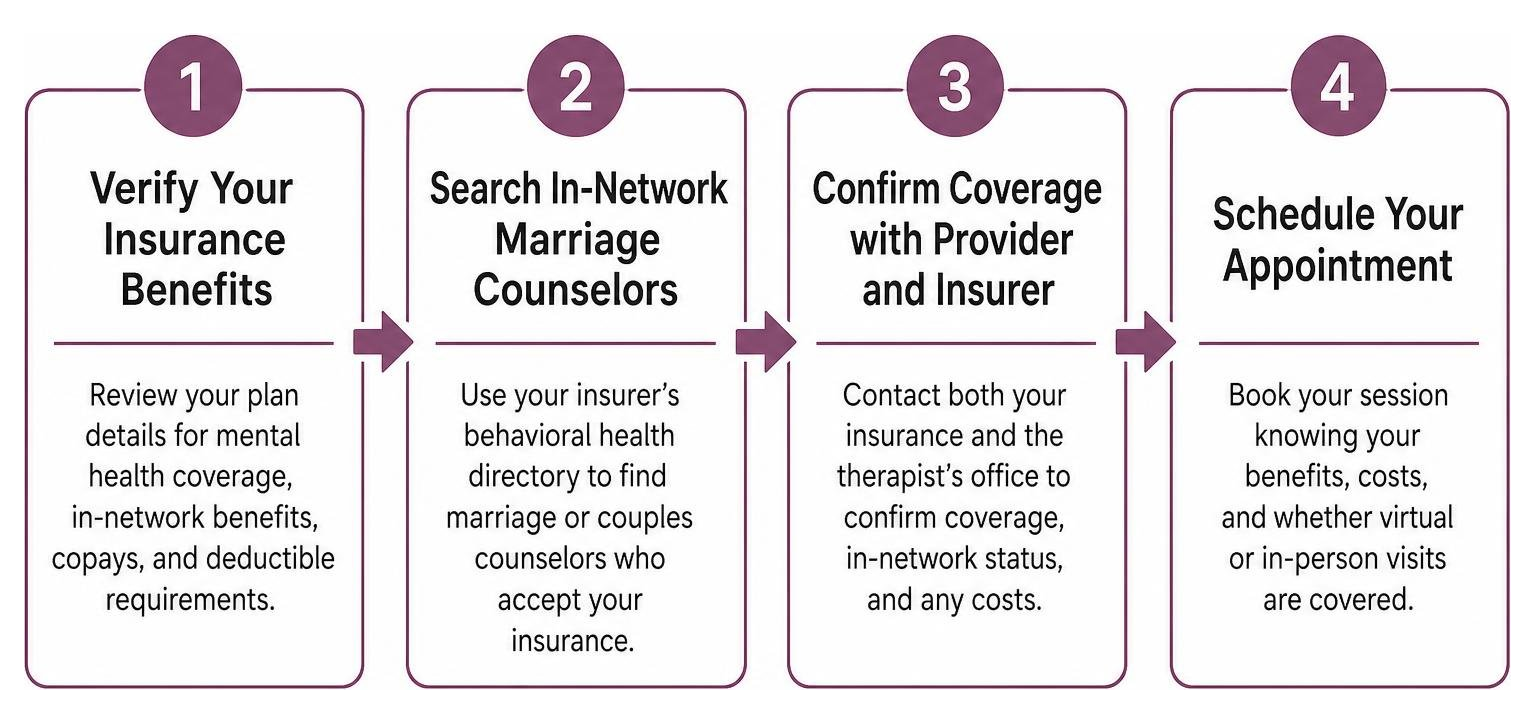
Finding a qualified relationship therapist who accepts your insurance coverage involves a clear, methodical process. Beginning with your plan directory allows you to identify providers who are contracted with your specific network.

When initiating your search, consult resources on how can I find a therapist that accepts my insurance to streamline your outreach. Many couples also prefer the flexibility of virtual care, making couples therapy online an effective option for busy work schedules and family routines.
How to Search for In Network Relationship Counseling Providers
To locate experienced relationship clinicians within your network:
- Log in to your insurer member portal and navigate to the behavioral health directory.
- Filter the provider list by specialty, selecting marital, family, or couples psychotherapy.
- Check established mental health group practices such as Collective Counseling Solutions, which match individuals and couples with skilled, fully credentialed clinicians across diverse specialties.
- Verify whether your benefits cover virtual care alongside traditional in person office visits.
Critical Questions to Ask Counseling Offices and Insurers
Before your first appointment, contact both your insurer and your prospective therapist billing coordinator. Asking precise questions prevents unexpected financial surprises.
Key questions to ask your insurance customer service representative:
- Does my plan cover outpatient psychotherapy code 90847 for relationship sessions?
- Do I have an annual behavioral health deductible, and how much remains to be met?
- What is my specific copay or coinsurance percentage per session?
- Are there annual limits on the total number of outpatient psychotherapy sessions?
Key questions to ask the therapy practice intake coordinator:
- Are you currently in network with my exact health insurance plan?
- Do you manage billing directly with the insurer, or do you provide superbills for self submission?
- How do you approach clinical documentation when billing couples sessions through insurance?
For additional details on navigating this conversation, refer to our comprehensive guide on verifying insurance coverage for therapy.
4. Alternative and Affordable Paths When Insurance Denies Coverage
If your health insurance plan does not cover relationship therapy or if you prefer to keep your records entirely private, several viable alternatives exist. Many private practices reserve specific openings for sliding scale fees, which adjust rates based on household income levels.
Reviewing practical strategies from 5 tips for finding affordable therapy can uncover several low cost options:
- Employee Assistance Programs: Many employers offer short term counseling benefits that provide several free sessions per year for employees and their spouses.
- Graduate Training Clinics: University psychology departments offer affordable counseling led by advanced graduate interns under the direct supervision of licensed faculty.
- Community Mental Health Agencies: Local nonprofit organizations often provide accessible relationship counseling based on regional economic scales.
What to Do If Your Claim Is Denied
Receiving an insurance denial for couples counseling can be frustrating, but clients have formal rights to challenge the decision.
Begin by requesting a formal Explanation of Benefits to understand the exact denial code. Common issues include clerical errors, incorrect billing codes, or a lack of prior authorization. If your claim is denied, review the Explanation of Benefits or denial notice and contact your insurer to understand the reason. Your therapist’s billing office may be able to correct billing errors or provide additional documentation when appropriate. You may also have the right to file an internal appeal or request an external review, depending on your plan and the reason for denial. If the denial remains in place, you can file a formal administrative appeal with your insurer, supporting documentation detailing why the treatment is essential for your mental health.
5. Frequently Asked Questions About Insurance Covered Couples Counseling
Does health insurance cover premarital or communication counseling?
Standard health insurance generally does not cover nondiagnostic services such as general communication skill building or premarital counseling. Because these services focus on personal enrichment and preventative relationship maintenance rather than treating an illness, they do not meet the criteria for medical necessity. Most couples pay out of pocket for premarital counseling or relationship enrichment programs because these services generally are not covered by health insurance and do not qualify for HSA or FSA reimbursement.
Will couples therapy appear on my permanent medical record?
When couples therapy is billed through an insurance provider, the primary identified client must receive a formal diagnosis. This diagnosis and associated treatment summaries are maintained within the payer database and your permanent health record. If you require absolute privacy for personal or professional reasons, opting for private pay sessions keeps all documentation strictly within your therapist confidential office files.
Can unmarried or non cohabitating partners use joint insurance benefits?
Insurance policies only cover individuals who are formally enrolled under that specific plan. If you and your partner have separate health insurance policies, the session must be billed under the plan of the partner identified as the primary client. The non insured partner attends as a collateral participant. An individual cannot use their partner insurance plan directly unless they are officially listed as a covered dependent or spouse on that policy.
Conclusion: Investing in Your Relationship Health and Longevity
Prioritizing your partnership through structured counseling is one of the most meaningful investments you can make for your shared future. Whether you choose to utilize your insurance benefits or select a private pay path, seeking professional guidance provides the communication tools, emotional safety, and practical strategies needed to thrive. When you are ready to take the next step toward a stronger bond, Find a therapist at Collective Counseling Solutions who fits your unique goals and insurance needs.