

Does Insurance Cover Therapy? Start by Checking Your Benefits
Yes, many U.S. health insurance plans cover therapy when it meets the plan’s medical-necessity requirements, but benefits vary by plan.
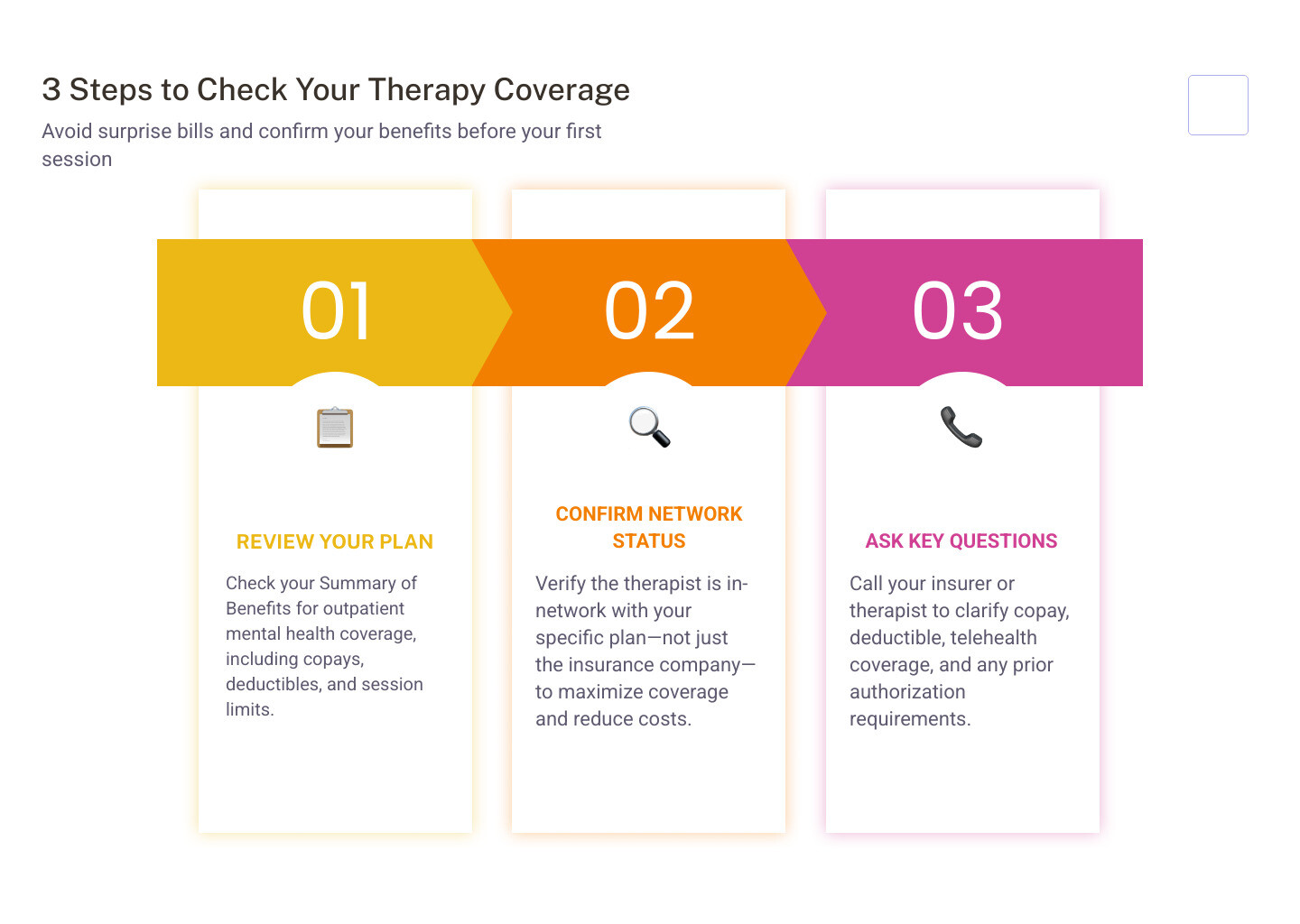
Before scheduling, take these three steps:
- Check your plan for outpatient mental health or behavioral health benefits.
- Confirm the therapist accepts your specific plan, not just the insurance company name.
- Ask about your copay, deductible, session limits, virtual visit coverage, and any referral or approval rules.
Federal mental health parity protections generally require covered mental health care to be treated comparably to medical care. Still, coverage does not always mean every therapist is available in network or every service is covered. A quick benefits check can prevent surprise bills and help you choose care that fits your needs.
Does insurance cover therapy terms to know:
- Coping with nervousness
- Online anxiety counseling
- Proven anxiety relief
How Does Insurance Cover Therapy Across Major Health Plans?
Navigating behavioral health benefits can feel overwhelming, yet millions of people rely on their health coverage each year to access outpatient mental healthcare. According to research on mental health access, nearly 1 in 5 U.S. adults live with a mental illness, and financial uncertainty remains one of the most significant reasons individuals delay care. Understanding Mental Health & Therapy: What Health Insurance Covers allows you to unlock valuable treatment without unexpected financial strain.
Health insurance coverage for psychotherapy is designed to share the cost of clinical care between the member and the insurance plan. While individual policies differ, standard plans generally include outpatient visits, individual psychotherapy, group counseling, and diagnostic evaluations within their behavioral health benefits.
Federal Parity Laws and Essential Health Benefits
Federal legislation provides the foundation for behavioral healthcare access across the country. For health plans subject to the Mental Health Parity and Addiction Equity Act, mental health benefits must be provided on equal terms with medical and surgical benefits. Under these parity rules, insurers cannot impose stricter financial requirements or more restrictive treatment limitations for mental health visits than for standard office visits.
In addition, the Affordable Care Act established mental health and substance use disorder services as an Essential Health Benefit. This means that individual and small group health plans cannot exclude mental healthcare from their basic coverage tiers. For an indepth legal overview of consumer protections and NQTL comparative analysis requirements, review Counseling Insurance Coverage: What Your Plan Pays. These regulations ensure that arbitrary session caps or disproportionately high out of pocket expenses for mental health treatment are prohibited by law.
Coverage Variations Across Employer, Marketplace, Medicare, and Medicaid Plans
While parity laws establish nationwide standards, your day to day coverage depends on the specific structure of your plan. Exploring therapy and insurance coverage helps clarify how different health plan categories deliver benefits:
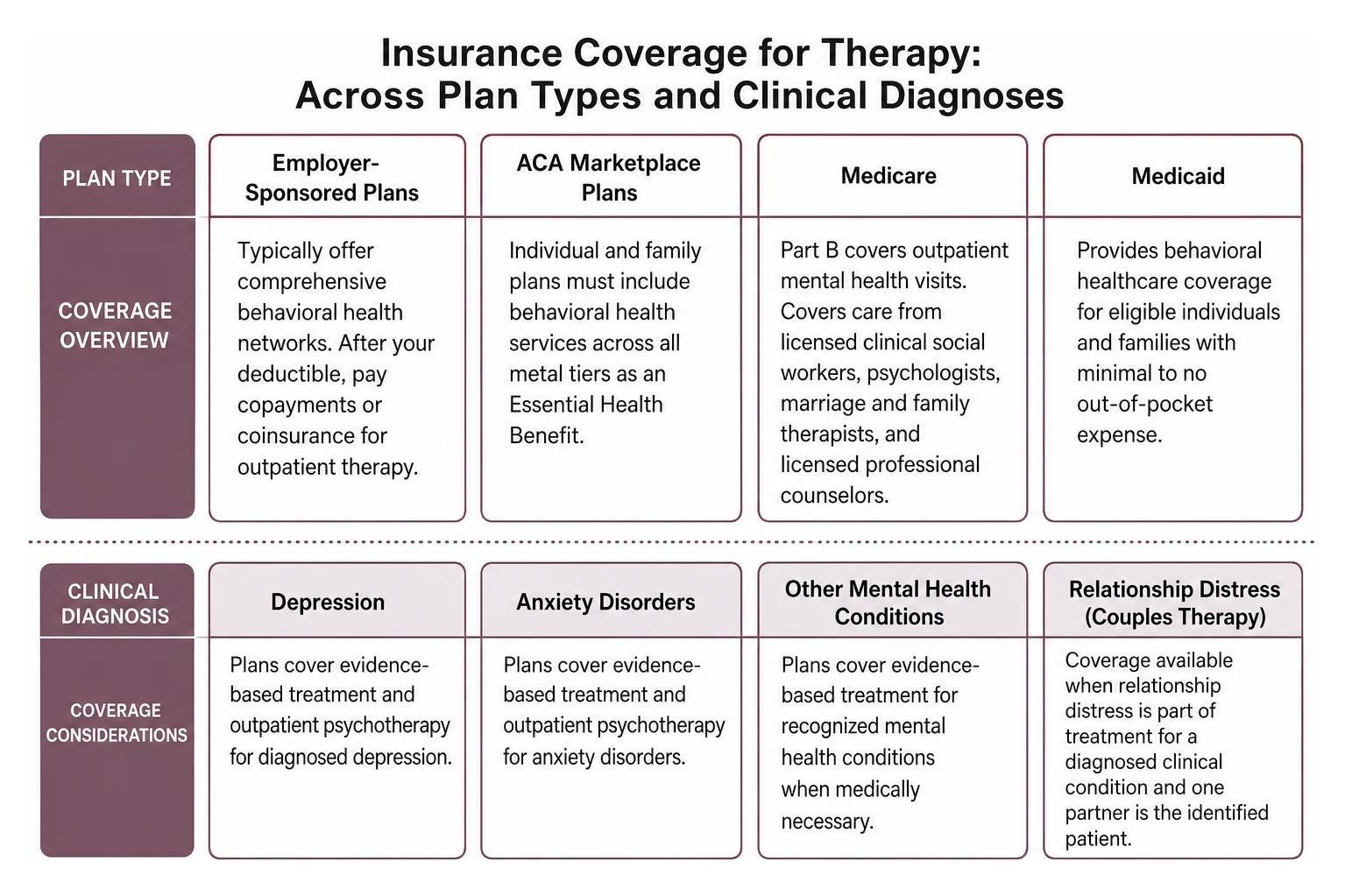
- Employer Sponsored Plans: Large employer plans typically offer comprehensive behavioral health networks. Cost sharing usually involves an annual deductible followed by fixed office visit copayments or percentage based coinsurance.
- ACA Marketplace Plans: Individual and family policies purchased through state or federal exchanges must include behavioral health services across all metal tiers.
- Medicare: Original Medicare Part B covers outpatient mental health visits, paying a substantial portion of the approved amount once the annual Part B deductible is met. Medicare also covers services delivered by licensed clinical social workers, psychologists, marriage and family therapists, and licensed professional counselors.
- Medicaid: State Medicaid programs provide behavioral healthcare coverage for eligible individuals and families, ensuring essential support with minimal to no out of pocket expense.
Does Insurance Cover Therapy for Specialized Diagnoses?
To utilize insurance benefits for therapy, the services provided must meet the standard of medical necessity. This means a licensed clinician must assess your symptoms and assign an appropriate diagnosis based on the Diagnostic and Statistical Manual of Mental Disorders.
Insurance plans routinely cover evidence based treatments for recognized conditions. For example, plans provide dedicated benefits for therapy for depression insurance as well as clinical support through therapy for anxiety insurance. Standard outpatient psychotherapy sessions are billed using specific procedural codes based on session length, such as standard individual sessions or initial diagnostic interviews.
When it comes to relationship counseling, policies handle billing differently. Many plans do not cover relationship enrichment or marital counseling purely for communication growth. However, when relationship distress is addressed as part of treatment for a diagnosed clinical condition, couples therapy insurance benefits may be utilized when one partner is the primary identified patient.
In Network vs Out of Network Therapy Costs and Billing

Choosing between an in network provider and an out of network provider represents the single largest factor in determining your overall session costs. In network therapists have signed contracts with your insurer, agreeing to accepted reimbursement rates. When you stay in network, your insurer covers the negotiated fee, leaving you responsible only for your designated copay or coinsurance once your deductible is satisfied.
Out of network clinicians do not have contracted rate agreements with your insurance company. If you choose an out of network therapist, you typically pay the provider directly at the time of service and may request an itemized receipt known as a superbill to submit for possible reimbursement.
| Benefit Feature | In Network Therapy | Out of Network Therapy |
|---|---|---|
| Contracted Rates | Negotiated rates apply | Provider sets independent rates |
| Upfront Payment | Member pays copay or coinsurance | Member often pays full fee upfront |
| Claim Submission | Provider bills insurance directly | Member submits superbills to insurer |
| Plan Deductible | Standard in network deductible applies | Higher out of network deductible applies |
| Out of Pocket Cap | Counts toward in network maximum | May have a separate, higher maximum |
Finding an available in network provider can sometimes require patience. In fact, a third of psychologists do not take insurance at all, leading many clients to explore the reasons therapists opt out of insurance. Furthermore, according to health access reports, therapy patients are reportedly far more likely than other specialists patients to end up seeing an out of network provider, underscoring the value of verifying network status beforehand.
Does Insurance Cover Therapy Conducted Online or via Telehealth?
Telehealth therapy has become a standard, highly effective method for receiving care. Modern insurance plans widely cover virtual sessions on terms comparable to in person office visits. Utilizing telehealth allows clients to connect with clinicians from the comfort of their home, eliminating commute times and expanding provider options.
Virtual care is particularly effective for managing everyday emotional wellbeing, including accessing specialized care such as therapy for stress insurance. Clinicians providing virtual care must be licensed in the state where the client is physically located during the session, ensuring professional standards and regulatory compliance are maintained.
Step by Step Guide to Verifying Your Therapy Insurance Benefits

Verifying your benefits prior to your first appointment ensures complete transparency and prevents administrative surprises. Follow this step by step process to confirm your coverage details:
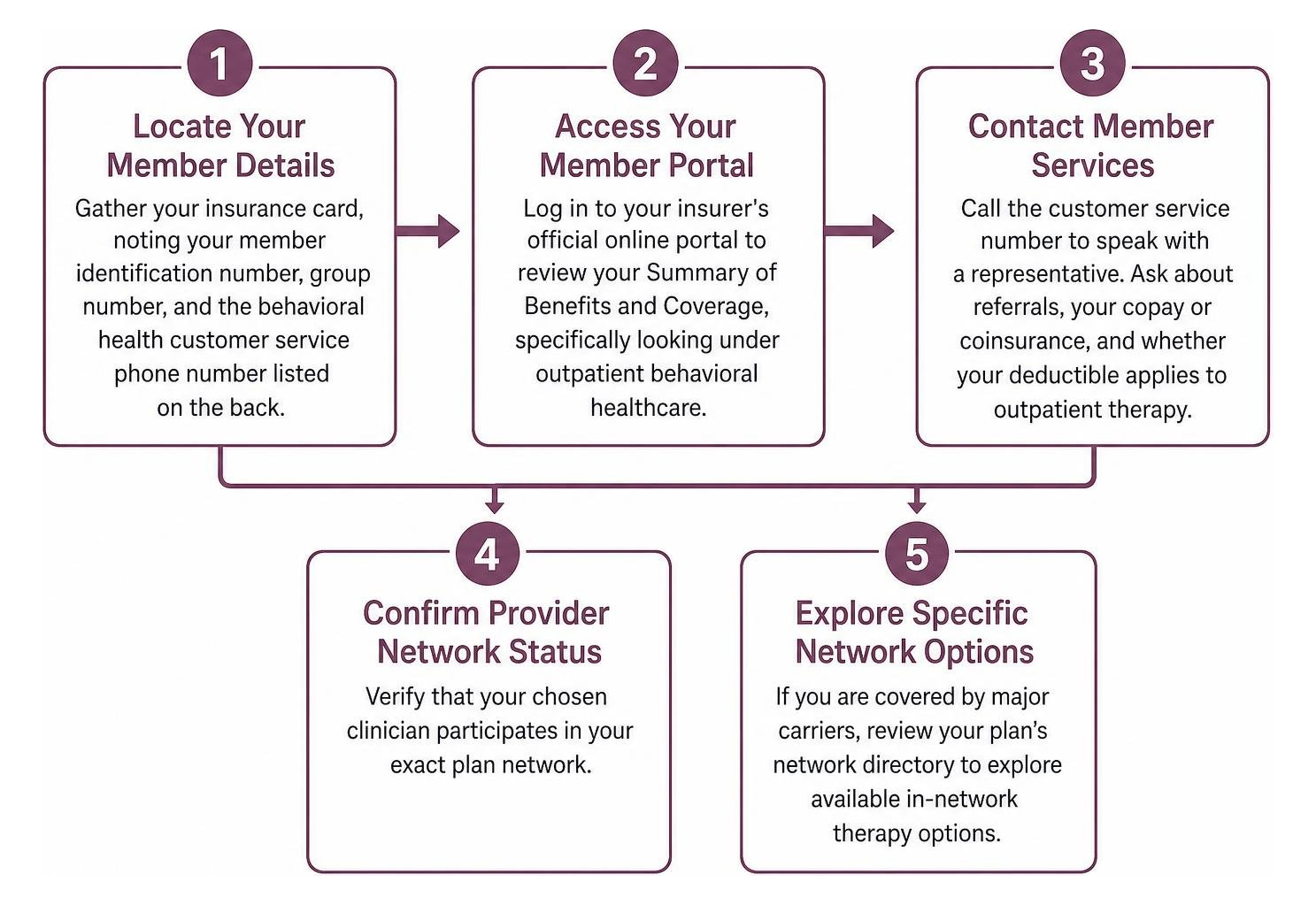
- Locate Your Member Details: Gather your insurance card, noting your member identification number, group number, and the behavioral health customer service phone number listed on the back.
- Access Your Member Portal: Log in to your insurer’s official online portal to review your Summary of Benefits and Coverage, specifically looking under outpatient behavioral healthcare.
- Contact Member Services: Call the customer service number to speak with a representative. Ask whether your plan requires a referral from a primary care physician, what your copay or coinsurance responsibility is, and whether your deductible applies to outpatient therapy.
- Confirm Provider Network Status: Verify that your chosen clinician participates in your exact plan network. For practical advice on locating the right provider, see our guide on finding a therapist that accepts your insurance.
- Explore Specific Network Options: If you are covered by major carriers, you can connect directly with specialists by reviewing options for United Healthcare therapist insurance, connecting with a Cigna therapist insurance professional, or exploring Kaiser therapist insurance resources.
What to Do If Your Claim Is Denied or Capped
If an insurance claim is denied or if an insurer questions the number of sessions requested, you have formal appeal rights under federal law. Follow these steps to resolve coverage disputes:
- Review the Explanation of Benefits: Identify the exact denial code or reason listed on your insurance statement.
- Request a Letter of Medical Necessity: Work with your treating therapist to obtain clinical documentation outlining why continued treatment is essential for your wellbeing.
- File an Internal Appeal: Submit a formal written appeal to your insurer within the standard window, including your clinical records and supporting statements.
- Request an External Review: If the internal appeal is upheld, request an independent external review through your state insurance regulator or behavioral health ombudsman.
Alternative Payment Options When Insurance Coverage Is Limited
When insurance coverage is limited, high deductibles create temporary hurdles, or you prefer not to use health insurance for privacy reasons, several flexible payment options can keep care accessible. Discover additional strategies in our guide to tips for finding affordable therapy.
- Health Savings Accounts (HSAs) and Flexible Spending Accounts (FSAs): These accounts let you use pretax earnings to pay for qualified medical expenses, including therapy copayments, coinsurance, and out of pocket session fees.
- Employee Assistance Programs (EAPs): Many employers provide confidential EAP benefits offering a set number of free counseling sessions per issue each year.
- Sliding Scale Fees: Some independent clinicians offer adjustable rates based on household income to support clients who are uninsured or underinsured.
- University Training Clinics: Graduate psychology and counseling departments often operate community clinics where supervised student interns provide high quality care on flexible payment schedules.
Frequently Asked Questions About Therapy Insurance Coverage
How much should I expect to pay out of pocket for an in network therapy session?
Your exact out of pocket cost depends entirely on your plan design. If your plan utilizes a copayment structure, you will typically pay a set dollar amount per visit once active. If your plan requires coinsurance, you will pay a percentage of the insurer’s contracted rate after meeting your annual deductible.
Why do some licensed therapists choose not to accept health insurance?
Some therapists opt out of insurance panels due to low reimbursement rates, extensive administrative requirements, or panel size restrictions set by insurers. Additionally, private pay arrangements allow clinicians and clients complete autonomy over treatment planning without requiring mandatory clinical diagnostic submissions to third parties.
Can I use pretax HSA or FSA funds to pay for therapy copays and deductibles?
Yes. Psychotherapy provided by a licensed mental health professional for the treatment of a mental or emotional condition is considered a qualified medical expense by the IRS. You can use your HSA or FSA debit card or submit itemized receipts for direct reimbursement.
Conclusion
Understanding your behavioral health benefits empowers you to prioritize your emotional health with confidence. Health insurance is designed to make professional care accessible, and taking a few proactive steps to verify your network status and cost sharing responsibilities ensures a smooth, stress free therapeutic experience.
At Collective Counseling Solutions, we simplify the process of connecting with compassionate, licensed clinicians who accept insurance for both in person and virtual therapy. When you are ready to begin your healing journey, find an in network therapist and take the first step toward lasting wellbeing today.