

Start Relationship Counseling Virtual Sessions With Less Hassle
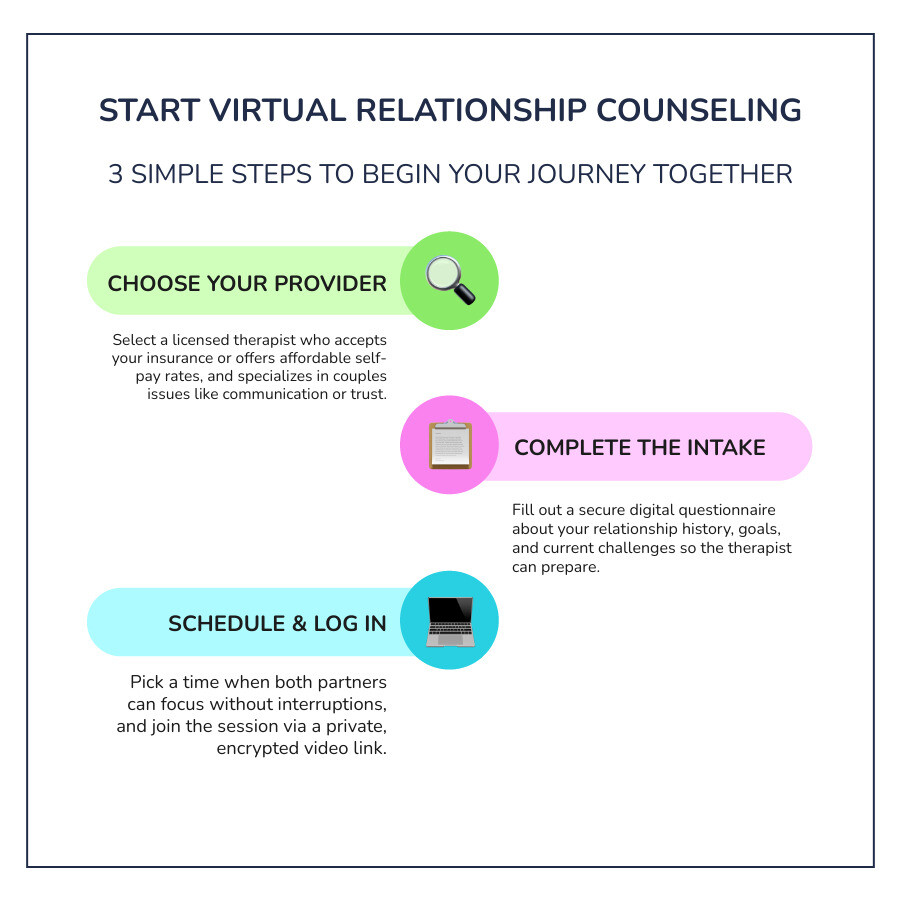
Relationship counseling virtual sessions let both partners meet with a licensed therapist by secure video from a private place that works for them. To get started, choose a provider that fits your insurance or payment needs, complete the intake form, and schedule a time when both partners can focus without interruptions.
Virtual care can reduce travel and make scheduling easier for busy couples. It can also expand your choices of therapists, including counselors with experience in communication problems, conflict, trust, or life changes. A good session gives each person time to speak, while the therapist helps the conversation stay fair, focused, and productive.
You will usually need a reliable internet connection, a device with a camera and microphone, and a quiet space. Virtual counseling may not be the right setting when there is violence, coercion, or an immediate safety crisis. In those cases, seek local emergency or specialized support.
Understanding Relationship Counseling Virtual Sessions: Formats and Structure
Virtual therapy provides a modern pathway for partners seeking to strengthen their bond. Instead of commuting to an office, couples log into secure telehealth platforms that support interactive video conferencing. This approach accommodates modern lifestyles while preserving the clinical rigor of traditional sessions.
The process typically begins with individual and joint intake assessments. These digital questionnaires give the therapist insight into your relationship history, personal goals, and current friction points. From there, appointments are conducted either with both partners sitting in the same room sharing a screen, or dialing in from different locations when work or travel schedules demand it. Clinicians often use screen sharing tools to review interactive relationship worksheets, communication exercises, and goal tracking charts in real time.
Some platforms also provide asynchronous messaging between scheduled appointments. This allows partners to reflect on discussions, ask quick questions, or log emotional insights in real time. Having access to ongoing support helps couples apply new insights during everyday interactions at home.
| Feature | Virtual Couples Therapy | Traditional In Person Therapy |
|---|---|---|
| Location Flexibility | Join from a private location where your therapist is legally permitted to provide telehealth services. | Must travel to a specific clinic |
| Commute Time | Zero travel time required | Requires dedicated transit and parking time |
| Scheduling Options | Broad evening and weekend availability | Limited to clinic operating hours |
| Therapist Selection | Access licensed professionals authorized to provide telehealth services in your state. | Restricted to local geographic radius |
| Multi Device Access | Partners can join from separate physical rooms | Both partners must appear in the same office |
| Privacy Control | Manage comfort within your own home | Shared waiting rooms with other clients |
Structuring Relationship Counseling Virtual Sessions for Success
Creating a successful virtual therapy routine requires thoughtful preparation. Establishing a comfortable physical environment and preparing your tech setup helps you focus entirely on the emotional work rather than troubleshooting connections.
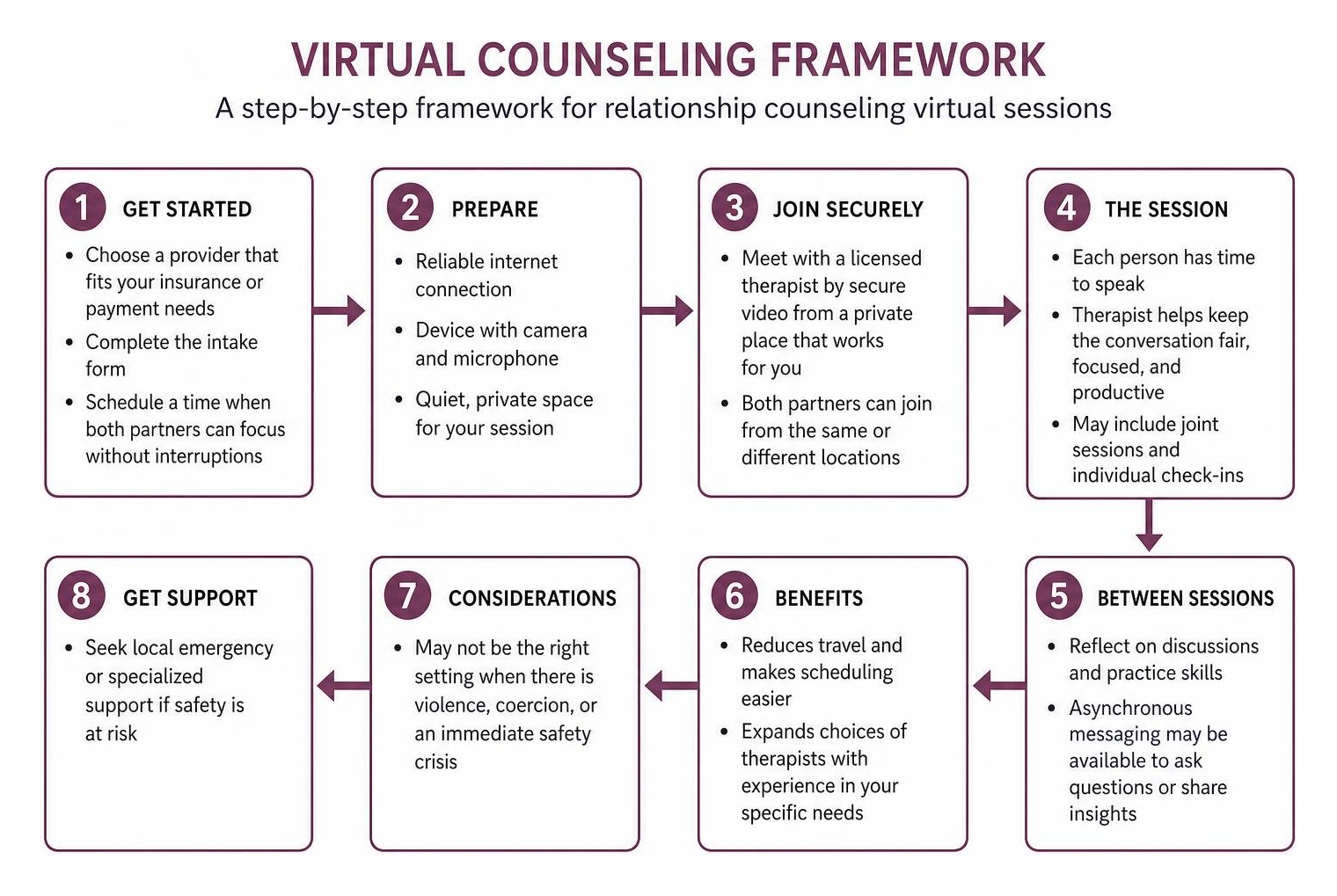
Before your first meeting, test your microphone, camera, and internet connection. Choose a well lit room where doors can be closed for complete privacy. Many couples benefit from reviewing simple tips to make virtual therapy work for you to optimize their space and mindset. Eliminating distractions like open browser tabs, household chores, or ambient noise creates an intentional space for meaningful connection.
Therapists often structure the process by holding joint sessions to observe interaction patterns, interspersed with occasional individual check-ins. This dual structure can help ensure that each individual has an opportunity to be heard while keeping shared relationship goals front and center.
Evaluating Session Length and Platform Capabilities
Session duration is an important consideration when selecting a care model. Some digital providers utilize shorter 30 minute sessions. While convenient for quick check ins, many couples find that brief timeframes feel rushed, leaving little room to untangle complicated emotional dynamics.
A standard 45 to 60 minute appointment offers the time needed for deep exploration of core issues. During these longer meetings, clinicians guide meaningful dialogue, observe body language, and assign practical exercises. To understand what these conversations look like, explore what happens in couples therapy as you prepare for your journey. Practicing collaborative tools outside the appointment reinforces clinical breakthroughs and builds lasting communication habits.
Key Benefits and Drawbacks of Virtual Couples Counseling

Selecting remote therapy comes with distinct advantages along with a few logistical considerations. Examining both sides helps you determine whether virtual care aligns with your shared goals.
Flexibility and Accessibility Advantages
The most apparent benefit of online care is sheer convenience. Couples no longer need to coordinate commute times, arrange childcare, or fight rush hour traffic to attend an appointment. If one partner travels frequently for work, multi location calling allows both people to dial into the same meeting seamlessly, ensuring consistency in care regardless of distance.
Virtual therapy also dramatically expands your access to specialized providers. Rather than settling for whoever is closest to your neighborhood, you can connect with clinicians experienced in couples therapy online across your state. This is especially helpful for couples seeking specific cultural competencies, LGBTQ+ affirming support, or niche relationship guidance that might not be available locally.
Technology Hurdles and When In Person Care Is Better
While teletherapy offers immense value, it has boundaries. Technical glitches, unstable broadband, or audio lags can occasionally disrupt the emotional momentum of a conversation. Furthermore, subtle nonverbal gestures like shifting posture, foot tapping, or gentle hand gestures may be harder for a therapist to track through a screen.
Virtual couples therapy may not be appropriate in situations involving active domestic violence, coercive control, severe crises, or significant safety concerns. A qualified professional can help determine whether individual treatment, specialized domestic violence services, crisis resources, or another form of care is safer and more appropriate. For relationships facing persistent arguments that feel difficult to manage remotely, understanding couples therapy conflict can help you identify when dedicated local support is best.
Therapeutic Methods, Security, and Costs

Virtual relationship counseling utilizes the same evidence based clinical modalities found in private offices. Therapists tailor these frameworks to help couples navigate life transitions, enhance intimacy, and rebuild mutual trust.
Evidence Based Methods: Gottman, EFT, and Cognitive Techniques
Licensed therapists rely on structured frameworks recognized by clinical research and professional organizations such as the American Psychological Association to help partners understand their relationship dynamics. Common methodologies include:
- The Gottman Method: Focuses on disarming conflicting verbal communication, increasing intimacy, respect, and affection, and removing barriers that create stagnation.
- Emotionally Focused Therapy (EFT): Helps partners identify their underlying attachment styles, uncover unmet emotional needs, and form secure emotional bonds.
- Cognitive Behavioral Couples Therapy (CBCT): Identifies negative thought patterns and behaviors that trigger distress, replacing them with constructive problem solving skills.
These clinical approaches place a heavy emphasis on couples therapy communication, teaching active listening and emotional deescalation. When betrayal has damaged the partnership, specialized frameworks help rebuild trust and connection through marriage relationship counseling by guiding couples through accountability and reconciliation.
Navigating Insurance, Pricing Models, and HIPAA Privacy
Confidentiality is a cornerstone of mental health care. Telehealth providers subject to HIPAA must use appropriate safeguards to protect patients’ health information and use technology vendors that comply with applicable HIPAA requirements. Patients can also improve privacy by attending sessions in a private location and using secure devices and networks.
When exploring financial structures, platforms generally operate on subscription models or pay per session structures. Many clients prefer working with practices that accept health insurance to help manage out of pocket costs. Verifying your coverage through couples therapy insurance resources ensures transparency, so you can focus on therapy without unexpected billing surprises.
Frequently Asked Questions About Online Relationship Therapy
How Effective Are Relationship Counseling Virtual Sessions Compared to In Person Therapy?
Research suggests that couples therapy delivered by videoconference can be an effective alternative to in-person care, with studies reporting improvements in relationship satisfaction and other outcomes. However, the research base for virtual couples therapy is still developing. Couples report significant improvements in relationship satisfaction, emotional connection, and conflict resolution skills. To learn more about common client experiences, review the most frequently asked questions about online therapy.
What Technology Do Couples Need for Remote Sessions?
You only need a reliable high speed internet connection, a computer, tablet, or smartphone with an integrated camera and microphone, and an up to date web browser or video conferencing application. Using headphones can improve audio clarity and keep your conversation completely private from others in your household.
How Do Therapists Maintain Neutrality in Video Sessions?
Experienced virtual clinicians are trained to manage screen dynamics actively. They track speaking time to ensure both partners receive equal attention, moderate interruptions, and encourage open dialogue without taking sides. Setting your camera so both partners are clearly visible helps the therapist read body language and maintain a fair, supportive environment.
Conclusion
Virtual relationship counseling provides a private, convenient, and effective path toward deeper understanding and lasting harmony. By eliminating the stress of travel and offering access to licensed clinicians, remote therapy empowers partners to invest in their shared future on their own schedule. Whether you are navigating communication roadblocks or seeking to strengthen an already solid foundation, dedicated support makes all the difference. Discover compassionate, professional care with Collective Counseling Solutions couples therapy and begin your journey toward relationship renewal today.