

Find the Right In Person Marriage Counseling Format
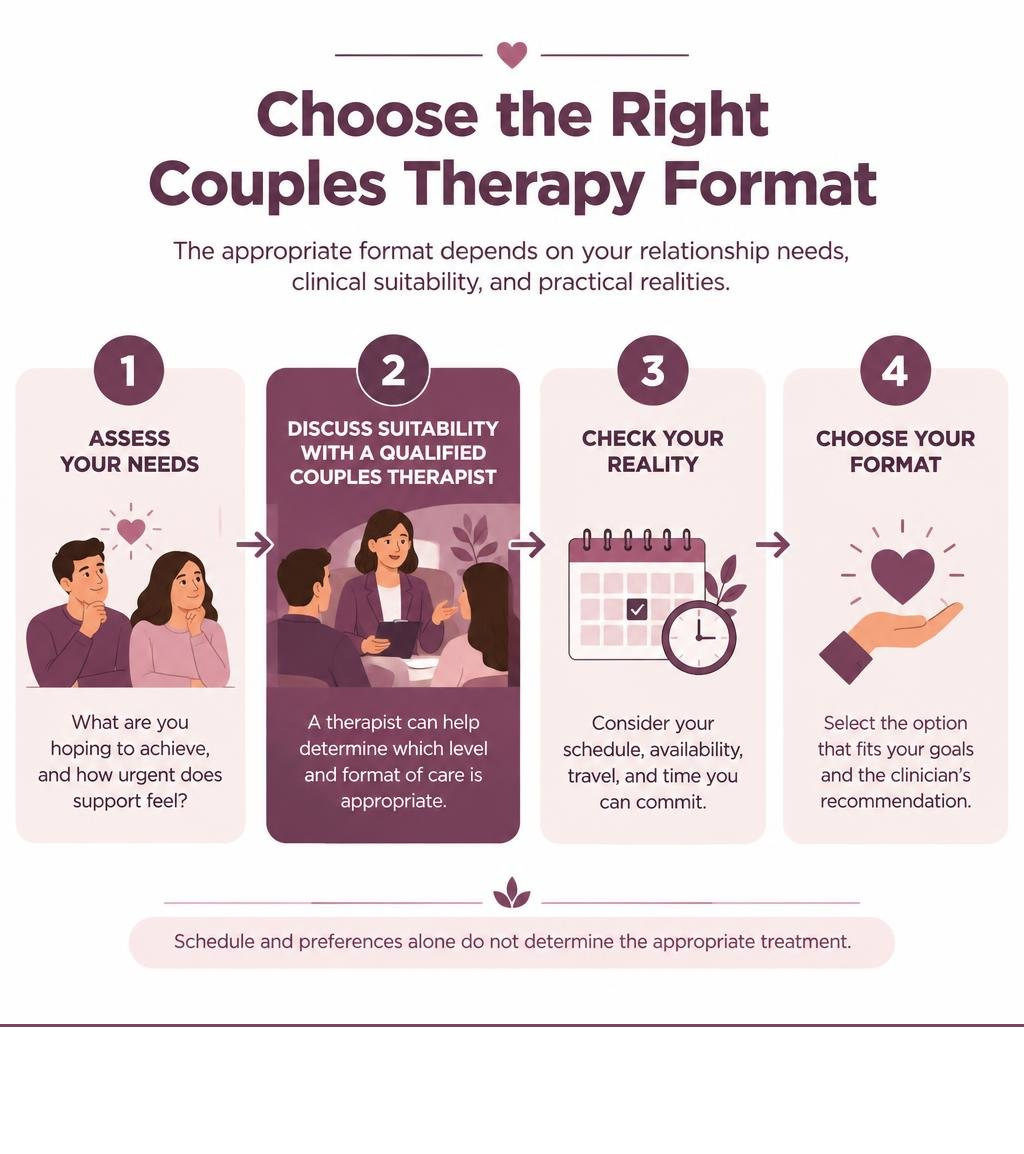
In person marriage counseling brings both partners into the same room with a licensed therapist to work on communication, conflict, trust, and connection. To choose the right format, start with your needs:
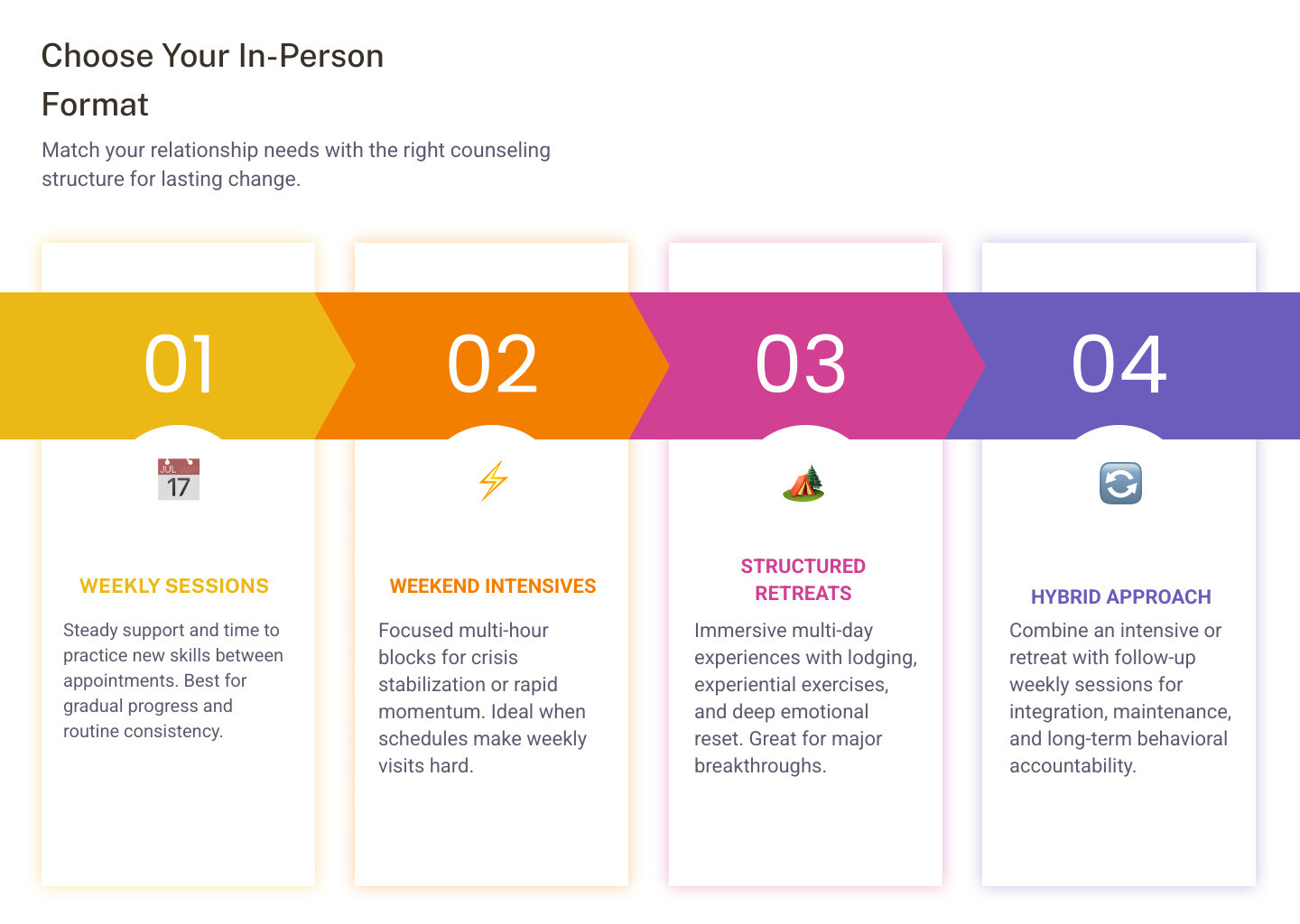
- Choose weekly sessions for steady support and time to practice new skills.
- Consider an intensive if your relationship needs focused help quickly or your schedule makes weekly visits hard.
- Look for a therapist whose approach, location, insurance options, and experience fit your goals.
Meeting face to face can make it easier for a therapist to notice body language, pauses, emotional overwhelm, and the ways partners respond to each other in real time. The office can also offer a neutral, private space away from work, home demands, and daily distractions.
Whether you are married, engaged, rebuilding after a painful event, or simply want a stronger relationship, the best format is the one you can attend consistently and use outside the session. While some couples consider couples counseling online, participating in dedicated marriage relationship counseling in an office provides distinct relational advantages.
The Core Benefits of In Person Marriage Counseling
Meeting in person allows the therapist to observe partners’ posture, gestures, tone, and interactions within a shared space. When conversations become overwhelming, the therapist can pause the discussion and help partners practice grounding, breathing, or other calming strategies. These techniques can also be adapted for online sessions.
Stepping into a dedicated therapeutic office can reduce household chores, children, work alerts, and the familiar triggers of home life. This distraction free environment signals to the nervous system that this time is uniquely reserved for relationship repair and emotional honesty. In this neutral space, real-time interventions help partners catch reactive cycles as they happen, creating immediate opportunities to practice repair and build lasting emotional security.
Formats: Traditional Sessions, Intensives, and Retreats
Couples have different scheduling realities, relational goals, and emotional urgency. Therapists offer various formats to meet these distinct needs, ranging from ongoing weekly appointments to accelerated immersive experiences.
| Counseling Format | Best Suited For | Typical Schedule | Key Advantages |
|---|---|---|---|
| Weekly Therapy | Ongoing skill building, steady habits. | 50 to 90 minutes weekly or biweekly | Gradual integration, weekly homework practice, steady containment |
| Couples Intensives | Seeking extended sessions for those assessed as suitable. Busy work or travel schedules | Extended sessions over one or more days; duration and staffing vary. | More uninterrupted time for assessment and therapeutic work. |
| Couples Retreats | Reconnection, premarital growth, structured relational education. | Multi-day group workshops with private breakout exercises. | Experiential learning, shared community perspective. |
Choosing Weekly In Person Marriage Counseling
Weekly sessions provide a dependable rhythm for couples who want steady progress and time to integrate new tools between appointments. This traditional structure allows partners to learn a communication technique in the office, practice it at home during daily interactions, and return the following week to discuss what worked and what felt challenging.
For couples seeking routine consistency and habit formation, specialized couples therapy offers a dedicated weekly checkpoint. This gradual pacing supports long term relationship maintenance, giving both people the space to process emotional insights without feeling rushed or overwhelmed by rapid change.
Immersive Weekend Intensives and Structured Retreats
When a partnership experiences acute distress or a sudden crisis, waiting a full week between fifty-minute appointments can feel agonizing. Intensives provide longer blocks of therapeutic time over a shorter calendar period. They may suit some couples, but progress varies, and ongoing sessions may still be needed.
Intensives may be used to address rebuilding trust after betrayal, navigating major life transitions, or breaking entrenched gridlock. By remaining in the therapeutic space for several consecutive hours, partners can move past surface defenses, stabilize heightened emotions, and achieve meaningful breakthroughs without the constant stopping and starting of traditional appointments. A therapist should assess whether joint sessions are appropriate, particularly when there is fear, coercive control, or violence. Separate support may be recommended.
Approaches Used in Couples Therapy
Licensed marriage counselors rely on research backed frameworks to guide couples toward lasting security. Rather than offering subjective advice, these modalities provide structured interventions grounded in psychology, attachment science, and neurobiology.

One widely utilized approach is the Gottman Method, developed from decades of research observing relational interactions. This framework focuses on strengthening the Sound Relationship House by dismantling harmful patterns known as the Four Horsemen: criticism, contempt, defensiveness, and stonewalling. Therapists guide couples in replacing these destructive habits with constructive dialogue, shared fondness, and mutual admiration.
Another prominent modality is the Psychobiological Approach to Couple Therapy, which blends attachment theory with neuroscience and nervous system regulation. Counselors observe physical posturing, voice tone, and facial cues to help partners move from defensive reactions into secure functioning. Similarly, the Intimacy from the Inside Out model applies internal family systems principles, helping each partner understand their own protective internal parts and cultivate compassionate communication. These frameworks empower couples to master healthy relationship communication and engage in constructive conflict management that strengthens their bond over time.
Preparing for Your First In Person Marriage Counseling Session
Starting counseling can evoke both hope and nervousness. Knowing what to expect during the initial intake helps both partners arrive feeling prepared and grounded. Prior to the appointment, you will typically complete electronic intake paperwork detailing your relationship history, individual backgrounds, and current concerns.
During the initial session, the therapist focuses on building relational safety, understanding your shared goals, and clarifying therapeutic boundaries. Many clinicians begin with a joint conversation, followed by brief individual check ins to learn more about each partner’s personal history, family background, and attachment style. To better understand the flow of these meetings, learning what happens in couples therapy can demystify the intake process. It is also beneficial to prepare key questions to ask regarding the therapist’s approach, experience, and confidentiality policies.
Handling Emotional Flooding and Vulnerability in the Room
Discussing sensitive topics often triggers emotional flooding, a state where the nervous system becomes overwhelmed and heart rates elevate, making it harder to listen, think clearly, and respond constructively. In an office setting, your therapist acts as an active co-regulator.
When flooding occurs, the clinician will pause the dialogue, introduce somatic de escalation tools such as grounding exercises and deliberate breathing, and ensure both individuals feel physiologically safe before continuing. Establishing structured timeout protocols inside the office teaches partners how to calm emotional reactivity safely at home.
Pre Commitment and Proactive Relationship Building
Counseling is not solely for relationships in distress. Many proactive couples seek guidance before marriage or cohabitation to build a resilient foundation. Attending premarital counseling sessions allows partners to explore shared values, financial goals, career ambitions, family expectations, and role distributions. Proactively addressing these fundamental topics equips couples with essential conflict resolution tools long before destructive habits form.
Navigating Costs, Insurance Coverage, and Logistics
Understanding the logistical and financial aspects of counseling ensures a smooth and transparent experience from the very first session.

Insurance may not cover counseling focused solely on relationship concerns. Coverage may apply when sessions are medically necessary to treat a covered mental health condition, depending on the plan. A superbill does not guarantee reimbursement. Confirm benefits, eligible services, and out of network requirements with your insurer before starting.
When booking appointments, always review the practice’s cancellation policies, intake requirements, and scheduling availability. Licensed clinicians hold state specific credentials, ensuring they adhere to rigorous professional and ethical standards within their jurisdictions.
Frequently Asked Questions About Couples Therapy
How do we know when it is the right time to seek counseling?
You do not need to wait for a major crisis to benefit from professional guidance. Signs that it is time to seek support include circular arguments that never reach resolution, lingering emotional distance, unaddressed resentments, or a desire to deepen intimacy. Reviewing resources on knowing when therapy is needed can help you identify subtle warning signs early, making relationship repair smoother and more effective.
Are all relationship types and structures supported in therapy?
Yes. Modern couples therapy provides an inclusive, affirming environment for all partnerships. Skilled therapists work with married couples, engaged partners, LGBTQ+ couples, blended families, and diverse relationship structures, tailoring evidence based tools to honor each unique relational dynamic with empathy and respect.
What follow up support is recommended after an intensive?
Completing an immersive multi-day intensive creates significant momentum, but lasting transformation requires intentional follow-up. Follow-up depends on the intensive program, your goals, and the therapist’s assessment. Ask whether ongoing sessions are recommended, how often they should occur, and who will provide them. These sessions reinforce newly established communication habits, review homework assignments, and help both partners stay accountable as they navigate daily life.
Conclusion
Investing in your relationship through face to face counseling offers a powerful pathway toward emotional reconnection, mutual understanding, and sustainable partnership habits. Whether you choose weekly sessions or an immersive multi day intensive, sitting in a neutral, supportive space with a licensed clinician allows you to break negative cycles and rediscover genuine closeness.
Collective Counseling Solutions can help you find a therapist. Ask individual providers about couples counseling, in-person availability, fees, and insurance eligibility. If you are ready to strengthen your partnership, schedule an in-person couples therapy session today to begin your journey toward lasting healing and connection.