

Couples Counseling Online
Couples counseling online lets partners meet with a licensed therapist by secure video from home, work, or separate locations. It can offer the same core support as office based therapy, including help with communication, conflict, trust, and shared goals, while making sessions easier to fit into a busy schedule.
For many couples, virtual care is a practical first step when stress, distance, or packed calendars make in person appointments difficult. Research on videoconferencing couples therapy suggests online relationship therapy can be as effective as face to face care for improving relationship satisfaction when both partners can engage openly and consistently, as shown in a study of couples therapy delivered through videoconferencing.
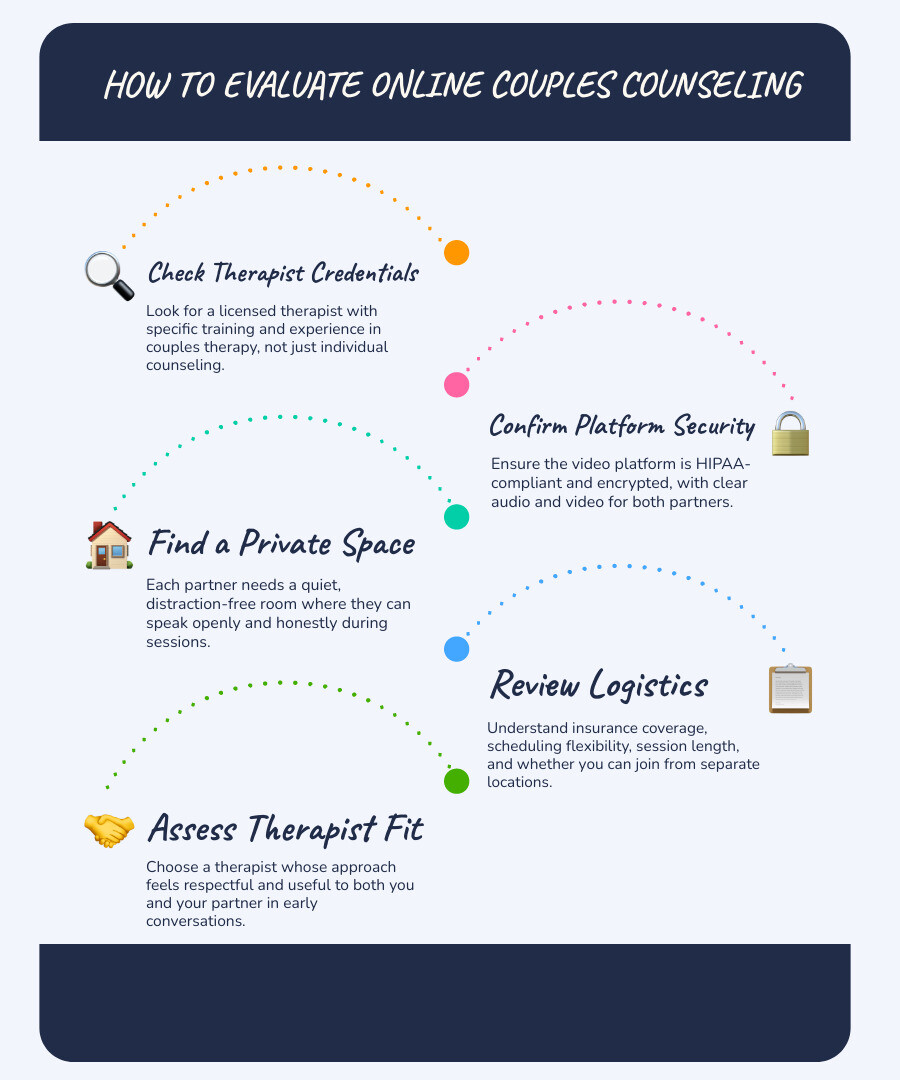
Before choosing a service, look for:
- A licensed therapist with couples therapy experience
- A secure video platform and a private place to talk
- Clear information about insurance, scheduling, and each partner’s role
- A therapist whose approach feels respectful and useful to both of you
Online care is not right for every situation, but it can be a supportive option for couples ready to work on their relationship with professional guidance.
Understanding How Couples Counseling Online Works
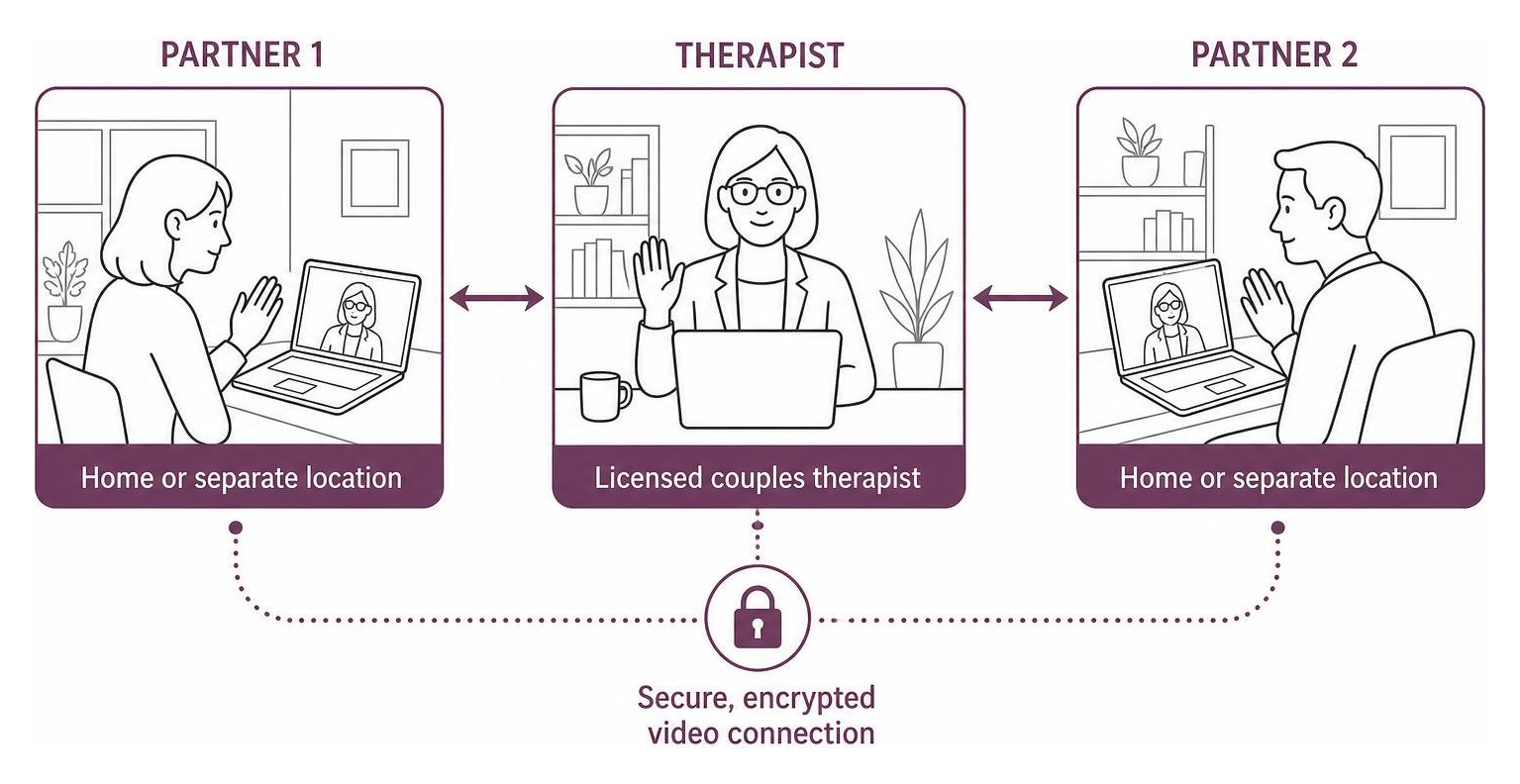
Virtual therapy brings the professional guidance of traditional therapy into a digital environment. Using encrypted telehealth platforms, partners can log into a virtual room alongside a qualified professional. This setting enables partners to address long standing disagreements, build emotional closeness, and restore mutual understanding without needing to travel to a physical clinic.
Through interactive video sessions, remote care offers unique flexibility. Partners who travel frequently or work differing shifts can participate together from separate locations. Digital intimacy grows as couples learn to discuss sensitive issues within the familiar surroundings of their own home. You can explore how these modern virtual settings operate by visiting the couples therapy online page.
Key Differences Between Teletherapy and In Person Sessions
While both options share identical goals for relationship improvement, the day to day experience differs in practical ways. Office settings provide a dedicated neutral environment free from household distractions. Virtual sessions, however, offer the comfort of home, which can reduce anxiety for partners who feel intimidated by clinical offices.
Therapists in traditional settings observe whole body posture and subtle movements. In teletherapy, therapists adapt by paying close attention to facial expressions, vocal tone, and eye contact through the screen. Understanding what do couples do in therapy can help contextualize how these interactions translate seamlessly across video feeds.
| Feature | In Person Sessions | Online Couples Counseling |
|---|---|---|
| Location | Therapist office | Home, office, or separate locations |
| Travel Required | Yes, commute to clinic | No travel required |
| Comfort Level | Neutral clinical setting | Familiar personal environment |
| Flexibility | Fixed scheduling around travel | Easier multi location access |
| Body Language | Full physical presence | Focus on facial cues and vocal tone |
Is Couples Counseling Online Right for Your Relationship?
Choosing between virtual or traditional care depends on your current relationship situation and personal goals. Couples experiencing mild to moderate conflict, communication breakdowns, or life transitions often flourish with remote sessions.
When evaluating suitability, partners should reflect on whether they have a private space to talk freely without children or roommates overhearing. Reading about how to know when it is time for therapy offers valuable guidance on assessing relationship readiness. Furthermore, understanding why attending therapy is healthy can help both individuals enter the process with open minds.
Effectiveness and Benefits of Virtual Therapy

Research on teletherapy outcomes for married couples suggests that couples counseling online can deliver outcomes comparable to traditional office appointments for relationship satisfaction, sexual satisfaction, and therapeutic alliance, according to a teletherapy and in person couple therapy outcomes study. Modern teletherapy platforms allow clinicians to implement proven clinical modalities, such as Emotionally Focused Therapy and the Gottman Method, with equal success online.
As digital health tools expand worldwide, couples gain access to specialized care that might not exist in their immediate geographic area. This expansion empowers partners to prioritize relationship care proactively.
Clinical Research and Success Rates
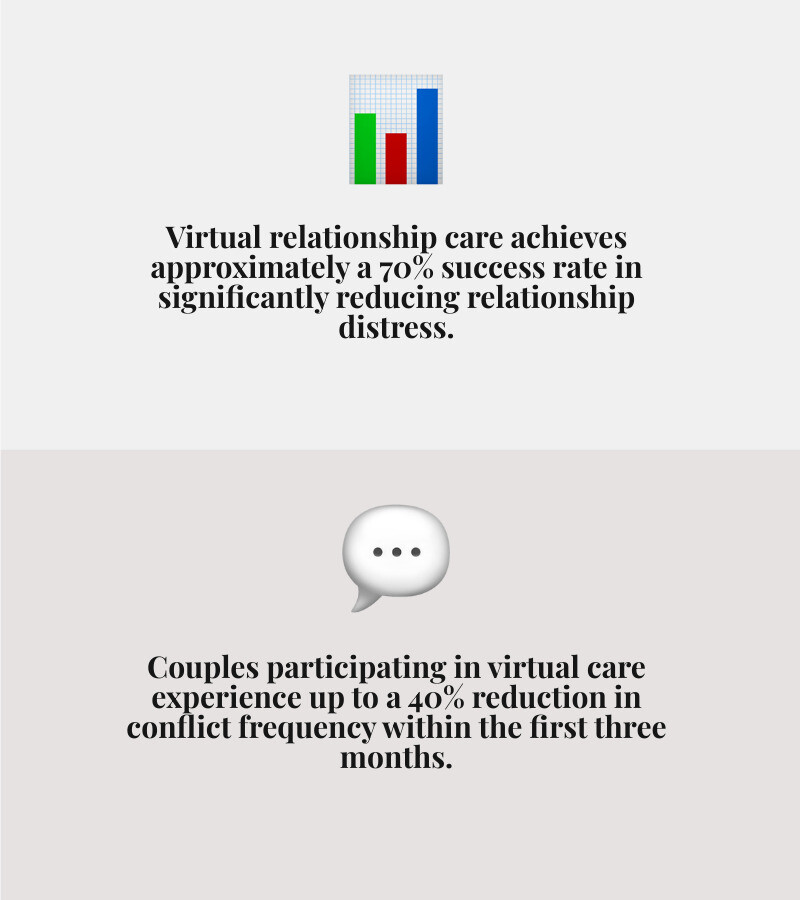
Clinical studies indicate that virtual relationship care can meaningfully reduce relationship distress and improve satisfaction. A randomized trial of the web based OurRelationship program found significant improvements in relationship satisfaction, confidence, and negative relationship quality compared with a waitlist group, as reported in the OurRelationship randomized controlled trial.
Videoconferencing research also suggests that online couples therapy can support positive change in relationship satisfaction, mental health, and therapeutic alliance. A study comparing videoconferencing with face to face therapy found both formats produced positive changes, with no significant differences between groups, according to research on couples therapy delivered through videoconferencing.
Advantages and Potential Drawbacks
The most prominent advantage of remote counseling is convenience. Partners save time on commuting and can fit sessions into busy workdays. Additionally, accessing care from home helps both individuals feel relaxed, encouraging deeper honesty early in the process.
Potential drawbacks primarily center around technology. Unstable internet connections, low audio quality, or video lag can interrupt delicate conversations. To minimize these friction points, couples can review simple tips to make virtual therapy work to optimize their technical setup and session preparation.
Selecting the Right Therapist and Technology Setup
Finding the right clinician and establishing a reliable technical arrangement form the foundation of successful remote therapy. A thoughtful approach to provider selection ensures that both partners feel supported and respected throughout their therapeutic journey.
A reputable clinical service will always prioritize patient privacy, user friendly technology, and transparent credentialing. Reviews and curated evaluations, such as those found in comprehensive resources on the best online couples therapy platforms, emphasize the value of vetting platforms for safety and quality.
Technical and Privacy Requirements for Virtual Care
To maintain strict privacy and high clinical standards, virtual relationship sessions should use secure telehealth platforms that protect health information. Federal telehealth guidance explains that providers should use technology vendors that meet HIPAA requirements and enter into appropriate business associate agreements, as outlined in HHS guidance on HIPAA rules for telehealth technology.
A successful session requires:
- High speed internet with adequate bandwidth for video streaming
- A private, quiet room with a closeable door
- A computer or tablet with a working camera and microphone
- Headphones or earbuds to enhance audio clarity and privacy
Key Features to Look for in Couples Counseling Online

When selecting a therapist, verify that the practitioner holds active state licensing and specialized training in relationship systems. A provider experienced in working with couples understands how to manage complex dynamics over video without letting one voice dominate the conversation.
Partners should prepare thoughtful questions before their initial intake. Reviewing potential questions to ask in couples therapy helps clarify the practitioner’s therapeutic methodology, experience level, and session policies.
Issues Addressed and Session Expectations
Virtual counseling effectively addresses a broad spectrum of relationship concerns. Clinicians guide couples through structured conversations that foster empathy, repair emotional ruptures, and build practical problem solving strategies.
Whether a couple seeks to enhance everyday interactions or heal after significant strain, remote sessions offer a safe space to work through challenges systematically.
Core Relationship Issues Best Addressed Online
Online care excels at addressing core relational dynamics, including:
- Communication Skills: Learning non defensive expression and active listening techniques through the couples therapy communication page.
- Conflict Resolution: De escalating patterns of argument and finding middle ground via the couples therapy conflict page.
- Premarital Preparation: Establishing foundational alignment on finances, family, and roles using the couples therapy premarital page.
- Infidelity Recovery: Rebuilding trust and understanding root causes with help from the couples therapy infidelity page.
What Happens During a Virtual Session and Cost Breakdown
During a standard virtual session, the therapist welcomes both partners into the secure room and sets an agenda. The session typically involves reviewing homework exercises, discussing recent interactions, and practicing new communication techniques in real time. To learn more about standard session structures, consult this guide on what happens in couples therapy.
Financial considerations vary depending on coverage. Many health insurance plans cover teletherapy similarly to office visits. Couples should check their benefits or visit the couples therapy insurance page to understand how insurance applies to virtual relationship care.
Frequently Asked Questions
How effective is virtual counseling compared to in person therapy?
Clinical research confirms that virtual couples care delivers outcomes equivalent to in person therapy. Success relies heavily on active participation, mutual commitment, and the clinical expertise of the therapist rather than physical location.
Is online relationship therapy covered by health insurance?
Many behavioral health insurance plans cover teletherapy for couples. Coverage depends on your specific insurance policy, provider network, and local state mandates. Verifying your plan details prior to the first session helps ensure smooth reimbursement.
Can partners join video sessions from different locations?
Yes, standard telehealth platforms easily support multi location logins. This enables partners who are traveling, working in separate offices, or living apart to join the same secure session with their therapist without difficulty.
Conclusion
Evaluating couples counseling online is a proactive step toward building a stronger, healthier partnership. Virtual therapy offers flexibility, proven effectiveness, and comfortable access to experienced care from the privacy of home.
By choosing a qualified therapist, ensuring a private technological setup, and committing to open communication, partners can heal distance, resolve recurring conflict, and deepen emotional intimacy.
If you are ready to explore supportive relationship care tailored to your schedule, connect with experienced clinicians through the main couples therapy page or find a matching professional on the find a therapist page. Collective Counseling Solutions connects partners with licensed therapists who accept insurance, simplifying access to high quality care for long term healing.