

How Relationship Therapy for Intimacy Issues Can Help You Reconnect
Relationship therapy for intimacy issues helps couples understand what is blocking closeness, talk about needs without blame, and rebuild safety step by step. Start by naming the pattern you are stuck in, such as one partner pursuing connection while the other pulls away. Then practice calm conversations, nonsexual affection, and shared time that feels positive rather than pressured.
Intimacy is more than sex. It includes feeling emotionally safe, enjoying physical closeness, and sharing thoughts, values, and experiences. Stress, anxiety, parenting, major life changes, past trauma, betrayal, and different levels of desire can all make these areas harder.
The good news is that intimacy concerns are common and treatable. Couples therapy can help partners move from conflict and distance toward clearer communication and a stronger bond. For concerns involving pain, arousal, orgasm, or other sexual functioning challenges, a certified sex therapist may be an important part of care.
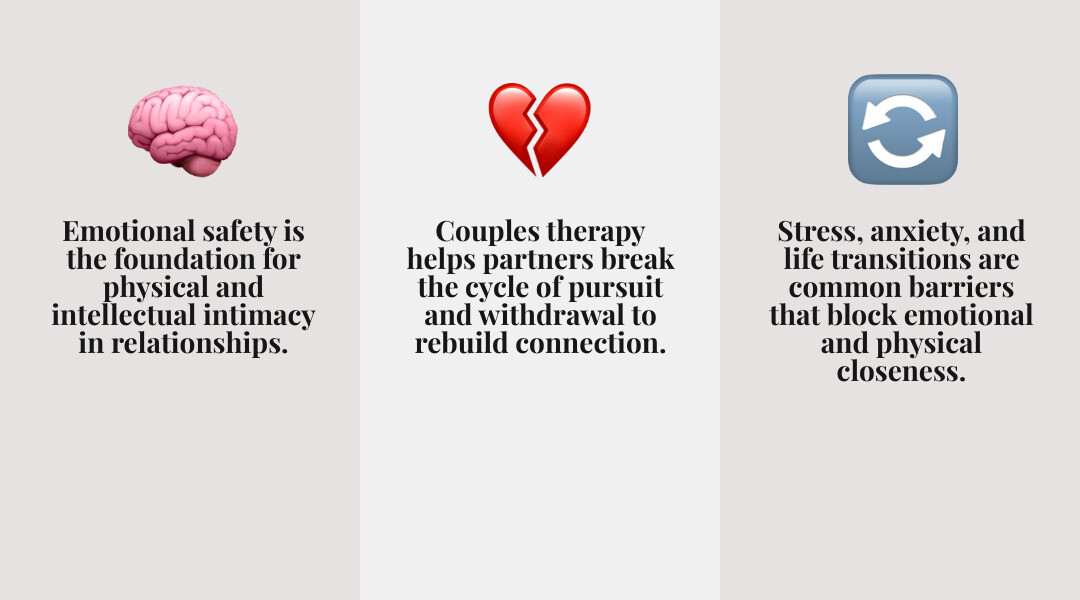
Basic relationship therapy for intimacy issues vocab:
Understanding the Root Causes and Layers of Intimacy Breakdown
When emotional warmth or physical affection fades, partners often wonder what went wrong. Intimacy does not usually disappear overnight. Instead, it slowly unravels across several interconnected layers. Attachment theory suggests that early relationship experiences can influence how adults navigate vulnerability, safety, and affection, although attachment patterns can also be shaped by later relationships and life experiences. Recognizing these patterns is a vital first step, and recognizing when to seek couples therapy allows partners to address distress before resentment solidifies.
Intimacy operates across three primary dimensions:
- Emotional intimacy: The shared sense of psychological safety where partners can reveal their deepest fears, dreams, and vulnerabilities without fear of rejection.
- Physical intimacy: The full spectrum of touch, ranging from hand holding, gentle hugs, and kissing to sensual touch and sexual closeness.
- Intellectual and experiential intimacy: The connection formed through stimulating conversations, shared values, collaborative problem solving, and enjoyable mutual activities.
When a breakdown occurs in one area, the other layers typically feel the strain. For instance, when emotional safety weakens, physical touch can start to feel transactional or overwhelming. Conversely, a prolonged absence of physical affection can lead one or both partners to doubt their emotional value to each other.

The Impact of Anxious and Avoidant Attachment on Closeness
Adult attachment styles strongly influence how each partner seeks closeness and handles conflict. When both individuals operate from a secure attachment base, they view vulnerability as a natural path to connection. However, insecure attachment styles can create significant friction in both emotional and physical intimacy.
Partners with an anxious attachment style often fear abandonment and crave frequent reassurance. When they sense emotional distance, they may become hypervigilant, demanding connection or expressing frustration. This reaction is fundamentally a protest against perceived disconnection.
In contrast, partners with an avoidant attachment style tend to manage overwhelm by emotionally shutting down or physically retreating. They may equate intimacy with a loss of autonomy. When an avoidant partner withdraws, the anxious partner often pursues more intensely, creating a painful cycle that diminishes emotional closeness and sexual satisfaction for both.
How Stress, Life Transitions, and Betrayal Erode Connection
External stressors frequently disrupt the emotional equilibrium of a partnership. Navigating demanding careers, caring for aging parents, or managing the exhaustive responsibilities of parenthood can leave little energy for romantic connection. According to the Surgeon General’s parental stress statement, modern caregiving demands can create significant chronic pressure, which often shifts couples into functional managers rather than romantic partners. In such moments, engaging in therapy for chronic stress can help individuals offload tension before it harms the relationship.
Life transitions, such as welcoming a new child, moving homes, or adjusting to health shifts, also alter relationship dynamics. Furthermore, emotional or physical betrayals introduce deep attachment injuries that shatter relational safety. When trust is broken, physical closeness often feels unsafe or triggering. In these instances, navigating recovery after infidelity requires targeted professional guidance to unpack the breach, establish healthy boundaries, and rebuild safety from the ground up.
How Relationship Therapy for Intimacy Issues Helps Couples Reconnect
Therapy provides a structured, nonjudgmental environment where couples can resolve recurring arguments and understand the underlying needs driving their behaviors. Intimacy concerns are common among couples and can contribute to loneliness and relationship dissatisfaction when they remain unresolved. Left unaddressed, these issues can lead to profound loneliness within the relationship.
In therapeutic settings, clinicians assist partners in recognizing that disconnection is rarely a result of falling out of love. Rather, it is a byproduct of unhelpful relational patterns and unexpressed attachment fears. By slowing down interactions, partners learn to access their softer, primary emotions such as sadness, fear, and longing rather than reacting with secondary emotions like anger or cold silence.

How Emotionally Focused Therapy Works as Relationship Therapy for Intimacy Issues
Emotionally Focused Therapy is an evidence-based modality designed specifically to resolve attachment distress. Research on Emotionally Focused Therapy has found that approximately 70% to 75% of distressed couples in some studies moved from distress to recovery, although outcomes vary among couples and studies.

EFT conceptualizes relationship distress through the pursuer and withdrawer cycle:
- Trigger: An event occurs, such as a partner being late or declining an invitation for physical closeness.
- Perception: One partner interprets this as rejection or unimportance; the other interprets subsequent comments as criticism or inadequacy.
- Unmet Attachment Need: Both partners experience a fundamental threat to security, longing for acceptance and reassurance.
- Protective Reaction: The anxious partner pursues with complaints or demands, while the avoidant partner withdraws into silence or work.
- Reinforced Pattern: The withdrawal reinforces the pursuer’s fear of abandonment, while the pursuit confirms the withdrawer’s fear of failure.
Through EFT, a therapist helps the couple step outside this loop. Partners learn to map the cycle together, identifying the cycle itself as the common adversary rather than each other. As emotional safety is restored, vulnerability becomes easier, paving the way for natural physical and emotional closeness.
Assessing If You Need Relationship Therapy for Intimacy Issues or Sex Therapy
Couples often wonder whether they should pursue generalized couples counseling or specialized sex therapy. While both modalities aim to enhance connection, their primary focus areas differ based on the underlying concerns.
| Focus Area | Couples Therapy | Certified Sex Therapy |
|---|---|---|
| Primary Target | Relational dynamics, emotional safety, communication, conflict resolution. | Sexual concerns such as desire differences, arousal or orgasm difficulties, sexual pain concerns, sexual anxiety, and sexual communication. |
| Common Issues Addressed | Constant arguing, emotional distance, betrayal, life transitions, parenting stress. | Painful intercourse, arousal difficulties, orgasm concerns, performance anxiety, sexual trauma. |
| Typical Interventions | EFT cycle mapping, active listening, attachment repair exercises, value alignment. | Sensate focus exercises, somatic awareness, psychosexual education, pelvic health coordination. |
| When to Choose | When intimacy issues stem primarily from emotional disconnection or ongoing relationship conflict. | When physical intimacy is blocked by specific functional challenges or severe sexual anxiety. |
When sexual concerns may have a physical or medical cause, a therapist may recommend evaluation or coordinated care with an appropriate healthcare provider.
In many cases, partners benefit from a collaborative approach where a couples therapist repairs relational security while a certified practitioner helps them address specific physical obstacles. When exploring options, consulting resources on entering couples sex therapy can offer a clear perspective on what to expect.
Evidence Based Counseling Techniques to Restore Closeness
Restoring connection requires intentional, consistent effort outside the counseling office. A therapist serves as a guide, but true transformation happens as partners integrate structured exercises into their daily lives. By exploring understanding what happens in therapy sessions, partners can prepare themselves for practical, experiential homework that deepens their mutual love maps.
Intentional Delight and Behavioral Appreciation
Intentional Delight is a practical behavioral exercise derived from attachment informed counseling. In this technique, each partner creates a list of small, specific actions that make them feel appreciated, seen, or cared for. These actions must be concrete and manageable, such as bringing a morning beverage, offering a spontaneous six second hug, or sending an encouraging midday note.
To make the exercise engaging, couples often track positive moments throughout the week using physical tokens, such as placing colored beans or glass beads into a shared jar whenever they notice an act of kindness. This playful game trains the brain to look for positive behaviors rather than focusing on shortcomings. At the end of the week, partners review the jar together, expressing gratitude and discussing how those small gestures fostered warmth and security.
Structured Date Nights and Shared Family Goals
Reigniting romantic interest requires setting aside dedicated, distraction free time. The structured Date Night framework helps couples break out of routine logistics and rediscover each other as individuals.
- Alternating ownership: Partners take turns planning dates without requiring input from the other, reducing decision fatigue.
- Novel experiences: Trying new activities together can add novelty to the relationship and create opportunities for shared positive experiences.
- Banned topics: Logistics, household chores, finances, and parenting discussions are set aside during these dedicated hours.
Alongside date nights, establishing a shared Family Mission and value driven goals fosters deep intellectual and emotional alignment. When couples write down their overarching values, mutual financial visions, and personal growth aspirations, they transform from parallel individuals into unified teammates working toward a meaningful future.
Overcoming Desire Discrepancy and Communication Barriers
One of the most common concerns brought to therapy is desire discrepancy, where one partner experiences a higher or different appetite for physical closeness than the other. Differing desire levels are entirely normal and do not mean a relationship is incompatible. However, when treated as a personal rejection or an obligation, desire differences can quickly breed shame, guilt, and resentment. Learning effective tools for improving relationship communication enables couples to discuss their physical needs without pressure or defensive reactions.
Spontaneous vs. Responsive Desire Dynamics
A frequent source of misunderstanding is the difference between spontaneous and responsive desire models.
- Spontaneous desire: An internal, unexpected drive for physical intimacy that emerges out of nowhere, often more common in the early phases of dating.
- Responsive desire: A sexual response that emerges in reaction to an external stimulus, emotional safety, relaxation, or gentle, non demanding touch.
In many partnerships, one person experiences responsive desire and mistakenly assumes something is wrong with them because they do not feel spontaneous urges. When partners understand responsive desire, they can remove the pressure of immediate arousal. Intimacy can begin with relaxation, emotional warmth, and nonsexual touch, allowing desire to build naturally at its own pace.
Rebuilding Emotional Safety Through Gentle Dialogue
Improving communication about sensitive topics like physical intimacy requires psychological safety. Couples can practice specific conversational frameworks to reduce defensiveness:
- Utilize clear “I” statements: Frame feelings around personal experiences rather than partner actions. Saying “I feel lonely when we do not share touch” prevents the defensiveness caused by “You never touch me.”
- Practice reflective listening: Repeat back what the other person shared to verify understanding before offering a response.
- Implement gentle boundaries: Both partners must feel confident that their boundaries are respected. Knowing that an embrace will not automatically lead to expectations of sex creates safety for frequent, affectionate nonsexual touch.
Frequently Asked Questions About Relationship Therapy
Can relationship therapy help if physical intimacy has been absent for years?
Yes. Even after prolonged periods of physical disconnection, couples can rebuild warmth by addressing underlying emotional injuries. Therapy begins by establishing emotional security and lowering expectations of immediate sexual encounters. By focusing on gentle communication and rebuilding trust and connection, partners gradually reintroduce low pressure physical touch, such as holding hands or shared cuddles, allowing physical closeness to return organically.
How does untreated anxiety affect intimacy in relationships?
Untreated anxiety can severely inhibit intimacy by keeping the nervous system in a constant state of hypervigilance. Individuals navigating high anxiety often struggle with performance worries, overthinking, and physical tension that makes it difficult to remain present during vulnerable moments. Working with a clinician for managing anxiety in relationships can help partners regulate their physiological stress responses, quiet mental distractions, and cultivate the calm presence necessary for genuine emotional and physical connection.
Is online couples counseling effective for working through intimacy concerns?
Research suggests that couples therapy delivered by videoconference can be an effective option, with some studies finding outcomes comparable to face-to-face treatment. In fact, many partners find that discussing vulnerable topics from the comfort of their own home reduces performance anxiety and fosters greater honesty. Choosing convenient online couples counseling offers scheduling flexibility while connecting partners with skilled clinicians who specialize in attachment and intimacy repair.
Conclusion
Intimacy issues are not an indicator that a relationship is broken beyond repair. Instead, they serve as a signal that the emotional foundation between partners requires care, understanding, and intentional maintenance. By understanding adult attachment styles, dismantling destructive pursuer and withdrawer patterns, and implementing practical communication tools, couples can rediscover the joy of emotional and physical closeness.
Rebuilding deep intimacy takes patience, vulnerability, and consistent guidance. Collective Counseling Solutions simplifies access to licensed, compassionate therapists who accept insurance and specialize in helping couples heal relational wounds. Whether meeting virtually or in person, professional support provides the safe framework needed to transform emotional distance into lifelong connection. When you are ready to take the first step toward lasting closeness, explore personalized couples therapy and begin your journey toward renewal together.