

Find Depression Therapy Providers Who Accept Your Insurance
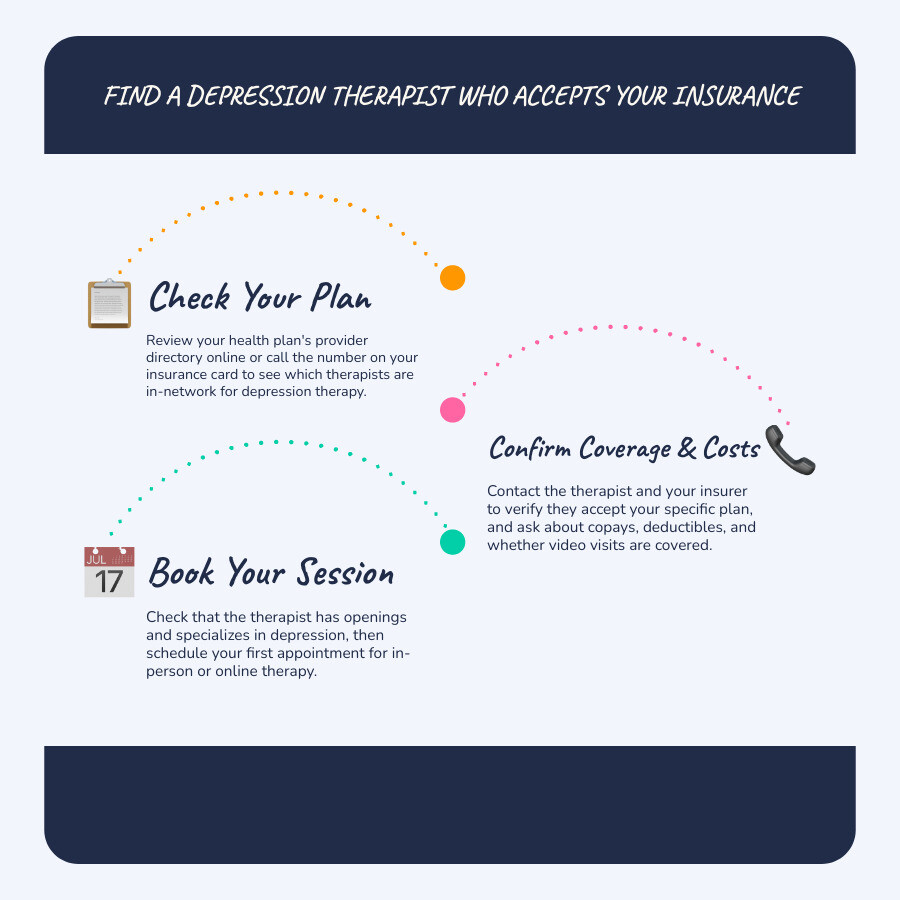
To find depression therapy providers accepting insurance, start with your health plan’s provider list. Contact a few therapists who treat depression, then ask both the therapist and your insurer to confirm that the therapist accepts your specific plan. Check your costs, whether video visits are covered, and whether the therapist has openings before you book.
Most health plans cover therapy for depression, but coverage and costs vary. Collective Counseling Solutions helps clients connect with licensed therapists who accept insurance for in person or teletherapy sessions, providing access to evidence based treatment for depression and proven therapy interventions for depression.
Understanding How Insurance Covers Depression Therapy
Navigating health coverage for mental health care can feel overwhelming, but modern regulations make accessing support much more straightforward. People often wonder: Does insurance cover therapy? Many health plans are subject to mental health parity protections, which generally prevent them from applying more restrictive financial requirements or treatment limits to mental health benefits than to comparable medical and surgical benefits. Marketplace plans must cover mental health services, but parity laws alone do not require every health plan to cover every type of treatment. Medicare follows separate coverage rules. This means insurance companies cannot place harsher financial restrictions, such as disproportionately higher copayments or separate deductibles, on mental health treatments than on physical health services.
Health insurance plans evaluate counseling through the lens of medical necessity. Individual counseling for depression may be covered when it meets your plan’s medical-necessity criteria and other coverage requirements. A clinician’s assessment supports the claim, but payment also depends on factors such as covered benefits, provider eligibility, network participation, and any required authorization. Understanding the scope of covered mental health services helps you advocate for your care and choose the best path forward.
| Plan Type | Mental Health Benefits | Common Out of Pocket Structure | Referral Requirements |
|---|---|---|---|
| Employer Sponsored Plans | Many cover outpatient mental health treatment; benefits and applicable parity protections vary | Copayment, deductible, and/or coinsurance | Check the specific plan’s behavioral health rules |
| ACA Marketplace Plans | Mental health services are essential health benefits | Copayments, deductibles, and/or coinsurance | Vary by plan |
| Original Medicare Part B | Covers eligible outpatient psychotherapy and an annual depression screening | Treatment generally has 20% coinsurance after the Part B deductible; qualifying screening has no cost when the provider accepts assignment | Usually no referral; Medicare Advantage rules may differ |
| Medicaid | Benefits and provider networks vary by state and program | Often little or no cost sharing; confirm your program | Vary by state and plan |
Private Health Plans, Medicare, and Medicaid Coverage Differences
Several psychotherapy approaches have evidence supporting their use for depression. Insurance may cover these approaches when delivered as a covered psychotherapy service, but payment depends on your plan’s rules, medical necessity, and the clinician’s network participation.:
- Employer-Sponsored and Private Plans: Many employer-sponsored and individual health plans are subject to federal mental health parity requirements, although exceptions apply. Check your plan documents for covered services, network rules, and any authorization requirements. Enrollees typically have access to outpatient psychotherapy, psychiatric evaluations, and group therapy. Depending on whether your plan is a preferred provider organization or a health maintenance organization, you might have out-of-network options or require a primary care clinician to authorize specialized care.
- Affordable Care Act Plans: All individual and small group plans purchased through state or federal exchanges must include behavioral health care as an Essential Health Benefit. These plans cannot deny coverage or charge higher premiums for pre-existing mental health conditions.
- Medicare Part B: Federal Medicare covers outpatient mental health services through Part B. Part B covers one depression screening each year in a primary care setting that can provide follow-up treatment and referrals. You pay nothing for the screening when the provider accepts Medicare assignment; it does not have to occur during an Annual Wellness Visit. Part B also covers eligible individual and group psychotherapy, psychiatric evaluations, and family counseling when its main purpose is to support your treatment. Treatment generally involves separate cost sharing.
- Medicaid Programs: State Medicaid programs provide behavioral health coverage for qualifying individuals and families. Medicaid covers a range of behavioral health services, but the specific services, eligibility requirements, provider networks, and cost sharing vary by state and program. Confirm coverage for outpatient counseling, crisis services, and case management with your Medicaid plan.
Evidence Based Modalities Covered by Insurance
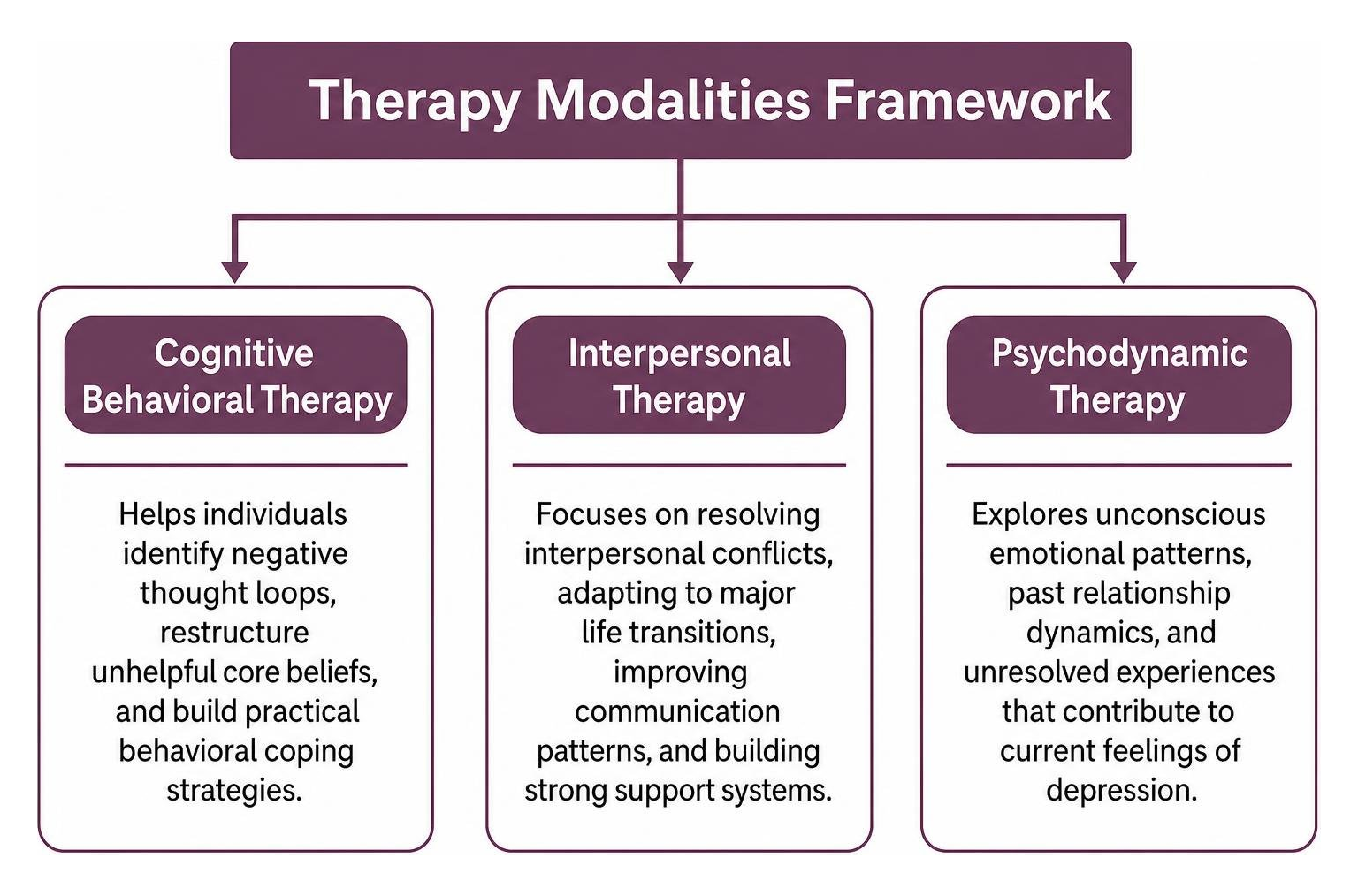
Insurance companies prioritize modalities supported by clinical research. When working with an in network clinician, several forms of evidence based treatment for depression are routinely covered:
- Cognitive Behavioral Therapy: This approach helps individuals identify negative thought loops, restructure unhelpful core beliefs, and build practical behavioral coping strategies.
- Interpersonal Therapy: This modality focuses on resolving interpersonal conflicts, adjusting to major life transitions, improving communication patterns, and building strong support systems.
- Psychodynamic Therapy: This depth-oriented approach explores unconscious emotional patterns, past relationship dynamics, and unresolved experiences that contribute to current feelings of depression.
- Behavioral Activation: This approach helps people gradually reduce avoidance and reengage with meaningful activities and routines. It is an established treatment option for depression.
Costs and Coverage: In Network vs. Out of Network Care
Understanding your policy terminology is the best way to avoid unexpected medical bills. When reviewing therapy for depression insurance benefits, you will encounter a few fundamental cost sharing mechanisms:
- Deductible: The amount you pay for certain covered services during your plan year before your insurance begins paying toward those services. Some services may be covered before you meet the deductible.
- Copayment: A fixed flat fee paid at the time of each counseling appointment.
- Coinsurance: A percentage of the allowable service cost that you pay after your deductible is fully met.
- Out-of-Pocket Maximum: The most you pay toward covered in-network benefits during your plan year through eligible deductibles, copayments, and coinsurance. After you reach this limit, your plan generally pays 100% of covered in-network benefits for the rest of the plan year. Premiums, noncovered services, and most out-of-network expenses do not count toward this limit.
Financial Breakdown: In Network vs. Out of Network Therapy
Choosing between an in network provider and an out of network clinician significantly influences your total expenses:
- In Network Care: In-network therapists have established contracts with your health insurance provider. They agree to contracted rates and generally bill your insurer directly. Depending on your benefits, you may owe a copayment, coinsurance, or the contracted session cost until you meet your deductible. This creates predictable budgeting for ongoing weekly or biweekly appointments.
- Out-of-Network Care: When working with an out-of-network clinician, you usually pay the full fee upfront at each session. Ask whether the therapist can provide an itemized statement called a superbill. If your plan includes out-of-network mental health benefits, you may be able to submit it for reimbursement. Reimbursement is not guaranteed and may depend on a separate deductible and the insurer’s allowed amount. Because self-pay rates are set independently by clinicians, understanding why some therapists do not take insurance can help you decide whether submitting claims on your own is worth the extra administrative step.
Virtual Care: Does Insurance Cover Online Depression Therapy?
Many insurance plans cover online depression therapy, but coverage, eligible providers, and out-of-pocket costs vary. Before scheduling, confirm that your specific plan covers video psychotherapy with the therapist you choose.
Virtual appointments allow you to connect with a licensed mental health professional from the comfort and privacy of your home or office. Research supports video-based psychotherapy as an effective option for many people with depression, with outcomes often comparable to in-person treatment. It removes travel time and may make scheduling easier, although clients still need privacy, reliable technology, and an appropriate setting for sessions.

How to Find and Choose Insurance Depression Therapy Providers
Connecting with the right clinician requires balancing clinical expertise with insurance compatibility. Knowing how to find an in network therapist saves both time and emotional energy. Organizations such as Mayo Clinic offer comprehensive guidance on selecting mental health providers based on training, credentials, and personal goals.
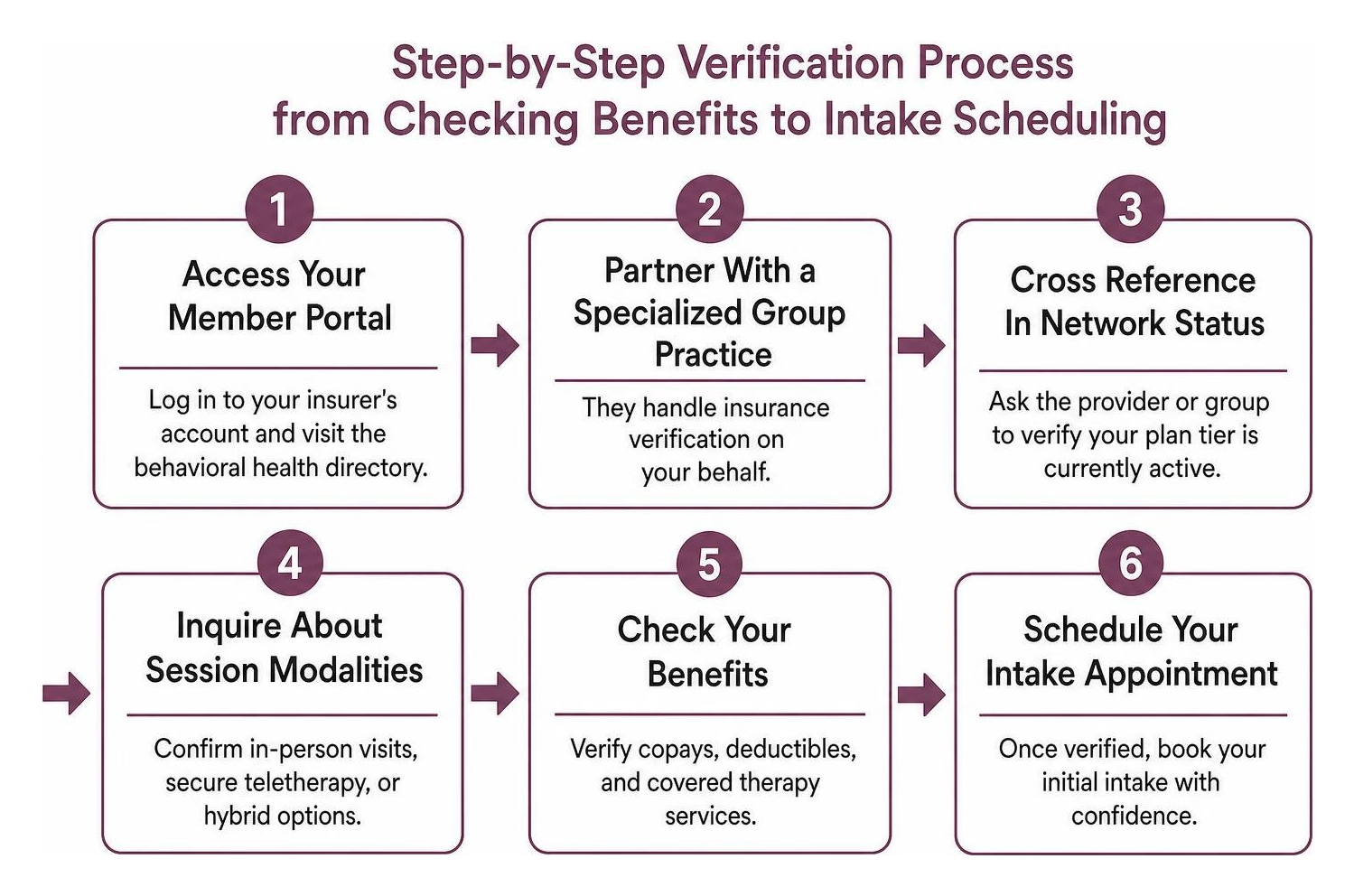
Before scheduling your initial intake appointment, review the steps for verifying therapy insurance coverage to confirm your exact benefits and avoid surprise charges.
Step by Step Search for Insurance Depression Therapy Providers
To streamline your search for a compatible clinician, follow these practical steps:
- Access Your Member Portal: Log in to your insurer’s online account and navigate to the behavioral health directory to filter by specialty and location.
- Ask About Insurance Support: Collective Counseling Solutions supports a network of therapists in private practice and provides insurance billing and benefit-verification services. Ask what assistance is available for the therapist you choose.
- Cross-Reference In-Network Status: Because directories can become outdated, confirm with both the therapist and your insurer that the individual clinician is in-network for your exact plan. Separately verify that your coverage is active and ask about costs and any authorization requirements.
- Inquire About Session Modalities: Confirm whether the clinician offers in-person visits, secure teletherapy appointments, or a flexible hybrid schedule.
Key Questions to Ask Insurance Depression Therapy Providers
When interviewing prospective clinicians, asking focused questions ensures their background matches your unique needs:
- What evidence based approaches do you use when treating depressive disorders?
- Do you have specialized experience treating mild depression or early stage mood changes?
- How do you approach high functioning depression for individuals managing demanding careers and family responsibilities?
- Do you offer targeted treatment strategies for seasonal depression and cyclical mood shifts?
- How does your administrative team handle billing, copay collection, and insurance claims?
When Insurance Coverage Is Unclear
If your policy documents seem ambiguous or your insurer gives confusing answers regarding mental health coverage, take these steps to establish clarity:
- Request Exact Service Code Details: Ask your insurance representative for the coverage rules on standard psychotherapy billing codes, such as code 90837 for a sixty-minute individual session or code 90834 for a forty-five-minute appointment.
- Check Deductible Accumulation: Clarify whether your outpatient therapy visits apply toward a general medical deductible or if your plan offers copay-based visits before your deductible is satisfied.
- Ask About Prior Authorization: Determine if your plan requires a clinical pre-authorization or a formal primary care referral before you attend your first visit.
- Utilize Practice Intake Coordinators: Ask whether the therapist or practice has billing staff who can help estimate your benefits and costs. You can also contact your insurer directly. Benefit verification is an estimate, not a guarantee that a claim will be paid.
Frequently Asked Questions About Depression Therapy and Insurance
How many depression therapy sessions will my insurance cover?
The number of covered sessions depends on your plan and your clinical needs. For plans subject to mental health parity protections, visit limits and authorization requirements generally cannot be more restrictive than those applied to comparable medical and surgical benefits. Your insurer may review medical necessity or require authorization for additional visits. Ask about these rules before starting treatment.
Do I need a primary care referral to see a depression therapist?
Referral requirements depend entirely on your specific plan design. If you have a Preferred Provider Organization plan, you can generally choose an in-network therapist and schedule an intake appointment directly, without seeing a medical doctor first. Some HMO plans require referrals for certain services, but many allow direct access to in-network outpatient mental health care. Check your plan’s behavioral health rules rather than assuming a referral is required.
What typical out of pocket costs should I expect with insurance?
Your exact financial responsibility depends on your plan structure. With in network benefits, clients generally pay an established copayment per session or a percentage coinsurance once their annual deductible is met. Utilizing in network coverage significantly lowers overall care costs compared to paying self pay rates.
Conclusion
Overcoming depression is a deeply personal journey, and financial complexity should never stand between you and the professional care you deserve. By understanding your behavioral health benefits, verifying network participation, and selecting the right clinical modality, you can focus fully on personal growth and recovery.
Collective Counseling Solutions helps you find therapists who participate in a range of insurance networks. Confirm that the therapist you choose accepts your specific plan and has openings before scheduling. Reach out today to explore our specialized therapy for depression and take the first step toward lasting wellness.