

Evidence Based Treatment for Depression Starts With the Right Fit
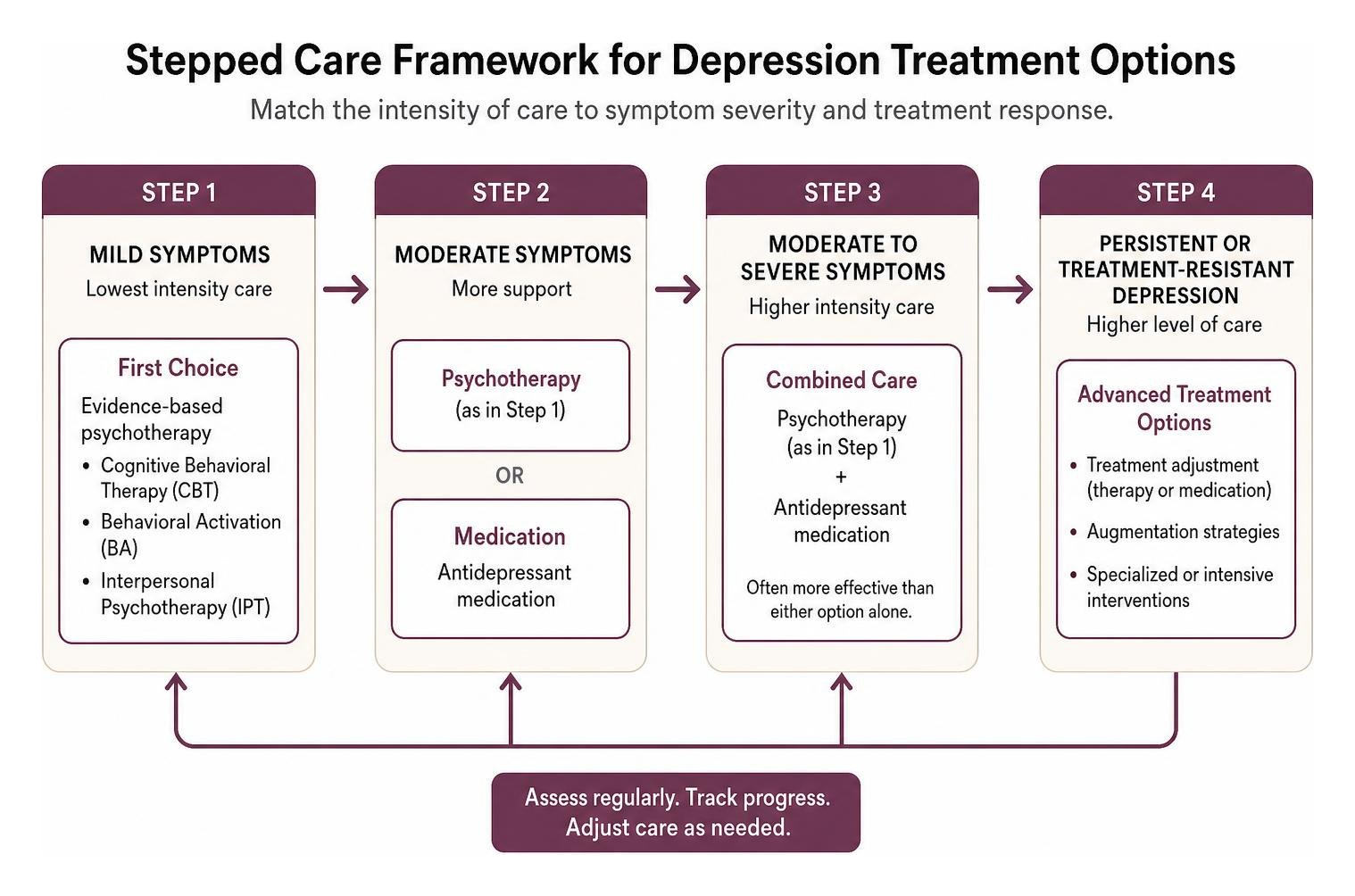
Evidence based treatment for depression includes proven psychotherapy, antidepressant medication, or both. For mild symptoms, therapy such as cognitive behavioral therapy, behavioral activation, or interpersonal psychotherapy may be a strong first choice. For moderate or severe depression, combining therapy with medication often works better than either option alone.
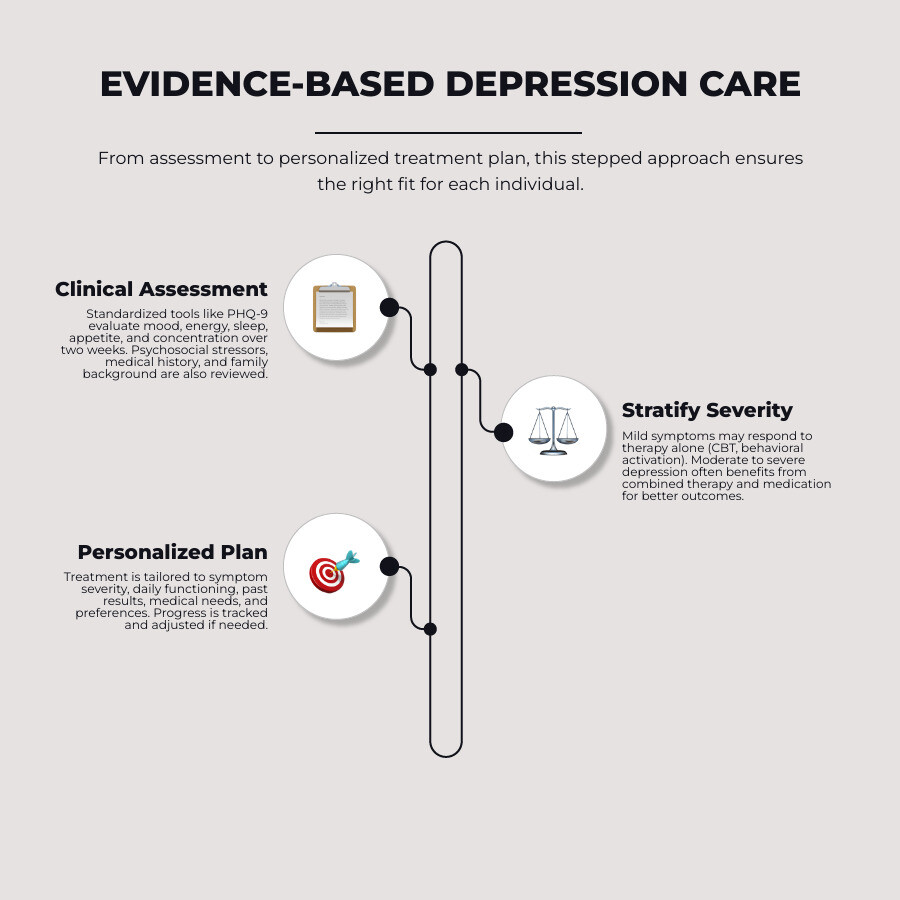
The best plan depends on symptom severity, daily functioning, past treatment results, medical needs, anxiety or trauma, and your preferences. A licensed clinician can assess these factors, check safety concerns, and track progress with tools such as the PHQ 9.
Depression is treatable, but it is not one size fits all. Some people improve with a first treatment, while others need a thoughtful change in therapy, medication, or level of care. Evidence based care means using approaches supported by research, reviewing results regularly, and making adjustments when progress stalls.
This guide explains the main options, from practical therapy skills and common medications to advanced treatments for depression that has not improved with initial care.
Understanding Severity and Clinical Assessment in Depression Care
Effective depression treatment begins with an accurate, thorough clinical evaluation. Clinicians do not rely on guesswork. They use standardized measurement tools alongside clinical interviews to understand the full picture of an individual’s mental health. The Patient Health Questionnaire (PHQ 9) is one of the most widely used tools in outpatient and primary care settings. It evaluates nine core criteria including mood, energy levels, sleep patterns, appetite, concentration, and feelings of worthlessness over the previous two weeks.
A comprehensive intake looks beyond basic symptom counting. It examines psychosocial stressors, medical history, interpersonal relationship patterns, and family background. Understanding what are the signs and symptoms of depression? helps differentiate typical emotional fluctuations from major depressive disorder.
Differential diagnosis is an essential part of this stage. Depressive symptoms frequently overlap with other conditions. For instance, clinicians routinely assess for comorbid generalized anxiety disorder, trauma related conditions, and subtle mood patterns. Learning to distinguish between depression or burnout: how to tell the difference and why it matters ensures that workplace exhaustion is not confused with clinical depressive disorders that require specific psychological interventions.
Clinical guidelines emphasize measurement based care throughout the entire care process. Regular reassessment using objective rating scales allows mental health professionals to gauge treatment response, recognize early signs of progress, and adjust interventions if a client is not moving toward full recovery.
Stratifying Mild Versus Severe Depressive Episodes
Depression exists along a spectrum of severity, and clinical interventions must match the degree of functional impairment. Stratifying symptoms into mild or less severe episodes versus moderate to severe episodes shapes the initial care plan.
- Mild or Subthreshold Episodes: Mild presentations typically involve lower scores on standard screening tools such as a PHQ 9 score below 16. Individuals experience distress but maintain most daily responsibilities, including work and social obligations. Research indicates that non pharmacological interventions, such as structured psychological care, guided self help, and lifestyle adjustments, are ideal initial steps. Specialized options like therapy for depression: mild depression provide practical tools without the need for immediate medication.
- Moderate to Severe Episodes: Moderate to severe presentations often involve PHQ 9 scores of 16 and above, along with pronounced functional disruption, intense emotional depletion, psychomotor slowing or agitation, and significant cognitive fog. In these instances, guidelines recommend intensive individual psychotherapy, antidepressant medication, or a structured combination of both to restore baseline functioning.
First Line Evidence Based Treatment for Depression: Core Psychotherapies and Medications
The foundation of modern depression care rests on well studied psychological modalities and second generation antidepressant classes. The American Psychological Association highlights several core interventions in the APA Depression Treatments for Adults, reinforcing that psychotherapy and pharmacotherapy are both potent standalone or combined solutions.

Selecting an initial therapy format depends heavily on client preferences, past clinical history, and symptom presentations. Collaborative care allows clients to explore options such as how to treat depression and anxiety without losing your mind while working alongside supportive professionals.
Psychotherapy as an Evidence Based Treatment for Depression
Psychotherapy is a cornerstone of recovery. It provides individuals with long term cognitive, behavioral, and emotional regulation skills that persist long after active sessions conclude.
According to a Comprehensive Meta Analysis on CBT for Depression analyzing over 400 trials, structured cognitive and behavioral approaches demonstrate substantial, lasting benefits for reducing depressive symptoms and preventing future relapses. Several distinct therapeutic modalities have accumulated strong empirical backing:
- Cognitive Behavioral Therapy (CBT): CBT operates on the principle that thoughts, feelings, and behaviors are interconnected. Clients learn to identify cognitive distortions, question unhelpful automatic thoughts using Socratic dialogue, and complete thought logs. CBT is typically delivered across 6 to 20 weekly sessions. Discovering practical tools used in depression therapy allows clients to apply structured exercises between appointments.
- Behavioral Activation (BA): Often utilized within CBT or as a standalone therapy over 20 to 24 sessions, BA addresses the avoidance and isolation that maintain depressive states. By monitoring daily activity and scheduling manageable, rewarding tasks, clients disrupt cycles of withdrawal and gradually rebuild positive environmental reinforcement.
- Interpersonal Psychotherapy (IPT): IPT focuses on social functioning and relational distress across 16 to 20 sessions. It specifically targets four core problem areas: unresolved grief, interpersonal role disputes, major role transitions, and interpersonal deficits.
- Mindfulness Based Cognitive Therapy (MBCT): Integrating traditional cognitive therapy strategies with mindfulness meditation practices, MBCT teaches clients to observe difficult thoughts and feelings non judgmentally as temporary mental events rather than absolute facts. It is particularly effective for individuals with recurrent depressive episodes.
- Psychodynamic Therapy: Short term psychodynamic therapy explores unconscious emotional conflicts, past relational patterns, and early attachment experiences. By creating insight within a supportive therapeutic relationship, clients resolve underlying emotional conflicts contributing to depressive symptoms.
Understanding what depression therapy is really like helps remove uncertainty, allowing individuals to enter therapy with clear expectations about session structures, collaborative goal setting, and practical skill building.
Second Generation Antidepressants and Tolerability Profiles
When pharmacotherapy is part of the treatment plan, medical providers typically initiate care using second generation antidepressants. These classes are preferred over older tricyclics or monoamine oxidase inhibitors due to their favorable safety profiles and overall tolerability.
- Selective Serotonin Reuptake Inhibitors (SSRIs): SSRIs work by increasing the availability of serotonin in neural synapses. They are widely considered first line options for uncomplicated major depression. Across clinical studies, the number needed to treat (NNT) for SSRIs to achieve a positive clinical response is approximately 7.
- Serotonin Norepinephrine Reuptake Inhibitors (SNRIs): SNRIs target both serotonin and norepinephrine reuptake pathways, offering an alternative for individuals with fatigue, physical pain complaints, or comorbid anxiety. SNRIs show an NNT of roughly 6 for clinical response.
- Norepinephrine Dopamine Reuptake Inhibitors (NDRIs): NDRIs enhance dopamine and norepinephrine activity without directly impacting serotonin. They are frequently selected for clients seeking to avoid common adverse effects such as sexual dysfunction or weight gain.
Common side effects of second generation antidepressants can include mild nausea, sleep alterations, dry mouth, headaches, or transient jitteriness during the first few weeks of initiation. Clinicians evaluate individual medical histories, potential side effect profiles, and client preferences to select the most suitable agent.
Combination Therapy Versus Monotherapy for Moderate to Severe Depression
For individuals presenting with moderate to severe or chronic depressive episodes, research consistently demonstrates that combining psychotherapy with antidepressant medication produces superior clinical outcomes compared to either monotherapy alone.
The logic behind combination therapy lies in its complementary mechanisms of action. Antidepressant medication can help lift severe lethargy, reduce acute emotional distress, and enhance neuroplasticity. This biological support creates the cognitive clarity necessary for an individual to actively engage in psychotherapy. Concurrently, psychotherapy equips the individual with cognitive restructuring tools, behavioral coping habits, and emotional resilience skills that protect against future symptom return.
This combined approach is especially valuable for individuals who maintain professional routines while struggling internally. Exploring high functioning depression signs & help highlights how high achievers often benefit from integrating structured cognitive skills alongside biological support to relieve persistent internal distress.
| Treatment Approach | Typical Duration | Primary Mechanism of Action | Clinical Strengths |
|---|---|---|---|
| Psychotherapy Monotherapy | 12 to 24 weekly sessions | Cognitive restructuring, behavioral activation, and interpersonal skill development | High durability, low relapse rates after completion, zero biological side effects |
| Antidepressant Monotherapy | Acute phase (6 to 12 weeks), Continuation (6 to 9 months) | Neurotransmitter modulation (serotonin, norepinephrine, dopamine) | Convenient administration, effective for physical and vegetative symptoms |
| Combination Therapy | 12 to 24 therapy sessions alongside concurrent medication | Simultaneous neurochemical balance and practical psychological coping | Highest remission rates for moderate to severe cases, lower overall recurrence |
Managing Treatment Resistant Depression and Advanced Somatic Therapies
While standard first line treatments help many individuals, major depressive disorder can sometimes be challenging to treat. Clinical trials on depression treatment sequencing show that approximately one third of individuals achieve full remission from their first antidepressant course. When an individual does not respond adequately to at least two separate antidepressant trials of adequate dose and duration, typically 6 to 8 weeks each, the presentation is classified as treatment resistant depression.
When initial medications do not yield sufficient improvement, medical providers consider evidence based augmentation strategies. These include adding a second agent with a complementary mechanism of action, such as an atypical antipsychotic, mood stabilizing agent, or thyroid hormone augmentation, while maintaining ongoing psychological care.

Advanced Interventions and Evidence Based Treatment for Depression When Medications Fail
For individuals navigating treatment resistant symptoms, modern neuromodulation and rapid acting clinical interventions offer reliable alternative pathways to relief.
- Repetitive Transcranial Magnetic Stimulation (rTMS): rTMS is a non invasive outpatient procedure that uses focused magnetic pulses to stimulate underactive neurons in the dorsolateral prefrontal cortex. Standard rTMS protocols involve daily sessions over four to six weeks, achieving response rates between 40% and 58% in treatment resistant groups.
- Accelerated TMS Protocols: Newer protocols utilize personalized neuroimaging guidance and high dose theta burst stimulation delivered across multiple daily sessions over a single week. These accelerated approaches have shown remission rates reaching 70% to 79% in specialized clinical studies.
- Electroconvulsive Therapy (ECT): ECT remains one of the most powerful biological interventions for severe, psychotic, or catatonic depression. Conducted under general anesthesia, ECT delivers a brief electrical stimulus to induce a therapeutic seizure, achieving remission rates of approximately 48% in highly treatment resistant populations.
- Rapid Acting Glutamatergic Therapies: Novel glutamatergic agents and NMDA receptor modulators act to promote rapid synaptic connectivity. Unlike traditional oral medications that take weeks to work, these specialized clinical approaches often produce noticeable symptom improvement within 24 to 72 hours, showing response rates of 50% to 70% in treatment resistant cases.
Combining brain stimulation or rapid acting therapies with structured cognitive behavioral therapy helps consolidate initial neurological improvements into lasting behavioral and emotional gains.
Treatment Duration, Relapse Prevention, and Safe Discontinuation Protocols
Depression treatment progresses through three critical phases: acute, continuation, and maintenance.

- Acute Phase (6 to 12 Weeks): The primary goal is achieving clinical response (a 50% or greater reduction in symptoms) and moving toward full remission.
- Continuation Phase (6 to 9 Months): Once symptoms resolve, treatment must continue to prevent an immediate return of the same depressive episode. Discontinuing care too early during this window significantly elevates the likelihood of relapse.
- Maintenance Phase (1 Year or Longer): Recommended for individuals with a history of three or more recurrent depressive episodes or chronic depressive illness, maintenance therapy focuses on long term stability and sustained wellbeing.
When a client and their healthcare provider decide to conclude antidepressant medication, a gradual, monitored tapering schedule is essential. Abrupt cessation can cause antidepressant discontinuation syndrome, which is characterized by the FINISH symptoms:
- Flu like symptoms (fatigue, muscle aches, sweating)
- Insomnia and vivid dreams
- Nausea and gastrointestinal upset
- Imbalance or dizziness
- Sensory disturbances (tingling sensations, brief electrical feelings)
- Hyperarousal (anxiety, agitation, irritability)
To prevent these uncomfortable sensations, clinicians recommend hyperbolic or gradual proportional tapering, decreasing doses by 25% to 50% every two to four weeks. Engaging in concurrent cognitive behavioral therapy during the tapering process helps individuals monitor their emotions and significantly lowers the risk of symptom recurrence.
Practical Considerations: Insurance Coverage and Shared Decision Making
Choosing the right depression treatment involves a shared decision making process between the individual and their care team. Clinical evidence provides the framework, but personal preferences, scheduling flexibility, and financial realities shape the ultimate plan of care.
Navigating healthcare coverage is often a primary concern when seeking therapy. Understanding mental health benefits helps remove barriers to starting care. Learning about therapy for depression: insurance offers clarity on how commercial plans cover outpatient psychotherapy sessions.
Many individuals wonder about their specific coverage details. Reviewing does insurance cover therapy? what you should know explains typical copays, deductibles, and parity regulations. Furthermore, resources on how to find a therapist that accepts my insurance simplify the process of connecting with credentialed providers, whether choosing in person appointments or telehealth sessions from home.
Shared decision making ensures that clients feel empowered throughout their care journey, establishing a strong therapeutic relationship that fosters meaningful recovery.
Frequently Asked Questions About Depression Treatments
How long does evidence based depression treatment take to show results?
Psychotherapy typically begins producing noticeable improvements in emotional regulation and daily coping within 4 to 8 weeks, with standard full courses lasting 12 to 20 sessions. Antidepressant medications generally take 2 to 4 weeks to show initial physiological changes in sleep, energy, and appetite, with full therapeutic benefits emerging around 6 to 8 weeks. Regular symptom check ins ensure the care plan is working effectively.
What is the difference between response and remission in depression care?
- Response: A clinical response is defined as a 50% or greater reduction in baseline depressive symptom scores on standardized scales such as the PHQ 9 or the Hamilton Rating Scale for Depression (HAM D). While a positive step, lingering symptoms may still be present.
- Remission: Clinical remission represents the virtual absence of depressive symptoms and the complete restoration of day to day functioning. Achieving full remission is the primary goal of evidence based care because it provides the strongest protection against future episodes.
Can lifestyle interventions replace formal depression treatment?
Evidence based lifestyle practices, such as regular moderate aerobic exercise, consistent sleep hygiene, and light exposure, are valuable complementary interventions. Exercise promotes positive neurochemical changes and helps reduce inflammation. However, for moderate to severe clinical depression, lifestyle adjustments work best as supportive additions to professional psychotherapy and medical care rather than complete substitutes.
Conclusion
Overcoming depression is a gradual process that relies on scientifically supported, compassionate care. Whether navigating an initial mild episode or seeking relief from persistent, complex symptoms, evidence based treatments offer dependable pathways to lasting recovery.
At Collective Counseling Solutions, clients connect with licensed therapists who accept insurance, providing accessible care through both in person sessions and secure teletherapy. With the right therapeutic match and a personalized care strategy, achieving emotional balance and reclaiming your life is entirely possible. Explore compassionate, professional therapy for depression and take the next step in your healing journey today.