

Depression Treatment Overview
Depression treatment is one of the most researched areas in mental health, and the good news is clear: it works. Around 80–90% of people who seek help eventually respond well to treatment.
If you’re looking for a quick overview of your options, here they are:
Main depression treatment options:
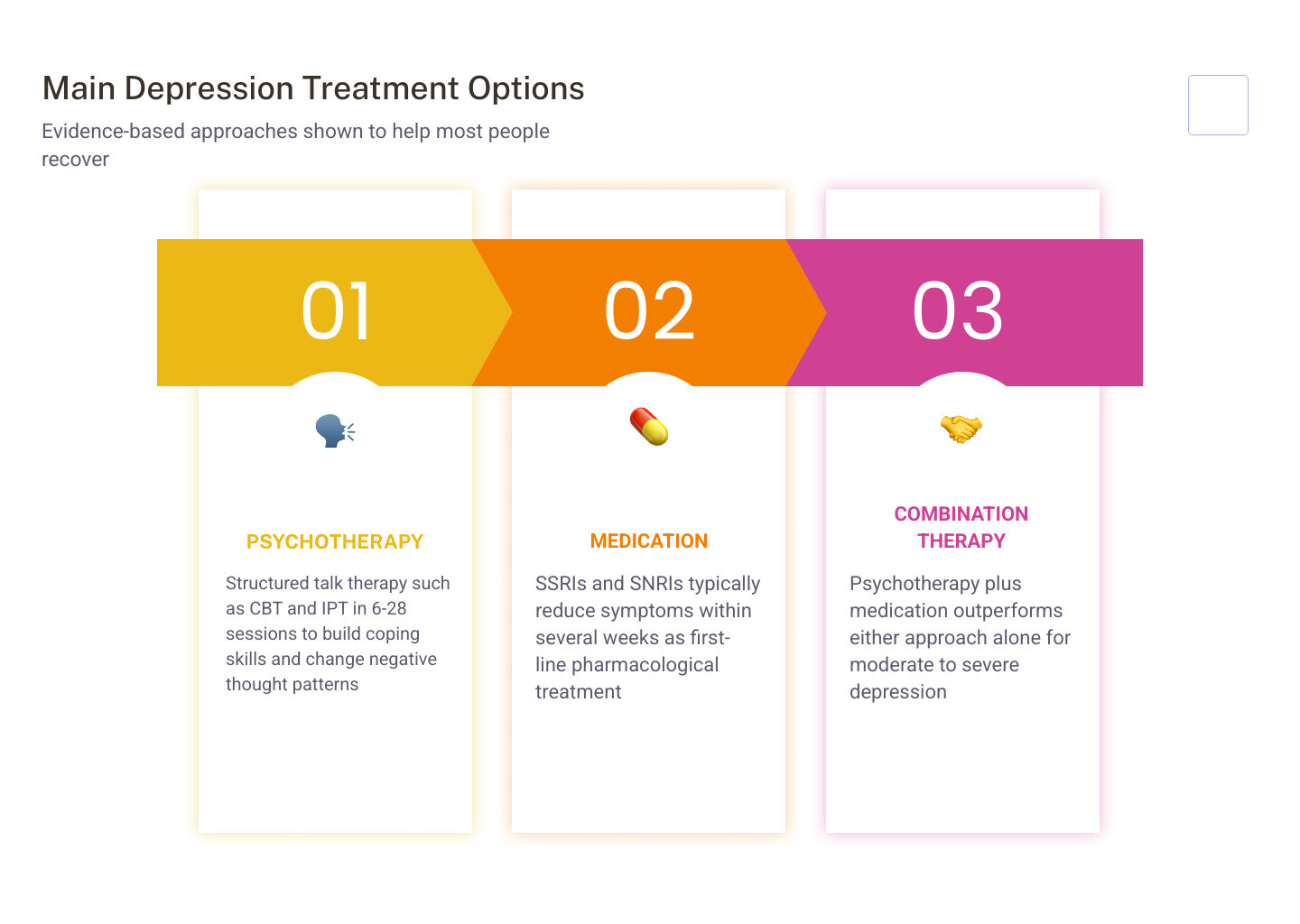
- Psychotherapy — CBT, IPT, MBCT, psychodynamic therapy, and behavioral therapy (6–28 weekly sessions depending on the approach)
- Medication — SSRIs and SNRIs are the most commonly prescribed; effects typically appear within several weeks
- Combination therapy — Psychotherapy plus medication, shown to outperform either approach alone
- Brain stimulation therapies — ECT and TMS, used when standard treatments haven’t worked
- Lifestyle support — Exercise, sleep hygiene, light therapy, and nutrition as supplementary tools
The American Psychological Association’s Clinical Practice Guideline recommends seven evidence-based psychotherapy approaches, plus second-generation antidepressants, for treating depression in adults.
Depression isn’t just persistent sadness. It affects how you think, sleep, eat, and function day to day. Nearly 7% of U.S. adults experience it in any given year, and yet many don’t know where to start with treatment.
This guide walks through every major option, so you can have an informed conversation with a provider and find the path that fits your life.
Evidence-Based Psychotherapy Options

When it comes to depression treatment, psychotherapy, which is often called “talk therapy,” is frequently the first line of defense. It isn’t just about venting; it’s a structured process designed to help individuals understand the root of their symptoms and develop tools to change them. According to the Depression Treatments for Adults guidelines, there are several distinct approaches that have been proven effective in clinical trials.
One of the most powerful tools in this arsenal is behavioral activation. This approach focuses on the relationship between what a person does and how they feel. When someone is depressed, they often withdraw from activities they once enjoyed. Behavioral therapy aims to reverse this negative pattern by encouraging the person to re-engage in pleasurable activities, even when their current mood tells them not to. By systematically increasing activity levels, the “feedback loop” of depression is broken.
Therapy for Depression also addresses negative schemas, which are early-learned mental frameworks that shape how a person interprets the world. If someone views every minor mistake as a sign of total failure, that schema is fueling their depression. Therapy helps identify these deep-seated beliefs and replace them with more balanced perspectives.
Psychotherapy as a Primary Depression Treatment
Cognitive Behavioral Therapy (CBT) is perhaps the most well-known depression treatment. It operates on a simple but profound idea: our thoughts, feelings, and behaviors are all interconnected. If we can change the way we think, we can change the way we feel.
In a typical CBT session, a therapist might use “thought records.” These are logs where a person writes down a distressing situation, the automatic negative thoughts that follow, and the emotions they feel. The therapist then uses Socratic questioning, a series of guided questions, to help the person analyze the evidence for and against those thoughts. For example, if a person thinks “Nobody likes me,” the therapist might ask, “What evidence do you have for that? Have there been times when someone showed they cared?”
To understand the practical side of these sessions, it helps to look at What Depression Therapy is Really Like. It’s a collaborative process that usually involves “homework,” such as practicing a new coping skill or monitoring mood changes between appointments. CBT is typically delivered in 6 to 20 weekly sessions, making it a relatively short-term but intensive intervention.
Interpersonal and Mindfulness Approaches
While CBT looks inward at thoughts, Interpersonal Psychotherapy (IPT) looks outward at relationships. IPT is based on the idea that depression is often triggered or maintained by social difficulties. It focuses on four specific problem areas:
- Grief: Resolving complicated loss.
- Role disputes: Managing conflicts with partners, family, or coworkers.
- Role transitions: Adjusting to major life changes like retirement, divorce, or starting a new career.
- Interpersonal deficits: Building social skills to reduce isolation.
For those dealing with Therapy for Mild Depression, IPT can be particularly effective because it provides immediate strategies for improving social support.
Another vital approach is Mindfulness-Based Cognitive Therapy (MBCT). Originally designed for people who have experienced multiple episodes of depression, MBCT is a powerhouse for relapse prevention. It teaches people to view their thoughts as “mental events” rather than absolute facts. By using mindfulness meditations, such as body scanning or breathing exercises, individuals learn to stay in the present moment rather than spiraling into rumination about the past or future.
Psychodynamic and Supportive Therapy
Psychodynamic therapy takes a longer-view approach. It explores how unconscious patterns and past experiences, often from childhood, influence current behavior. By gaining insight into these hidden drivers, patients can achieve long-term outcomes and more profound personality changes. While traditional psychoanalysis could last years, modern “short-term” psychodynamic therapy for depression often involves 16 to 30 sessions.
The success of any therapy, however, often hinges on the “therapeutic alliance”, the quality of the bond between the therapist and the client. Supportive therapy focuses heavily on this, providing an empathetic, non-judgmental environment where the client feels heard and validated. This can be especially helpful when exploring the various Factors That Lead to Depression, such as biological predispositions or environmental stressors.
Pharmacological Treatment for Depression

For many, depression treatment involves medication, either on its own or alongside therapy. Currently, the standard for pharmacological care remains “second-generation” antidepressants. These are generally preferred over older classes of drugs because they tend to have fewer and less severe side effects.
The most common types include:
- SSRIs (Selective Serotonin Reuptake Inhibitors): Examples include fluoxetine (Prozac) and sertraline (Zoloft). They work by increasing levels of serotonin in the brain.
- SNRIs (Serotonin-Norepinephrine Reuptake Inhibitors): These affect both serotonin and norepinephrine, another neurotransmitter linked to mood.
- Atypical Antidepressants: Medications like bupropion (Wellbutrin) that don’t fit neatly into other categories but are effective for many.
When a doctor begins a diagnosis and treatment plan, they look at the specific Signs and Symptoms of Depression the person is experiencing. For instance, if someone is struggling with low energy and oversleeping, a more “activating” antidepressant might be chosen.
Managing Side Effects and Risks
Antidepressants are powerful tools, but they come with considerations. The FDA requires a “black box warning” on these medications, noting an increased risk of suicidal thoughts in children, teens, and young adults under 25. Close monitoring is essential during the first few weeks of treatment.
Common side effects can include nausea, weight gain, dry mouth, or sexual dysfunction. It’s also important to understand that while these drugs aren’t “addictive” in the traditional sense, the body can develop a physical dependence. Stopping them abruptly can lead to “discontinuation syndrome,” which feels like a severe flu combined with anxiety. Professional tapering protocols, gradually lowering the dose over several weeks, are necessary to stop safely.
In 2026, genetic testing is becoming more common. A simple cheek swab can sometimes provide clues about how an individual’s metabolism will react to a specific drug, helping to skip the “trial and error” phase that can be so frustrating for patients. A comprehensive Management of Depression in Adults: A Review suggests that while these tests aren’t perfect, they are a valuable part of a personalized treatment plan.
Choosing Between Medication and Therapy
Deciding whether to use medication, therapy, or both is a shared decision between the patient and the clinician. For mild depression, lifestyle changes and therapy are often enough. However, for moderate-to-severe cases, a combination of the two is frequently the gold standard.
Studies show that combined treatment provides a greater symptom reduction than either approach used alone. Factors to consider include:
- Severity: Higher severity often warrants immediate medication.
- Patient Preference: Some people prefer to avoid medication, while others find talk therapy difficult to engage in initially.
- History: If a person has found relief with a certain medication in the past, they may choose to start there again.
This is especially relevant for those with High-Functioning Depression: Signs and Help, where a person may still be going to work but feels “empty” inside. In these cases, medication can sometimes provide the “floor” needed to engage effectively in therapy.
Brain Stimulation and Alternative Therapies
When standard depression treatment, like medication and therapy, doesn’t provide relief, it is often referred to as “treatment-resistant depression.” This affects about 30% of people with major depressive disorder. Fortunately, brain stimulation therapies offer a path forward.
Electroconvulsive Therapy (ECT) is significantly different today than its historical (and often inaccurate) portrayal in movies. It is performed under general anesthesia and involves a controlled electrical current that induces a brief, therapeutic seizure. It is one of the fastest-acting treatments available, with an 80% response rate for severe depression.
Transcranial Magnetic Stimulation (TMS) is a non-invasive alternative. It uses magnetic fields to stimulate nerve cells in the brain regions involved in mood control. Unlike ECT, it doesn’t require anesthesia, and the patient can drive themselves home immediately after the session. Newer “accelerated” protocols can sometimes complete a full course of treatment in just one week.
| Feature | ECT | TMS |
|---|---|---|
| Invasiveness | Requires anesthesia | Non-invasive |
| Speed of Action | Very Fast (days) | Moderate (weeks) |
| Side Effects | Temporary memory loss/confusion | Headaches/scalp discomfort |
| Effectiveness | ~80% response rate | ~50-60% response rate |
For those dealing with Therapy for Seasonal Depression, light therapy is a primary alternative. This involves sitting in front of a specialized light box that mimics outdoor light, helping to regulate the body’s internal clock and boost mood during dark winter months.
Lifestyle Changes to Support Depression Treatment
While lifestyle changes are rarely enough to treat severe depression on their own, they are powerful supplements. Physical exercise is one of the most effective “add-on” treatments. It releases endorphins and promotes neuroplasticity (the brain’s ability to change). Even a 20-minute daily walk can make a measurable difference.
Other supportive strategies include:
- Sleep Hygiene: Maintaining a consistent sleep-wake cycle. Up to 90% of people with depression experience insomnia, which can worsen symptoms.
- Nutrition: Following a Mediterranean-style diet—rich in whole grains, fish, and healthy fats—has been linked to lower rates of depression.
- Stress Management: Learning to distinguish Depression or Burnout: How to Tell the Difference is crucial for applying the right coping strategies.
Understanding the Recovery Timeline
Recovery from depression isn’t a single event; it’s a timeline. Understanding the phases can help manage expectations and prevent the frustration that comes when symptoms don’t vanish overnight.
- Acute Phase (6–12 weeks): The goal here is “remission”, getting the symptoms under control so the person can function again.
- Continuation Phase (4–9 months): Once the person feels better, treatment continues to prevent the symptoms from returning. This is often where people make the mistake of stopping medication or therapy too soon.
- Maintenance Phase (1 year or more): For those with recurrent depression, long-term treatment helps them stay well.
During these phases, using Practical Tools Used in Depression Therapy, such as mood tracking or journaling, helps provide a clear picture of progress. It’s normal to have “setbacks,” but having a record of the “wins” can help maintain motivation.
Digital Support and Self-Care
Digital health has become a standard part of the depression treatment landscape. Psychoeducation, learning about the causes and biology of depression, is now easily accessible through certified apps and online modules.
Online Therapy for Depression has proven to be just as effective as in-person sessions for many people. It removes barriers like transportation and can be more comfortable for those with severe social anxiety. Digital Health Applications (DiGAs) offer structured CBT programs that can be used between sessions to reinforce skills.
Frequently Asked Questions
How long does it take for treatment to work?
Most people start to see some improvement within 2 to 4 weeks of starting medication or therapy. However, it usually takes 8 to 12 weeks to reach the full therapeutic effect. It is important not to give up if you don’t feel “cured” after the first few sessions.
Can depression be treated without medication?
Yes. For mild to moderate depression, psychotherapy (like CBT or IPT) is often just as effective as medication. Many people choose to start with therapy and lifestyle changes before considering pharmacological options.
What is treatment-resistant depression?
This is a term used when a person has tried at least two different classes of antidepressants at adequate doses and durations without significant improvement. In these cases, providers may suggest “augmentation” (adding a second medication) or brain stimulation therapies like TMS or ECT.
Conclusion
Finding the right depression treatment is a journey, but it’s one you don’t have to take alone. Whether it’s through the structured tools of CBT, the biological support of medication, or the innovative path of TMS, recovery is possible.
Collective Counseling Solutions simplifies this process by connecting clients with licensed therapists who accept insurance. Whether you prefer in-person visits or the convenience of teletherapy, our goal is to make skilled mental health care accessible and straightforward.
If you’re ready to take that first step, you can explore options for Insurance for Depression Therapy or use our tool to Find a Therapist who fits your specific needs. Depression may be a heavy burden, but with the right treatment plan, the weight can be lifted.