

What to Know About Marriage Counseling Cost
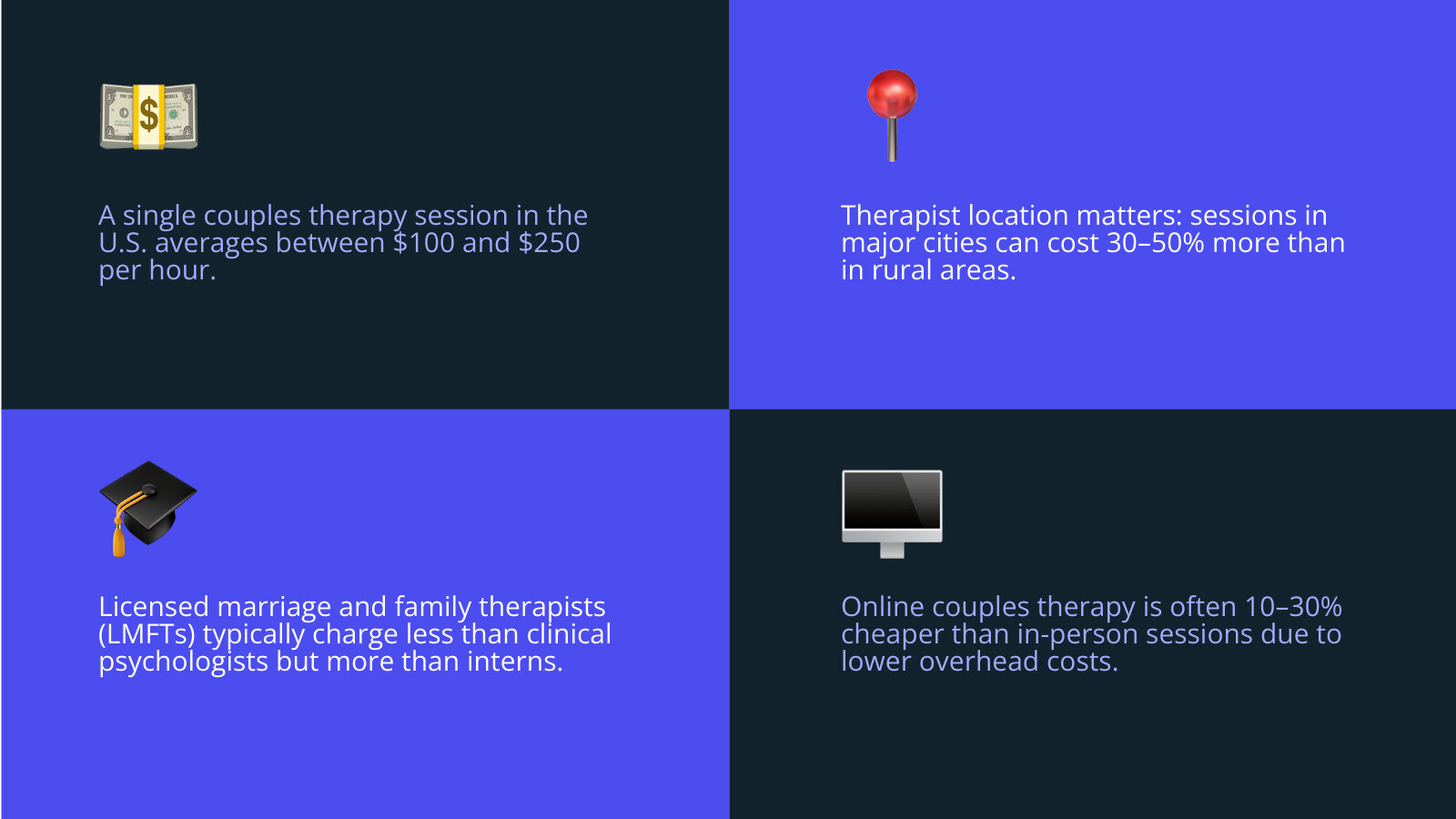
Marriage counseling cost depends most on the therapist’s training, your location, session length, and whether you use insurance or pay yourself. Before booking, ask for the full fee, how long each visit lasts, whether the therapist accepts your plan, and what lower cost options are available.
Private sessions are often the highest cost option. Virtual care, sliding scale rates, group programs, and workplace counseling benefits may make support easier to fit into a busy budget. Coverage can be limited when counseling focuses only on relationship concerns, so it is wise to verify benefits before the first appointment.
The best value is not always the lowest fee. Look for a licensed therapist whose approach, availability, and payment policies work for both partners.
Handy marriage counseling cost terms:
Understanding the Average Marriage Counseling Cost Breakdown
Couples seeking support often wonder what financial commitment to expect when entering therapy. Rates across the country vary based on several structural elements, from professional licensure to session formats. When partners choose to rebuild trust and connection through marriage relationship counseling, establishing clear financial expectations helps create a stable foundation for the therapeutic journey.
Standard hourly rates reflect the specialized training required to navigate complex relational dynamics. Unlike individual therapy, relationship counseling involves managing multiple viewpoints, relational histories, and communication patterns simultaneously. Therapists who dedicate their practices to relational care spend significant time developing interventions that foster mutual understanding and long term connection.
Factors That Influence Marriage Counseling Cost per Session
Several core elements determine the rate a clinician sets for relationship support:
- Provider credentials: A licensed marriage and family therapist, licensed professional counselor, or clinical psychologist sets rates reflecting years of clinical supervision and advanced education.
- Geographic setting: Metropolitan regions often present higher rates compared to rural areas due to clinical practice overhead.
- Session duration: Standard appointments typically last fifty to sixty minutes, whereas extended intake sessions or ninety minute appointments carry adjusted rates.
- Therapeutic specializations: Advanced training in modalities such as relational systems or attachment frameworks influences clinician fees.
| Provider Credential or Format | Typical Session Duration | Setting Type |
|---|---|---|
| Licensed Marriage and Family Therapist | 50 to 60 Minutes | Private Practice |
| Licensed Professional Counselor | 50 to 60 Minutes | Outpatient Clinic |
| Clinical Psychologist | 50 to 90 Minutes | Specialized Practice |
| Virtual Relational Counseling | 45 to 60 Minutes | Telehealth Platform |
| Extended Modality Session | 75 to 90 Minutes | Specialized Center |
In Person Sessions vs. Virtual Therapy Formats
Technological advances have made virtual care an accessible alternative to traditional office visits. Couples who select couples therapy online often find that virtual appointments eliminate travel time, parking fees, and the logistics of arranging childcare.
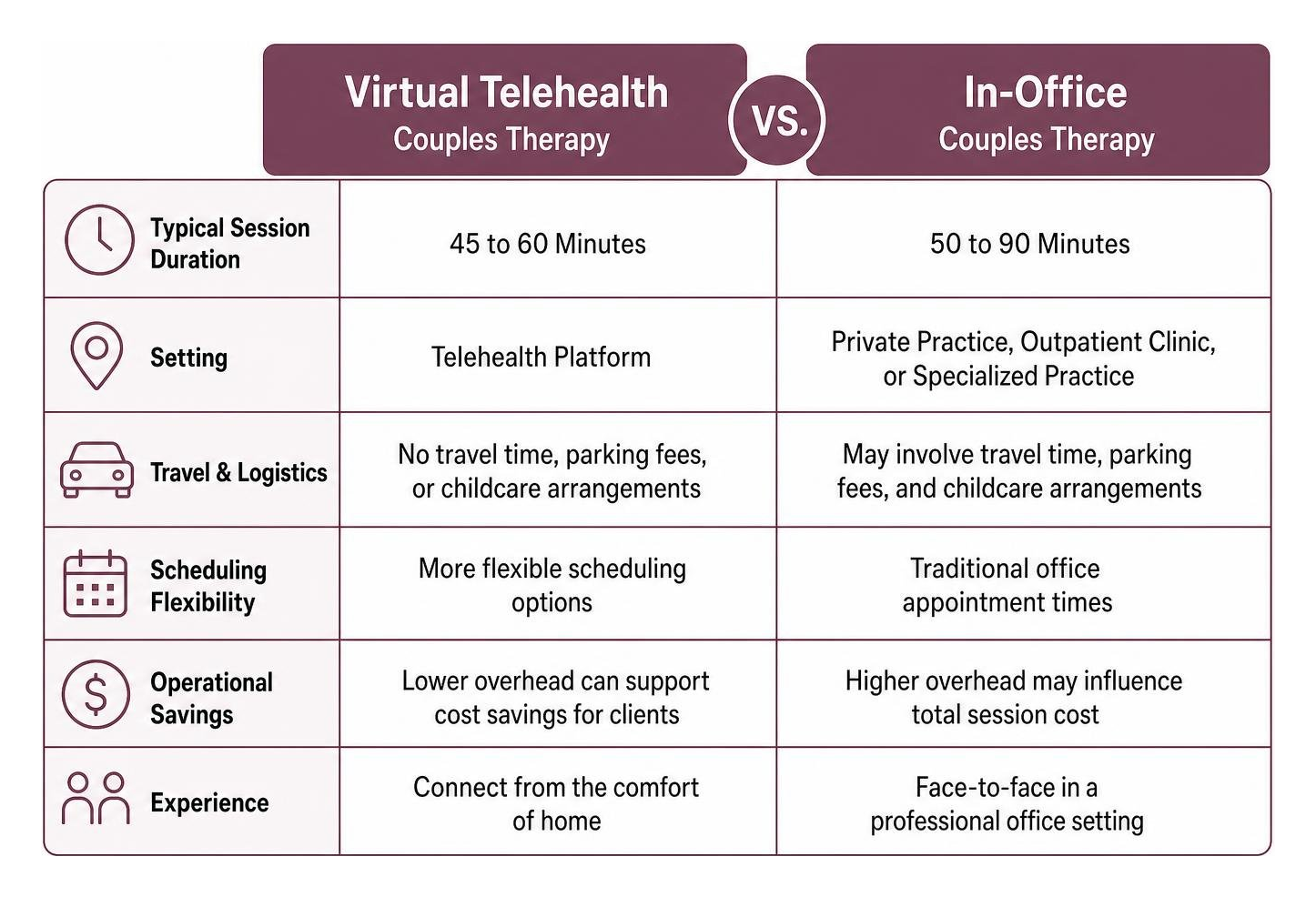
Virtual counseling may reduce indirect expenses, such as transportation, parking, or childcare, but session fees are not necessarily lower than in person care. Reviewing comparative couples therapy rates allows partners to weigh the benefits of meeting in an office against the convenience of connecting from the comfort of home. Virtual therapy formats also enable partners who travel frequently or manage differing work shifts to attend joint sessions consistently without disrupting their daily commitments.
Comparing Specialized Modalities and Total Course Expenses
Understanding what happens in couples therapy helps couples plan their overall therapeutic investment. Some couples benefit from a relatively brief course of counseling, while others attend for several months or longer. The number and frequency of sessions depend on the couple’s goals, concerns, and progress.
Premarital Preparation and State License Discounts
Preventative relationship counseling offers structured guidance for engaged couples. Reviewing premarital counseling cost trends shows that these programs generally follow a defined curriculum of four to eight sessions.
Some states offer marriage license fee reductions for couples who complete qualifying premarital education. Requirements, approved course lengths, and fee reductions vary, so couples should check their state’s rules before enrolling. These state incentives reward partners for proactively learning conflict resolution and financial management tools before marriage.
Gottman Method, Emotionally Focused Therapy, and Intensives
Evidence based approaches provide distinct frameworks for relational healing. For example, exploring Gottman Method pricing benchmarks reveals a structured process that often includes a comprehensive assessment phase alongside focused relational exercises.
Clinicians who specialize in Emotionally Focused Therapy concentrate on bonding patterns and attachment needs. When exploring what couples do in therapy, partners learn that specialized intensives, such as multi day retreats, provide concentrated progress over a weekend rather than spreading sessions over several months.
Navigating Health Insurance and Out of Pocket Payment Options
Navigating third party coverage can be complex when seeking relationship support. Knowing does insurance cover therapy empowers couples to explore their options with clarity. While general relationship enhancement is not always covered, working through couples therapy insurance pathways can help identify applicable benefits.
CPT Codes, Medical Necessity, and Superbills
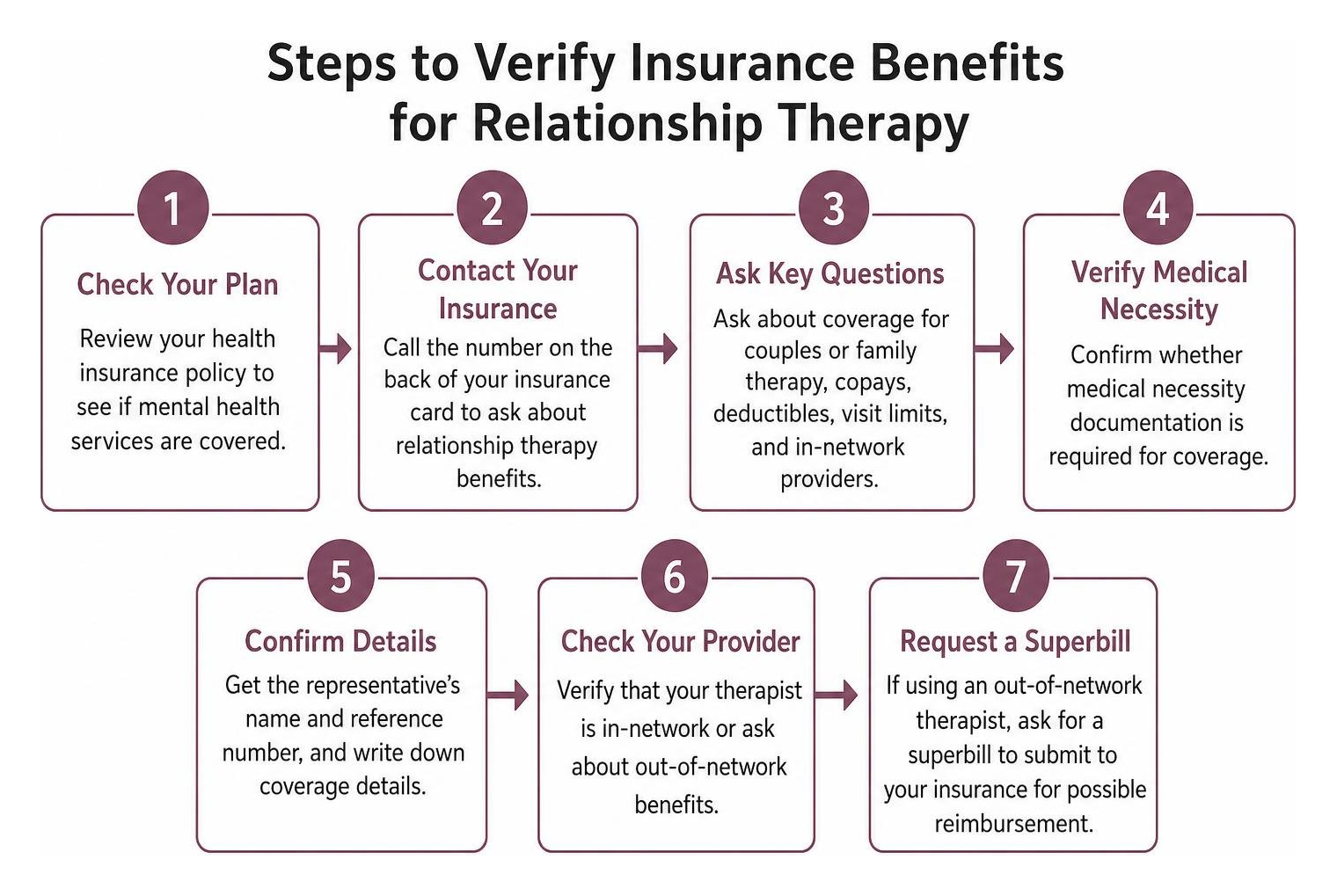
Insurance coverage for mental health services generally requires a documented diagnosis and medical necessity. CPT code 90847 describes family psychotherapy with the identified patient present and may apply to couples therapy when it forms part of treatment for one partner’s diagnosed mental health condition. Eligibility for reimbursement depends on the coverage requirements of the individual health plan.
Partners should consult resources for verifying insurance coverage for therapy before their first session. When seeing an out-of-network clinician, couples can request a superbill, which is an itemized receipt that can be submitted directly to an insurer for possible partial reimbursement. Couples receiving out-of-network services may request a superbill to submit to their insurer. However, reimbursement is not guaranteed and depends on the plan’s benefits, medical necessity requirements, and coverage exclusions.
Budgeting Strategies: HSA, FSA, and Sliding Scale Fees
Couples can employ several practical strategies to manage out of pocket costs:
- Health Savings Accounts and Flexible Spending Accounts: Pre-tax health funds can be used for qualified mental health services. Counseling must meet applicable IRS medical expense requirements. General marriage counseling or relationship enrichment is not automatically eligible.
- Sliding scale arrangements: Many community providers and private practitioners offer adjusted fees based on documented household income.
- University training clinics: Supervised graduate student interns provide professional care under the guidance of licensed faculty at accessible rates.
- Workplace wellness benefits: Many employers provide short-term counseling assistance programs that offer confidential introductory sessions at no initial charge to employees.
#
Evaluating the Long Term ROI: Therapy Versus Divorce

When relationship distress surfaces, partners often ask do we need couples therapy. Weighing the cost of proactive relational care against the financial disruption of legal separation or divorce highlights the value of counseling. Legal proceedings, establishing separate residences, and dividing assets involve significant expenses, making early therapy a prudent emotional and financial investment.
Ways to Reduce Total Marriage Counseling Cost Over Time
Couples can take several steps to make the most of their counseling sessions and manage overall expenses:
- Transition from weekly to biweekly appointments once primary communication dynamics stabilize.
- Complete assigned therapeutic exercises and reflections consistently between visits.
- Attend group workshops or educational webinars to build baseline communication skills.
- Establish clear, measurable goals during initial intake to keep sessions focused.
Essential Fee Questions to Ask Before Your First Appointment
Finding the right clinician involves understanding both therapeutic style and administrative policies. Reviewing guidance on how to choose a good therapist for you and preparing questions to ask in couples therapy ensures full transparency.
Consider asking prospective providers the following questions:
- What is your standard fee per session, and how long does each appointment last?
- Do you offer sliding scale options or package arrangements for couples therapy?
- Are you in network with my health plan, or do you supply superbills for out of network reimbursement?
- What is your cancellation and missed session policy?
- Do you provide virtual appointments, in person sessions, or a hybrid arrangement?
Frequently Asked Questions About Couples Therapy Pricing
How many sessions of couples therapy are typically needed?
Most couples participate in twelve to twenty sessions to address core communication challenges, process past hurts, and establish enduring relationship habits. Short term interventions for specific goals may require fewer visits, while deep rooted attachment repair may benefit from ongoing care.
Can we use our HSA or FSA to pay for relationship counseling?
HSA and FSA eligibility depends on whether counseling qualifies as medical care under IRS rules. General relationship counseling intended primarily to improve a relationship may not qualify, while services connected to eligible medical care may be treated differently. Before using these funds, check with your plan administrator or a qualified tax professional and keep any required documentation.
Does insurance cover couples therapy without a mental health diagnosis?
Many health insurance plans require an underlying mental health diagnosis to establish medical necessity for coverage, but a diagnosis alone does not guarantee that couples therapy will be covered. Sessions must also meet the plan’s medical necessity, billing, and benefit requirements. Some plans exclude couples counseling even when one partner has a diagnosed condition, particularly when the primary focus is general relationship enrichment or communication coaching. Check the specific plan before scheduling care.
Conclusion
Investing in relationship wellness provides lasting returns for emotional health, family stability, and long term peace of mind. Transparent conversations about fees, insurance benefits, and therapy formats allow couples to choose the care model that best suits their lives. When you are ready to take the next step toward a stronger partnership, you can find a therapist at Collective Counseling Solutions to connect with a licensed professional who aligns with your goals and budget.