

What Defines a Sexless Marriage and Why It Happens
Although some researchers describe a sexless marriage as one involving fewer than 10 sexual encounters per year, there is no universally accepted clinical definition. What matters most is whether both partners are satisfied with their level of intimacy. Research on relationship satisfaction suggests that the frequency number matters far less than the emotional meaning both partners assign to it. When both individuals happily share a companionate, low-desire lifestyle, a lack of physical intimacy may not cause relationship distress. However, when an unspoken gap leaves one or both people feeling isolated, inadequate, or rejected, the physical absence becomes a profound relational challenge.
The reasons why intimacy fades are multifaceted and rarely point to a simple loss of love. In many instances, physical factors lead the way. Hormonal fluctuations, pelvic pain, erectile challenges, chronic illnesses, and medical side effects can alter libido. When physical intimacy becomes uncomfortable, partners frequently pull away to avoid physical pain or performance anxiety.
Relational and psychological stressors also play a massive role. Life transitions such as caring for a newborn, balancing heavy career demands, or managing persistent worry can deplete the energy needed for romance. Mental health struggles create additional barriers; addressing these challenges through therapy for anxiety, specialized care through therapy for depression, or dedicated therapy for stress is often an essential first step before a couple can comfortably reawaken physical desire.
How Stress and Emotional Safety Can Affect Intimacy
Stress and perceived threats can activate physiological responses that make relaxation, emotional connection, and sexual intimacy more difficult. When partners feel emotionally secure, they may find it easier to connect physically. Sexual desire is also shaped by hormones, physical health, psychological well being, relationship dynamics, and personal circumstances.

Relational tension, chronic criticism, or unspoken resentments can increase stress and make physical closeness feel more difficult. Some people may become anxious or defensive, while others may withdraw or feel emotionally numb. When someone feels overwhelmed, sexual arousal may be more difficult.
Understanding this mind body connection helps couples move away from the myth of spontaneous desire. For many adults, particularly in long term relationships, desire is responsive rather than spontaneous. It does not appear out of thin air while washing dishes or managing household bills. Responsive desire requires context, relaxation, emotional safety, and intentional presence before arousal can spark.
The Waltz of Pain: Relentless Lover vs. Reluctant Lover
When emotional safety erodes, couples often fall into a recurring, painful dynamic that therapists sometimes describe as a dance of pursuit and withdrawal. This dynamic typically features two distinct roles:
- The Relentless Lover: This partner pursues physical connection to seek validation, comfort, and reassurance. When met with hesitation or refusal, they experience sharp rejection and internal shame, which frequently manifests as frustration, nagging, or emotional pleading.
- The Reluctant Lover: This partner pulls away from intimacy, often feeling overwhelmed by performance pressure or inadequate to meet expectations. Their avoidance is not an absence of affection, but a defense mechanism to manage their own shame and anxiety.
This cycle creates an avoidance loop. The more one partner pursues, the more pressured the other feels and withdraws. The more the other withdraws, the more intense the pursuer’s insecurity becomes. Recognizing that both partners are reacting to underlying vulnerability and fear, rather than a lack of love, is the cornerstone of breaking this destructive loop.
Practical Steps to Break the Silence and Rebuild Intimacy
Breaking the silence surrounding a sexless relationship requires stepping away from spontaneous confrontation and embracing intentional, gentle dialogue. Trying to initiate an emotional conversation late at night in bed often triggers immediate defensiveness. Instead, choose a neutral, low stress time outside the bedroom, such as during an afternoon walk or over coffee on the weekend.
A successful conversation relies on a softened start up. Focus on personal feelings and shared longing rather than pointing out past shortcomings. Using skilled couples therapy communication strategies allows partners to discuss intimacy without assigning blame:
- Instead of saying, “You never touch me anymore,” try saying, “I miss our closeness and want to find ways to feel connected with you again.”
- Instead of saying, “You always find an excuse to avoid sex,” try saying, “I notice we both seem stressed lately, and I want to understand how you are feeling about our physical connection.”
Focusing on emotional honesty creates space for both partners to voice their experiences without fear of escalating conflict.
Temporarily Reducing Expectations and Using Sensate Focus
For some couples, temporarily removing expectations for intercourse can help reduce performance pressure and create opportunities to rebuild comfortable physical connection. This approach should be mutually agreed upon, with both partners able to discuss their boundaries and comfort level.
Some couples use graduated touch protocols, often known as Sensate Focus, to rebuild comfort and sensory awareness without expectations of sexual performance. Sensate Focus exercises, originally developed by Masters and Johnson, may help couples reduce performance pressure, improve awareness of physical sensations, and explore comfortable forms of intimacy. A qualified sex therapist can help partners decide whether structured exercises are appropriate and guide their use safely and comfortably. The International Society for Sexual Medicine explains Sensate Focus.

Structuring Connection with Scheduled Intimacy and Variety
Relying purely on spontaneous passion in long term partnerships frequently results in months of inaction. Scheduling dedicated time for physical and emotional connection ensures that intimacy remains a shared priority among competing daily responsibilities.
Couples can maintain connection and curiosity through low pressure practices:
- The Six-Second Kiss: Try sharing a six-second kiss during daily greetings or goodbyes. This relationship exercise, popularized by the Gottman Institute, encourages couples to slow down and prioritize affectionate connection.
- The Erotic Menu: Create a written list of intimate activities, ranging from shared baths and massage to deep conversation and cuddling. Partners can take turns selecting low-pressure activities for their scheduled time together.
- Mindful Presence Exercises: Spend several minutes sitting quietly together, maintaining soft eye contact, and breathing in unison to downregulate the nervous system.
- Novelty Dates: Engage in new shared activities, such as taking a cooking class or exploring an unfamiliar park. Novelty stimulates dopamine in the brain, which naturally supports romantic attraction.
Understanding Sexless Marriage Therapy: Approaches and Modalities
When self guided efforts feel stuck, professional guidance offers objective structure and clinical support. Understanding the distinction between general couples therapy and specialized sex therapy helps partners choose the most appropriate resource for their needs.
| Modality | Primary Focus | Best Suited For | Common Interventions |
|---|---|---|---|
| Couples Therapy | Relational dynamics, emotional safety, communication, conflict resolution | Emotional distance, resentment, unresolved arguments, life stress | Emotionally Focused Therapy (EFT), Gottman Method, communication exercises |
| Sex Therapy | Specific sexual functioning, desire discrepancies, physical discomfort | Medical recovery, sexual avoidance, mismatched libido, arousal concerns | Sensate Focus, psychoeducation, desire mapping, anxiety reduction |
Many couples achieve the greatest success by working through relational friction in couples therapy conflict sessions before addressing specific sexual mechanics. Rebuilding the broader foundation helps rebuild trust and connection through marriage relationship counseling so physical affection can flourish naturally.
What to Expect in Sexless Marriage Therapy Sessions
Beginning therapy can feel intimidating, but knowing the process helps ease apprehension. Initial sessions typically center on a thorough clinical assessment, where the therapist learns about the couple’s relationship history, communication habits, and the emotional environment surrounding physical touch.

Clients discover what happens in couples therapy involves active skill building rather than passive complaints. Clinicians utilize evidence based frameworks, such as the Gottman Method or Emotionally Focused Therapy, to identify destructive interaction cycles and cultivate secure emotional attachment. Coming prepared with specific questions to ask in couples therapy ensures that both partners and the clinician remain aligned on realistic goals for intimacy restoration.
Alternatives and Complements: Intensives and Online Support
Traditional weekly therapy is not the only path to healing. Depending on work schedules, geographical location, and personal preferences, couples can choose from various complementary approaches:
- Marriage Intensives and Retreats: Marriage intensives and retreats provide concentrated opportunities to address relationship concerns over several days. However, their effectiveness varies, and continued therapy may still be necessary.
- Individual Therapy: One partner may engage in individual counseling to process personal trauma, body image distress, or mood concerns that inhibit intimacy.
- Virtual Counseling: Many partners utilize online couples counseling to access qualified clinicians from the privacy and comfort of home, making consistent attendance far easier.
- Financial Planning: Exploring couples therapy insurance options helps make consistent, professional guidance sustainable for long term progress.
Recognizing When Professional Support Is Necessary
Every relationship encounters periods of low physical desire. However, certain clear indicators signal that a couple has reached the limit of what they can resolve on their own.
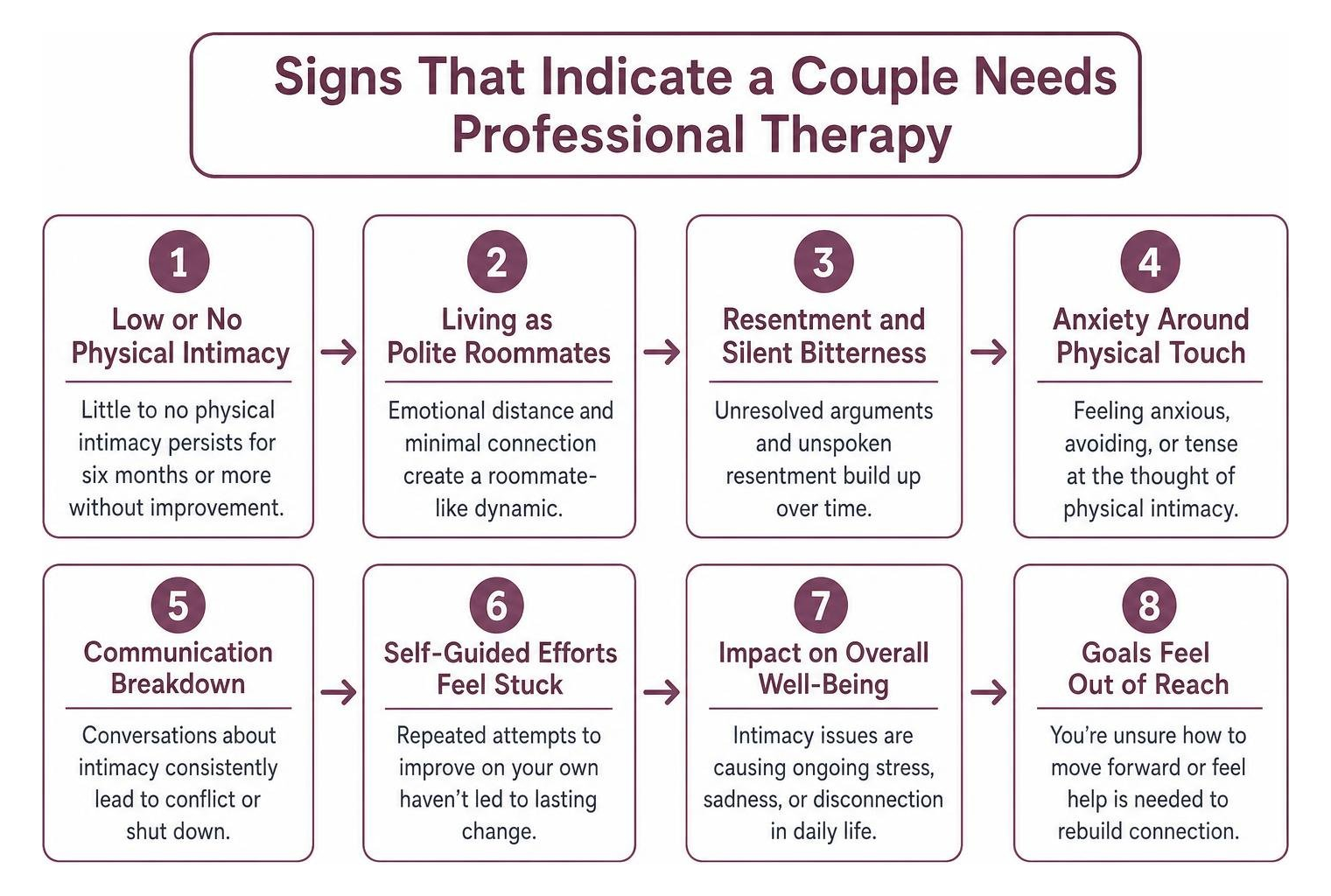
If partners find themselves living as polite roommates, harboring silent bitterness, or feeling intense anxiety at the thought of physical touch, reading do we need couples therapy can offer valuable clarity on taking the next step.
When to Start Sexless Marriage Therapy
A helpful benchmark for seeking professional support is when physical distance and emotional distress persist for an extended period without improvement. Waiting years to address intimacy gaps allows resentment to become deeply entrenched, making recovery more complex. Understanding why is it healthy to go to couples therapy normalizes the process of seeking help early, ensuring that minor desire discrepancies do not transform into permanent emotional estrangement.
Frequently Asked Questions About Sexless Relationships
Can a sexless marriage survive without physical intimacy?
Yes, a marriage without physical intimacy can survive and remain deeply loving if both partners mutually agree and feel content with a companionate relationship. When both individuals prioritize emotional companionship, shared parenting, or intellectual connection over physical passion, the union can thrive. Distress arises only when there is a mismatch in desire and one or both partners feel unheard, lonely, or neglected.
How long does it take for therapy to restore intimacy?
The time needed to improve intimacy varies widely between couples. Some may notice improvements in communication relatively early, while rebuilding emotional and physical closeness may require longer-term work. Many couples notice initial improvements in communication and emotional warmth within several sessions. Full restoration of physical closeness depends on the depth of past emotional injuries, the consistency of at-home exercises, and the willingness of both partners to practice vulnerability outside of clinical sessions.
What should I do if my spouse refuses to attend counseling?
If your spouse declines to attend therapy, you can begin by attending individual sessions. Focusing on your own emotional regulation, personal boundaries, and communication style changes the relational dance. Individual therapy can help you explore your feelings, establish healthy boundaries, and improve communication, even if your partner chooses not to participate in counseling.
Conclusion
A sexless marriage does not necessarily indicate a lack of love or relationship satisfaction. Changes in sexual intimacy can result from physical health concerns, emotional stress, relationship dynamics, personal preferences, or a combination of factors. By understanding how the nervous system regulates desire, setting aside the pressure of spontaneous performance, and engaging in structured, gentle touch, couples can rebuild both emotional security and physical closeness.
Restoring deep connection takes time, patience, and the right professional guidance. Collective Counseling Solutions simplifies the process of connecting with licensed, skilled therapists who accept insurance, offering compassionate care through both in person and teletherapy formats. When you are ready to take the first step toward renewing your relationship, you can find a therapist to support you on the journey back to intimacy and lasting fulfillment.