

Choosing Therapy Interventions for Depression
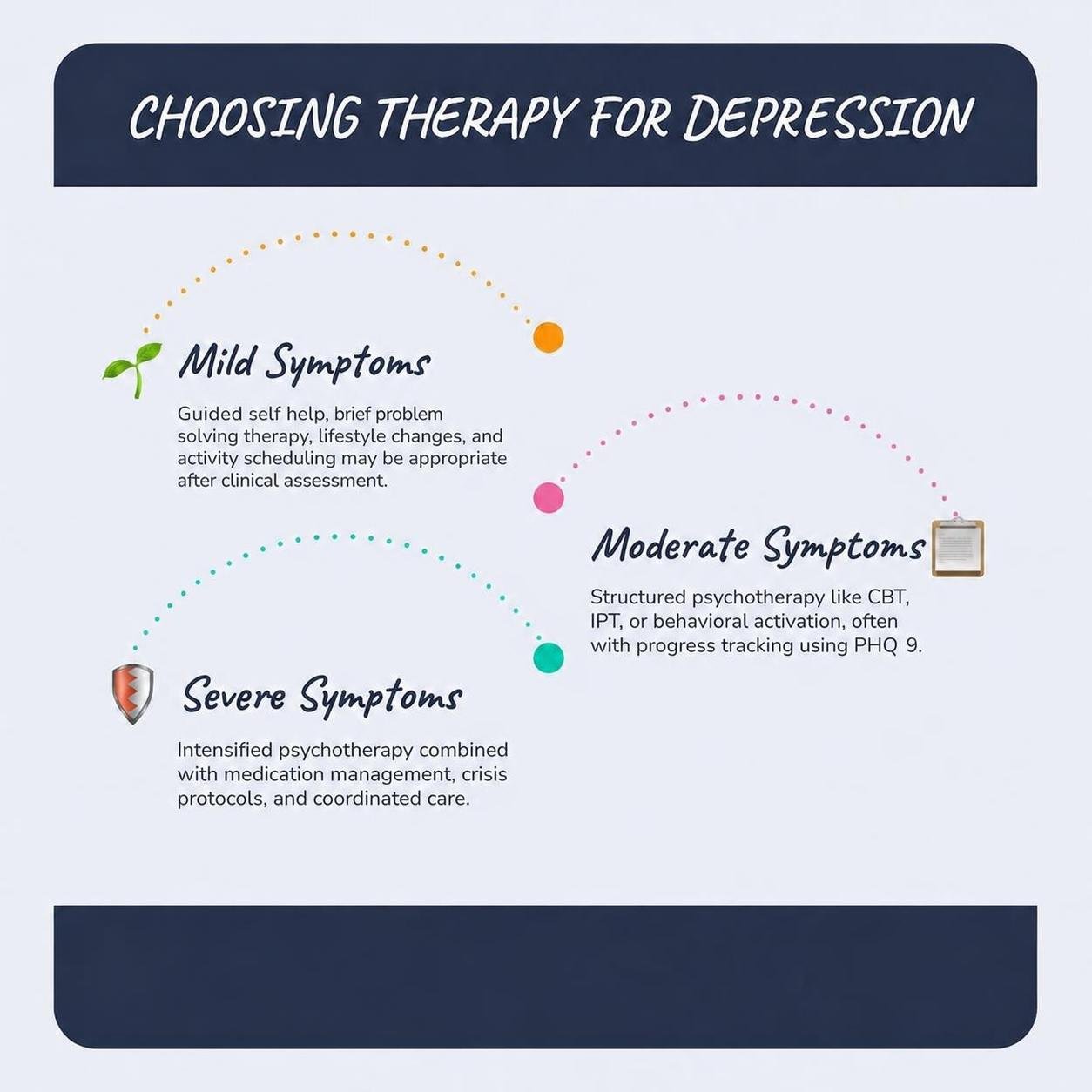
The most studied therapy interventions for depression are cognitive behavioral therapy, behavioral activation, and interpersonal therapy. For some people with less severe depression, clinician guided self help and behavioral activation may be appropriate after a clinical assessment. For more severe symptoms, structured therapy for depression often works alongside medication and closer support.
The right plan depends on symptoms, daily functioning, and what matters to the person seeking care. Accessing evidence based treatment for depression helps individuals work with clinicians who track progress using tools like the PHQ 9 and adjust care when needed.
Evidence Based Therapy Interventions for Depression Across Modalities
Clinical guidelines establish that structured psychotherapies serve as first line treatments for depressive disorders. According to the clinical practice guidelines, psychological interventions demonstrate strong efficacy in reducing symptom burden, restoring functional capacity, and fostering long term emotional stability.
Therapists select modalities based on diagnostic clarity, symptom presentation, and individual preferences. Understanding evidence based treatment for depression allows clinicians and clients to collaborate on targeted care paths.
- Cognitive Behavioral Therapy: Focuses on cognitive patterns and behavioral reinforcement through cognitive restructuring and behavioral experiments. Typical structure varies by protocol and individual needs.
- Behavioral Activation: Focuses on environmental reward and activity levels through activity scheduling and avoidance modification. Typical structure varies by protocol and individual needs.
- Interpersonal Psychotherapy: Focuses on relational context and social functioning through role clarification and communication analysis. Typical structure varies by protocol and individual needs.
- Acceptance and Commitment Therapy: Focuses on psychological flexibility and personal values through cognitive defusion and values based action. Typical structure varies by protocol and individual needs.
- Mindfulness Based Cognitive Therapy: Focuses on awareness of depressive thought patterns and relapse prevention in recurrent depression through decentering, meditation, and attentional control. It is often delivered in a structured group program, with length varying by program and individual needs.
Core Therapy Interventions for Depression: CBT, IPT, and Behavioral Activation
Cognitive Behavioral Therapy addresses distorted information processing that maintains low mood. Clinicians guide individuals to identify automatic thoughts, examine underlying cognitive schemas, and test negative assumptions. A comprehensive CBT meta analysis synthesizing 409 trials shows that CBT yields significant, durable improvements compared to control conditions.
Behavioral Activation functions as both a standalone modality and a core component of CBT. Depression frequently leads to avoidance and social withdrawal, which deprives individuals of positive reinforcement. Behavioral activation systematically reintroduces goal directed activities, breaks daily tasks into manageable components, and tracks mood shifts to disrupt depressive inertia.
Interpersonal Psychotherapy frames depressive episodes within social contexts. Based on interpersonal psychotherapy research, IPT targets four distinct problem areas: unresolved grief, interpersonal role disputes, life role transitions, and interpersonal deficits. By improving communication skills and building support networks, clients resolve relational distress that triggers or maintains depressive symptoms.
Acceptance and Mindfulness Based Approaches
Acceptance and Commitment Therapy shifts the focus from symptom reduction to psychological flexibility. Rather than attempting to suppress or eliminate painful thoughts, clients practice cognitive defusion, learning to observe internal experiences without reacting automatically. Therapy connects these acceptance processes to values based living, enabling meaningful engagement in life even during difficult emotional states.
Mindfulness Based Cognitive Therapy integrates classic cognitive strategies with secular meditation practices. The primary target is rumination interruption. MBCT teaches decentering skills, allowing people to recognize negative thought patterns as temporary mental events rather than absolute truths. Clinicians often introduce practical tools used in depression therapy to help clients establish grounding habits outside of formal sessions.
Digital, Blended, and Telehealth Delivery Models
Technological advancements have expanded access to evidence based mental health services. Therapist guided internet interventions provide structured cognitive and behavioral modules with asynchronous clinician feedback. These programs can reduce travel and geographic barriers while maintaining clinical structure, although licensing requirements, insurance coverage, technology access, and state restrictions may still affect availability.
Blended care combines traditional face to face sessions with digital health applications. Individuals complete psychoeducation, symptom tracking, and homework exercises on mobile platforms between appointments. Digital tools may help clinicians monitor progress and support patient engagement between sessions.
Stepping Care: Tailoring Interventions by Depression Severity
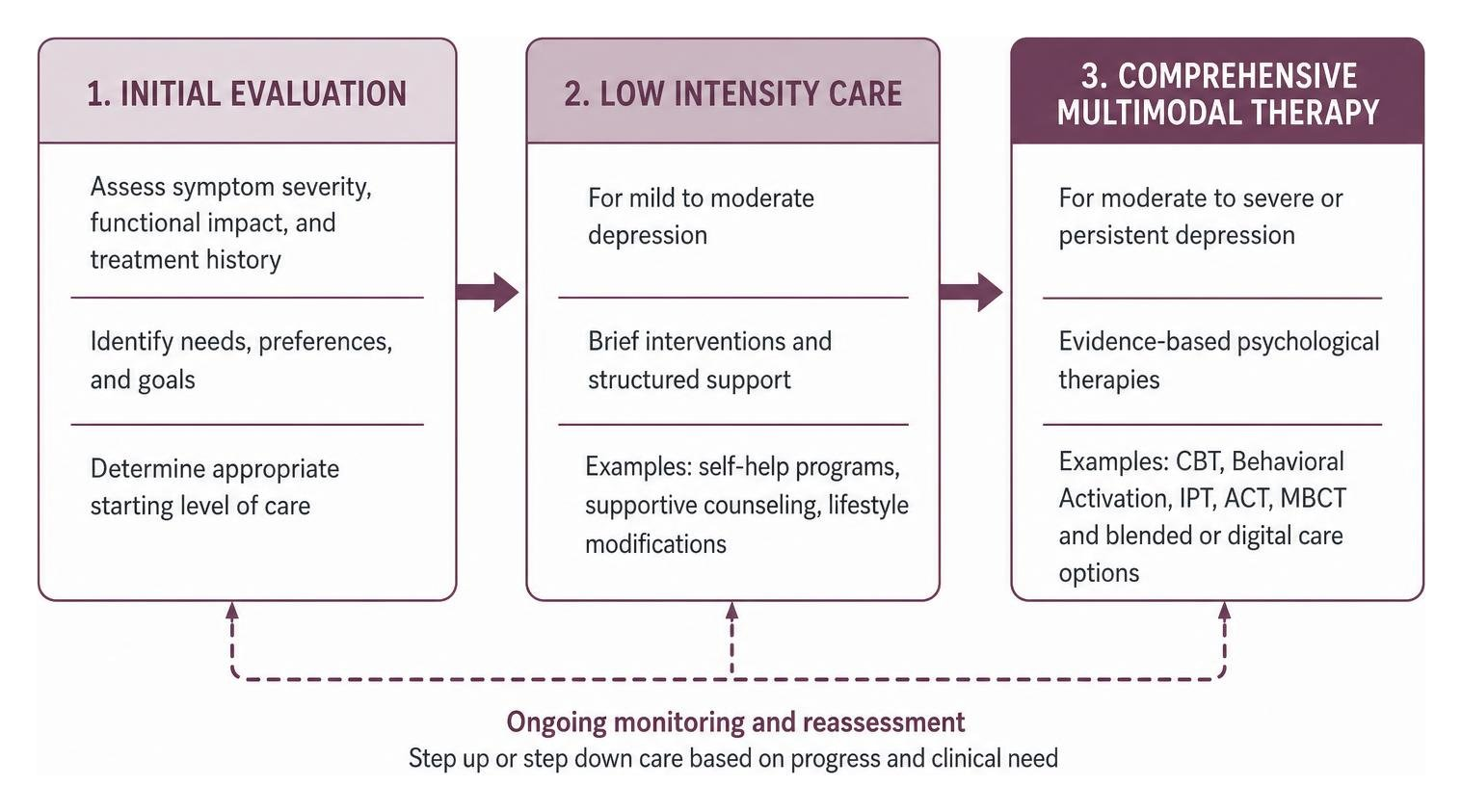
Stepped care models organize mental health interventions based on clinical need, ensuring individuals receive appropriate care without unnecessary complexity. The CANMAT treatment guidelines emphasize matching intervention intensity to symptom presentation, functional impairment, and history of prior episodes.
Interventions for Mild to Moderate Depression
Mild depressive presentations often respond well to lower intensity, highly structured interventions. Options include brief problem solving therapy, guided self help using structured workbooks, and supportive counseling. Clinicians offering therapy for mild depression focus on actionable lifestyle modifications, including consistent sleep routines and regular physical activity.
Individuals experiencing subtle functional declines may recognize high functioning depression signs such as persistent fatigue, internal emotional numbness, and diminished joy despite maintaining professional and personal responsibilities. Early therapeutic intervention may help reduce symptoms, improve daily functioning, and potentially lower the risk of worsening depression.
Interventions for Severe Depression and Crisis Protocols
Severe depressive episodes involve profound functional disruption, pronounced psychomotor changes, and significant emotional distress. Treatment at this level requires intensive, multimodal care, often combining structured psychotherapy with medical evaluation and multidisciplinary team support.
Clinical safety protocols are essential during severe episodes. Clinicians implement structured safety planning, such as the Stanley Brown model, to identify individual warning signs, internal coping strategies, supportive social contacts, and professional crisis resources. For immediate support during a mental health crisis, individuals can contact the 988 Suicide & Crisis Lifeline. If someone is in immediate danger, call 911 or seek emergency medical care.
Clinical Frameworks: Measurement Based Care and SMART Treatment Planning

Measurement based care involves the routine collection and evaluation of symptom data to inform clinical decisions. Systematic tracking creates a clear connection between assessment, treatment goals, and progress notes, ensuring diagnostic precision and targeted interventions.
Utilizing the PHQ 9 for Progress Tracking and Clinical Adjustments
The Patient Health Questionnaire 9 is a screening and symptom monitoring instrument that helps clinicians assess depressive symptom severity, but it is not a standalone diagnostic tool. Clinicians score responses from 0 to 27 to help stratify symptom levels:
- 0 to 4 indicates minimal or no depressive symptoms
- 5 to 9 indicates mild depressive symptoms
- 10 to 14 indicates moderate depressive symptoms
- 15 to 19 indicates moderately severe symptoms
- 20 and above reflects severe depressive symptomatology
Administering the PHQ 9 at baseline and regular intervals allows therapists to identify treatment non response early. If symptom scores fail to decline after several weeks, clinicians can adjust the intervention, reconsider diagnostic factors, or explore multimodal strategies.
Building Measurable SMART Goals for Depression
Effective treatment plans rely on the SMART framework to define clear, collaborative clinical objectives:
- Specific: Target distinct behaviors, such as scheduling two social interactions each week.
- Measurable: Use verified instruments, such as reducing PHQ 9 scores by five points.
- Achievable: Set realistic steps that match the client’s current energy levels and capacity.
- Relevant: Align therapeutic targets with the individual’s core values and personal goals.
- Time bound: Establish clear milestones, such as evaluating progress over an eight week period.
Tailoring Therapy Interventions for Depression with Co Occurring Conditions
Depression frequently co exists with other psychological conditions, requiring flexible, integrated treatment strategies. When treating co occurring depression and anxiety, clinicians often utilize transdiagnostic protocols that target shared cognitive vulnerability factors, such as intolerance of uncertainty and negative emotional reactivity.
When depression occurs alongside substance use disorders or emotional dysregulation, therapists integrate skills from Dialectical Behavior Therapy. Teaching distress tolerance, emotion regulation, and interpersonal effectiveness helps individuals manage intense distress without relying on maladaptive coping behaviors.
Managing Treatment Resistant Depression Through Therapy and Care Coordination
Treatment resistant depression commonly refers to major depressive disorder that has not responded adequately to at least two appropriate antidepressant medication trials. It is distinct from depression that has not improved with psychotherapy alone. In these situations, clinicians perform a comprehensive reassessment to identify contributing medical conditions, unaddressed life stressors, or overlooked diagnostic factors.
Adapting Therapy for Persistent Depression
When standard protocols do not produce sufficient relief, therapists adapt their therapeutic approach. Clinicians may transition from standard cognitive restructuring to acceptance based strategies, intensify behavioral activation schedules, or involve family members in supportive sessions. Coordinated care involving primary care providers, psychiatrists, and specialized mental health professionals ensures that biological, psychological, and social dimensions of health are addressed simultaneously.
Long Term Maintenance and Relapse Prevention Strategies
Achieving symptom remission is an essential milestone, but long term wellness requires proactive maintenance planning. Structured relapse prevention strengthens psychological resilience and reduces the likelihood of future depressive episodes.
Relapse Prevention Planning and Early Warning Signs
Relapse prevention planning begins during the consolidation phase of therapy. Therapists collaborate with clients to construct personalized relapse prevention toolkits that document:
- Individualized prodromal symptoms, such as changes in sleep architecture, increased irritability, or social withdrawal
- Specific behavioral activation steps to initiate immediately upon noticing early warning signs
- Cognitive restructuring exercises to address recurring negative thought patterns
- A scheduled cadence for periodic booster sessions to review skills and evaluate mood stability
Lifestyle Integration and Sustained Well Being
Sustained recovery relies on integrating therapeutic skills into daily routines. Stabilizing circadian rhythms through regular sleep and wake cycles, maintaining consistent physical activity, and cultivating reliable social connections provide a solid foundation for emotional regulation. Ongoing practice of mindfulness and values based action reinforces long term well being.
Frequently Asked Questions About Depression Therapy
How do clinicians determine what type or intensity of therapy may be appropriate?
Therapists assess symptom severity, functional impairment, previous treatment history, and individual goals during an initial diagnostic evaluation. Standardized instruments like the PHQ 9 help classify symptoms into mild, moderate, or severe categories, allowing clinicians to recommend either focused, low intensity strategies or comprehensive multimodal care.
How quickly can a patient expect results from evidence based depression interventions?
Some people begin noticing improvements within the first several weeks of therapy, although the timeline varies depending on symptom severity, treatment approach, and individual circumstances.
What should happen if a patient does not improve after standard psychotherapy?
If routine measurement reveals limited symptom reduction after a reasonable period, the therapist and client conduct a clinical review. This process involves evaluating treatment engagement, exploring co occurring conditions, adjusting the therapeutic modality, or coordinating with medical providers to incorporate complementary health interventions.
Conclusion
Overcoming depression involves a structured, evidence based process tailored to each person’s unique clinical presentation. By utilizing proven modalities such as Cognitive Behavioral Therapy, Behavioral Activation, and Interpersonal Psychotherapy, individuals develop practical tools to overcome negative thought cycles, re engage with rewarding activities, and build supportive relationships.
Early intervention and collaborative treatment planning lay the groundwork for long term health and symptom remission. Collective Counseling Solutions connects individuals with licensed therapists, including providers who accept participating insurance plans, and offers both in person and teletherapy appointments. To begin your journey toward sustainable emotional health, explore specialized therapy for depression and schedule an intake session today.