

Finding a Therapist for Stress and Anxiety
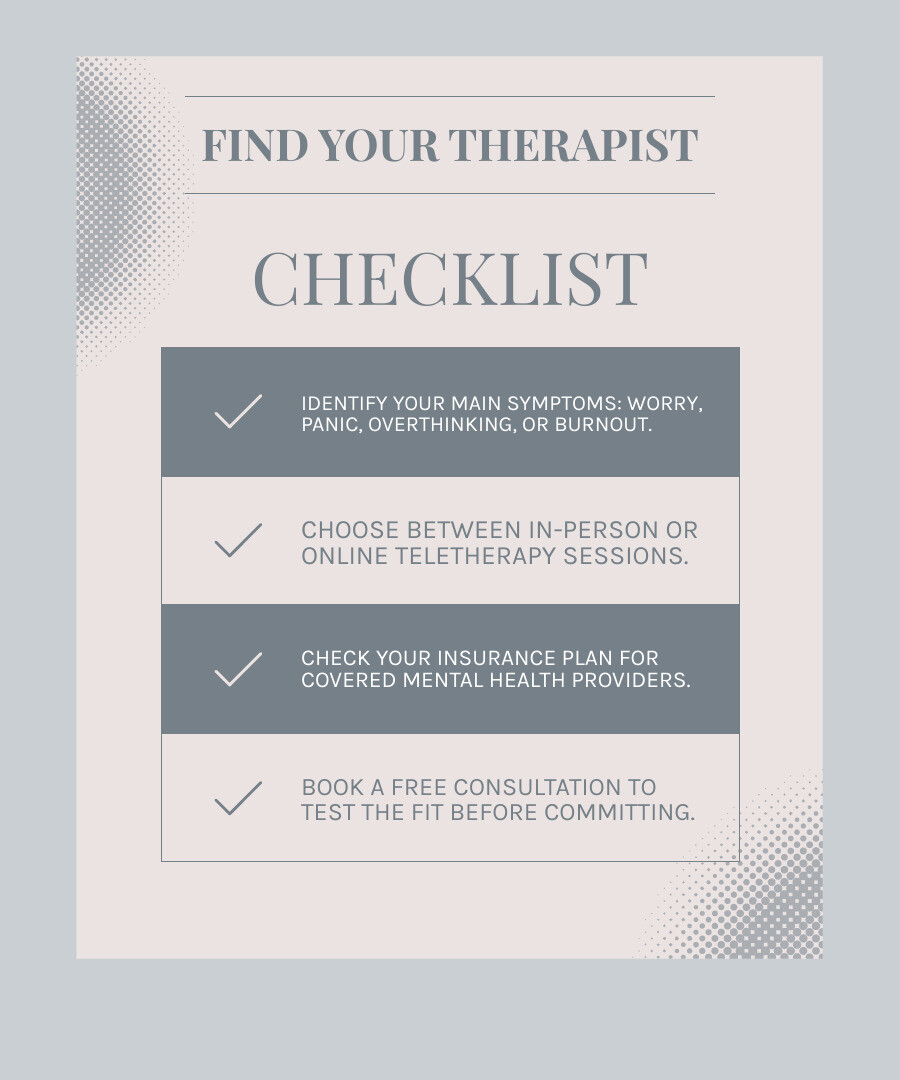
Finding a therapist for stress and anxiety is one of the most important steps you can take for your mental health. Here is a quick overview to help you get started right away:
How to find a therapist for stress and anxiety:
- Identify your main symptoms (worry, panic, overthinking, burnout)
- Decide between in person or online (teletherapy) sessions
- Check your insurance plan for covered mental health providers
- Search for therapists who specialize in anxiety using a directory or referral
- Book a free consultation to test the fit before committing
- Look for evidence based approaches like CBT, ACT, or EMDR
- Start therapy and give it at least 6 to 12 sessions to evaluate progress
Anxiety is extremely common. Over 40 million adults in the U.S. experience an anxiety disorder every year, according to the National Institute of Mental Health. That is nearly 1 in 5 adults. Yet fewer than 40% of people with anxiety ever seek treatment.
Many people wait because they are not sure where to start. Or they feel like they should be able to handle it on their own. If you have ever felt like you are holding it together on the outside while falling apart on the inside, you are not alone, and you do not have to keep doing that.
Therapy works. And getting started is simpler than most people expect.
Therapy for stress and anxiety terms explained:
- licensed therapist stress management
- local stress relief counseling
- counseling for stress management
Signs You Should Seek a Therapist for Stress and Anxiety
It is completely normal to experience occasional worry or pressure. However, there is a distinct difference between everyday stress and clinical anxiety that requires professional support. Many high achieving individuals look like they have everything completely under control on the outside while experiencing constant internal turmoil.

How do you know when your stress levels have crossed the line from manageable to overwhelming? Here are the key indicators that it is time to seek professional support:
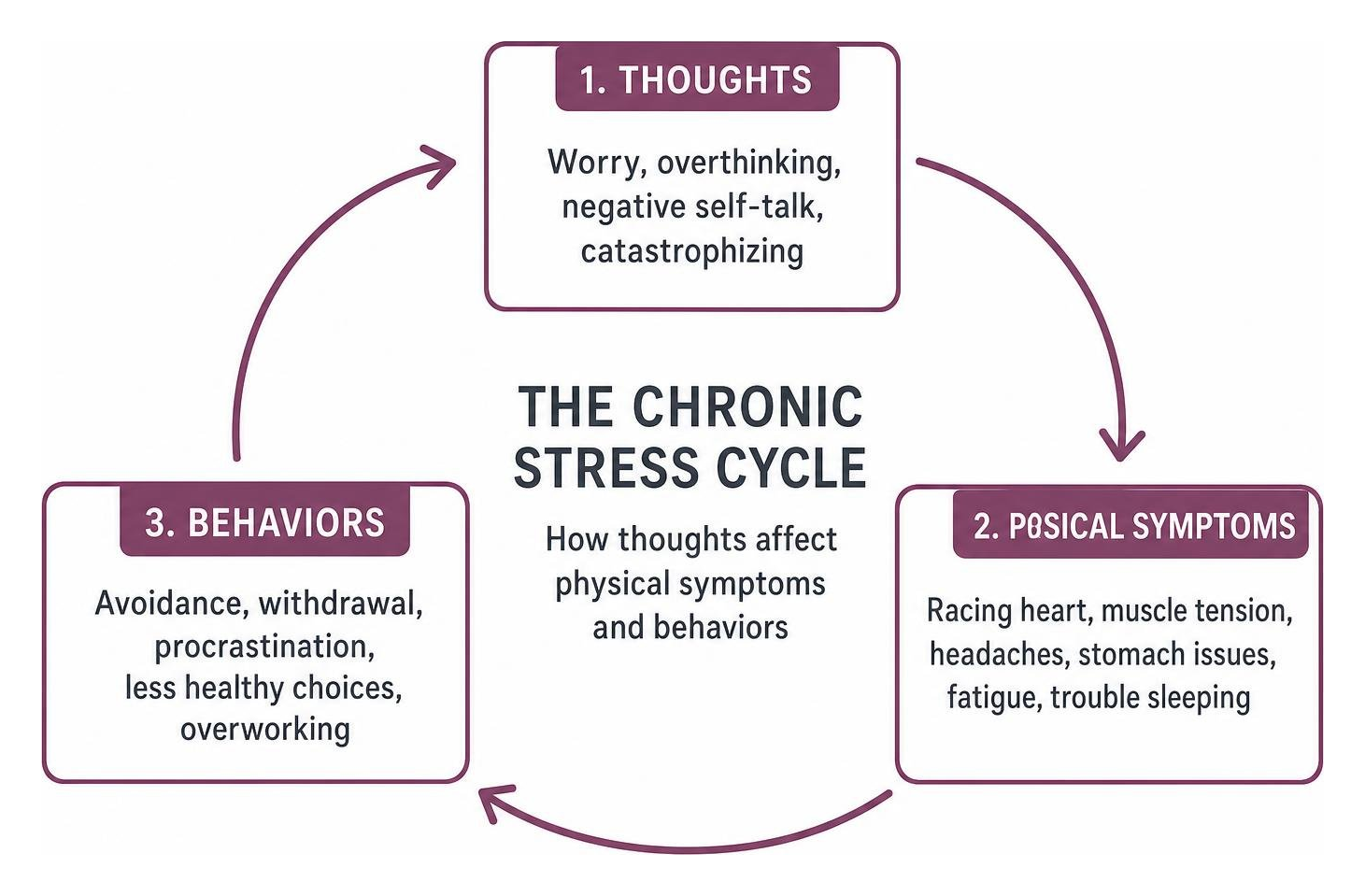
- Physical Symptoms: Chronic stress does not just live in your mind. It actively manifests in your physical body. You might experience a constantly racing heart, muscle tension, frequent headaches, unexplained stomach issues, or sudden panic attacks.
- Daily Disruption: If worry is clouding your daily decision making or causing you to avoid social gatherings, career opportunities, or daily tasks, it is time to seek help.
- Emotional Exhaustion: You feel constantly drained, irritable, or emotionally depleted. This is a primary indicator of burnout, especially for caregivers and professionals in high pressure environments.
- Overthinking and Perfectionism: You find yourself trapped in exhausting worry loops, constantly replaying past conversations or obsessing over future scenarios. Perfectionism is often a mask for deep seated anxiety.
- Sleep Disturbances: You struggle to fall asleep because your mind is racing, or you wake up in the middle of the night with a sense of dread.
When stress and anxiety begin to dictate how you live your life, therapy can help you regain control.
Understand the Most Effective Therapy Modalities
When searching for a therapist, you will notice various acronyms representing different therapeutic modalities. Understanding these approaches helps you select a practitioner who aligns with your healing goals. Modern therapy relies on evidence based treatments that have decades of research backing their efficacy.
Here is a comparison of the three most common and highly researched modalities for treating stress and anxiety:
| Modality | Core Focus | Best For |
|---|---|---|
| Cognitive Behavioral Therapy (CBT) | Identifying and changing unhelpful thought patterns and behaviors | Generalized anxiety, panic attacks, and daily stress management |
| Acceptance and Commitment Therapy (ACT) | Accepting difficult emotions and committing to actions aligned with personal values | Performance anxiety, work burnout, and life transitions |
| Eye Movement Desensitization and Reprocessing (EMDR) | Reprocessing painful memories and trauma through bilateral stimulation | Trauma linked anxiety, post traumatic stress, and phobias |
Cognitive Behavioral Therapy for Stress and Anxiety
Cognitive Behavioral Therapy is widely considered the gold standard for treating anxiety disorders. The core philosophy of CBT is that your thoughts, feelings, and behaviors are deeply interconnected. When you experience chronic anxiety, your mind often defaults to negative thought patterns, such as assuming the worst possible outcome.
A CBT therapist helps you recognize these unhelpful cognitive loops and actively restructure them. Through practical coping skills and behavioral activation, you learn to face feared situations gradually. CBT is highly goal oriented and practical, equipping you with tools that allow you to manage your symptoms independently.
Somatic and Trauma Informed Approaches
Sometimes, anxiety is too deeply rooted in the body to be resolved through cognitive restructuring alone. This is where somatic and trauma informed approaches become invaluable. Somatic therapy focuses on the connection between the mind and the physical body, helping you regulate your nervous system.
Body based tools, such as breathwork and mindfulness, teach you how to calm your physiological stress response. Additionally, Eye Movement Desensitization and Reprocessing is an exceptionally effective trauma recovery tool. EMDR helps the brain reprocess painful or traumatic memories without requiring you to talk about them in extensive detail. If you are looking for specialized clinical care, a national therapy provider can connect you with experts trained in somatic and trauma informed modalities without limiting your search to one specific area.
How to Choose the Right Mental Health Professional
Finding the right professional can feel overwhelming because of the diverse credentials and licensures in the mental health field. The ideal therapist should hold the proper licensing for your state and possess clinical expertise in treating your specific anxiety symptoms.

Comparing Psychologists Counselors and Social Workers
Understanding the differences in educational backgrounds and scopes of practice can help you narrow down your search:
- Psychologists (PhD or PsyD): These professionals have doctoral degrees and extensive training in psychological testing, assessments, and clinical therapy. They excel at diagnosing complex conditions and providing structured, evidence based therapies.
- Licensed Professional Counselors (LPC or LPCC): Counselors focus heavily on the therapeutic relationship, goal setting, and helping clients develop practical coping strategies for daily life challenges.
- Licensed Clinical Social Workers (LCSW or LISW): Social workers look at the individual through a systemic lens, evaluating how your environment, relationships, and societal factors impact your mental health.
- Marriage and Family Therapists (LMFT): These specialists focus on relational dynamics, making them ideal if your stress and anxiety are closely tied to family or relationship conflicts.
Finding the Best Fit with a Therapist
While credentials are vital, the therapeutic relationship itself is the single most important factor in your healing journey. You need to feel safe, respected, and completely comfortable dropping your protective masks during your sessions.
Most practices recommend scheduling an initial consultation call. This brief conversation allows you to ask questions about their therapeutic style, evaluate their warmth, and determine if they are the right fit for your personality and goals.
Practical Tips for Navigating Insurance and Costs
The financial aspect of therapy is a common concern, but there are several ways to make treatment accessible and sustainable.
- Verify Your Insurance Benefits: Many modern therapy practices accept major health insurance plans. Before your first session, reach out to your provider or the therapy practice to confirm your mental health benefits.
- Utilize Out of Network Benefits: If you find a specialist who does not accept your insurance, check if your plan offers out of network coverage. Many plans will reimburse between 50% and 80% of session costs.
- Request a Superbill: When using out of network benefits, you pay the therapist directly, and they provide you with a document called a superbill. You submit this to your insurance provider to seek reimbursement.
- Ask About Sliding Scale Fees: Some therapists offer sliding scale fees based on income to accommodate clients who do not have insurance or have limited financial means.
Collective Counseling Solutions simplifies this entire process by connecting you directly with highly skilled, licensed therapists who accept your insurance, reducing your out of pocket expenses.
Frequently Asked Questions About Stress and Anxiety Therapy
What to Expect During Your First Therapy Session
Your initial session is primarily an intake assessment. It is a collaborative, low pressure conversation where the therapist learns about your history, current symptoms, and primary concerns. Together, you will establish clear goals and build a personalized plan for your treatment. This session is also an opportunity to begin building a strong therapeutic alliance.
How Long Does Anxiety Therapy Take to Show Results
The timeline for therapy varies based on the severity of your symptoms and your personal goals. However, many individuals notice measurable improvements within 6 to 12 weekly sessions of regular attendance and active practice between appointments. Therapy is designed to equip you with lifelong tools, with the ultimate goal of helping you thrive independently.
Is Online Therapy as Effective as In Person Sessions
Yes, extensive research confirms that online teletherapy is just as clinically effective as in person therapy for managing stress and anxiety. Virtual sessions offer unmatched convenience, allowing you to meet with your therapist from the comfort of your home or office. Additionally, certifications like PsyPact allow licensed psychologists to legally practice teletherapy across state lines, significantly expanding your access to top tier specialists.
Conclusion
Reclaiming your calm, clarity, and confidence is entirely possible. You do not have to navigate chronic stress and overwhelming anxiety on your own. By identifying your symptoms, understanding therapeutic modalities, and utilizing professional matching services, you can find the perfect therapeutic partner for your journey.
When you are ready to take that first courageous step toward healing, Collective Counseling Solutions is here to simplify the process. They connect you with compassionate, skilled therapists who accept your insurance and offer both in person and virtual care.
Explore how professional support can transform your well being by visiting Collective Counseling Solutions Stress Therapy to book your initial consultation today.