

Finding Local Stress Relief Counseling
Finding local stress relief counseling is one of the most effective steps you can take when stress starts affecting your work, relationships, or sleep. If you are looking for clear guidance on how to locate a counselor in your area, here is a simple overview:
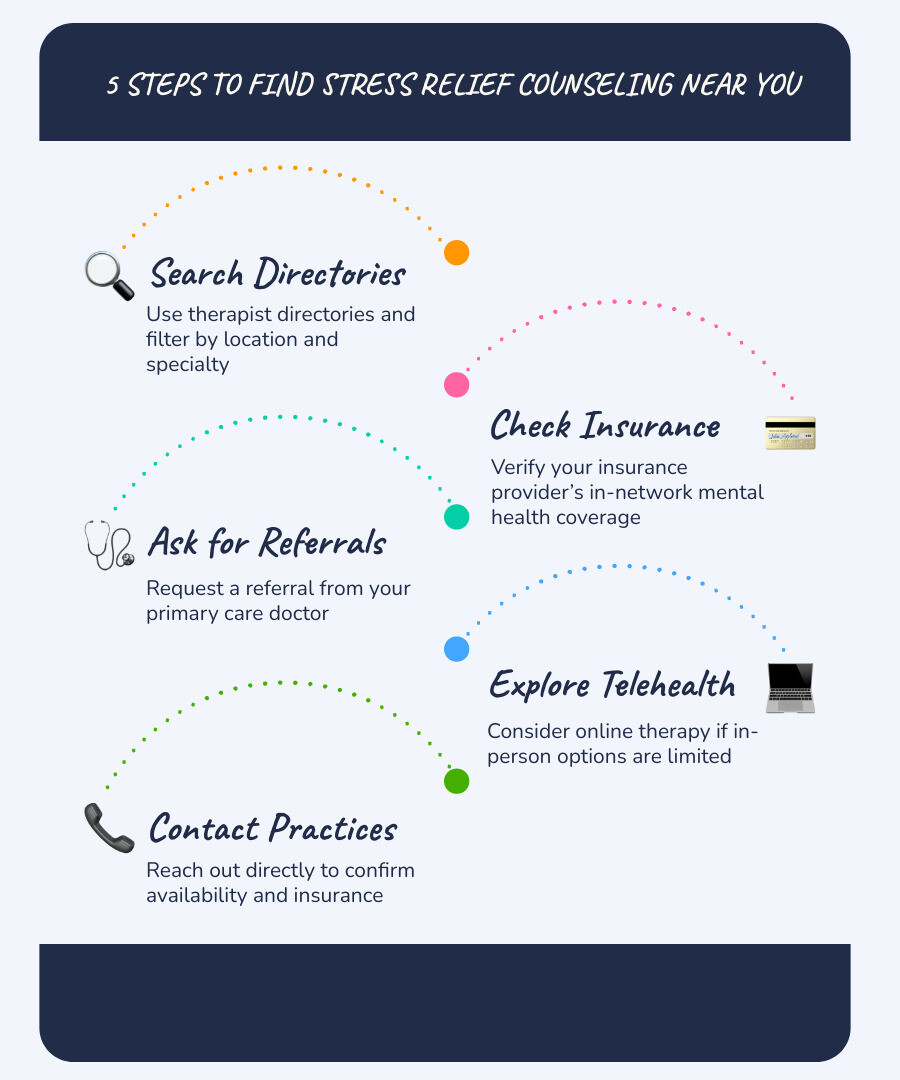
How to find local stress relief counseling:
- Browse Collective Counseling Solutions to connect with licensed therapists who accept insurance
- Check your insurance provider’s website for in-network mental health providers
- Ask your primary care doctor for a referral to a licensed counselor
- Look for telehealth options if in-person availability is limited in your area
Stress is a normal part of life, but chronic stress is a different story. It can show up as constant worry, physical tension, trouble sleeping, or feeling like you are always running behind. Thousands of people seek stress management therapy every year, and research shows that 84% of therapy clients see a measurable reduction in symptoms in as little as two months.
Support is more accessible than most people realize, whether you prefer sitting in an office or logging in from your couch.
Helpful stress relief counseling resources:
Understanding Stress Management Therapy and How It Works
Stress is the natural response of the body to physical or psychological demands. While occasional stress can motivate people to meet deadlines or achieve goals, chronic stress can have serious consequences for mental and physical health. When a person is constantly overloaded, the nervous system remains in a perpetual state of fight or flight. This state can lead to physical symptoms such as chronic muscle tension, headaches, fatigue, stomach issues, and sleep disturbances. Emotionally, it often manifests as irritability, anxiety, sadness, and complete emotional exhaustion.
This is where stress management therapy becomes essential. It is a specialized form of counseling designed to help individuals identify the root causes of their stress, understand their personal triggers, and develop healthier coping mechanisms. Rather than simply suggesting that a client avoid stressful situations, which is often impossible, a therapist helps clients build resilience and change how they react to pressure.
In a therapeutic setting, clients learn to balance their personal capacity against life demands. Many high performing individuals fall into the trap of compulsive overworking or, conversely, complete avoidance and procrastination when they feel overwhelmed. Therapy helps break down these extreme behaviors by teaching clients how to divide massive, overwhelming challenges into smaller, tolerable goals.
Therapists utilize several evidence based modalities to address chronic stress:
- Cognitive Behavioral Therapy (CBT): This approach focuses on identifying and shifting unhelpful thought patterns. Clients learn to recognize cognitive distortions, such as catastrophizing or assuming the worst, and replace them with more balanced perspectives.
- Mindfulness Based Stress Reduction (MBSR): By combining cognitive techniques with mindfulness practices, clients learn to stay present in the moment. This helps quiet the mental noise and reduces the physiological impact of stress.
- Acceptance and Commitment Therapy (ACT): This modality encourages clients to accept their thoughts and feelings rather than fighting them. Clients clarify their personal values and commit to taking action that aligns with those values, even in the presence of stress.
Stress management therapy is highly effective for addressing related issues such as generalized anxiety, professional burnout, and major life transitions. Whether someone is navigating a divorce, welcoming a new baby, adjusting to a career change, or coping with grief, professional support can make a profound difference. You can find more info about stress management therapy to see how these approaches are tailored to individual needs. Additionally, understanding the role of mental health counselors in stress management can give you deeper insight into how clinicians guide you through these therapeutic processes.
5 Ways to Find Local Stress Relief Counseling
Taking the first step to find professional support can feel overwhelming, especially when you are already dealing with high levels of stress. Fortunately, there are structured, reliable ways to navigate your search and connect with a qualified therapist who meets your unique needs.

1. Start With Collective Counseling Solutions
One of the fastest and most efficient ways to find a local therapist is by starting with Collective Counseling Solutions. The practice connects clients with licensed therapists who accept insurance and offer support for stress, burnout, anxiety, and related concerns.
When reviewing a therapist, it is important to look closely at credentials and licensing. You will commonly see abbreviations such as:
- LPC / LMHC: Licensed Professional Counselor or Licensed Mental Health Counselor
- LCSW / LICSW: Licensed Clinical Social Worker
- LMFT: Licensed Marriage and Family Therapist
- PsyD / PhD: Doctor of Psychology or Doctor of Philosophy in Psychology
These credentials show that the practitioner has completed the necessary graduate education, supervised clinical hours, and state licensing exams required to provide high quality care. Collective Counseling Solutions helps simplify this search by connecting you with licensed therapists who can provide stress relief counseling, teletherapy, and insurance friendly support.
What to Expect in Stress Relief Counseling Sessions
Walking into your first therapy session can bring up a mix of anticipation and nervousness. Knowing what to expect can help you feel more comfortable as you begin this collaborative journey.
During your first session, which is often called an initial assessment, your therapist will focus on getting to know you. You will discuss your background, your main sources of stress, and how those stressors are currently affecting your daily life. This is also an opportunity for you to ask questions and ensure that the therapist is a good fit for your personality and goals.
As therapy progresses, you and your therapist will establish a customized treatment plan. Sessions typically last between 45 and 60 minutes. In these sessions, you will not just talk about your problems, you will actively learn and practice practical strategies to manage stress in real time. These strategies often include deep breathing exercises, time management techniques, cognitive reframing, and boundary setting.
For many clients, learning 4 stress management techniques or practicing structured exercises can bring noticeable relief within a few weeks. Working with a professional is a proven path for how to finally overcome stress with counseling and regain control over your life.
To help you visualize the therapeutic journey, here is a comparison of what clients typically experience in short term versus long term stress counseling:
| Therapy Focus | Short Term Outcomes (Fewer than 12 sessions) | Long Term Outcomes (Consistent ongoing therapy) |
|---|---|---|
| Immediate Relief | Learning basic relaxation techniques and deep breathing to calm the nervous system. | Deep somatic regulation and automatic physical resilience to sudden stressors. |
| Behavioral Changes | Implementing basic time management and organizing daily tasks to reduce immediate overload. | Establishing firm boundaries in relationships and professional environments without guilt. |
| Cognitive Shifting | Identifying immediate negative thought patterns and practicing basic cognitive reframing. | Healing deeper childhood wounds, addressing perfectionism, and reshaping core beliefs. |
Frequently Asked Questions About Stress Counseling
Navigating the process of starting therapy often comes with several practical questions. Here are some of the most common concerns clients have when seeking stress counseling.
How long does stress management therapy typically last?
The duration of therapy depends entirely on your individual goals, the severity of your stress, and whether you are also dealing with chronic anxiety or trauma. For individuals with low amounts of anxiety and relatively simple goals, stress management therapy can be highly effective in fewer than 12 sessions.
During these sessions, the focus is on learning immediate coping tools and establishing a solid routine. For those dealing with deep seated burnout, complex life transitions, or long term anxiety, therapy may last several months or longer. To explore self guided steps you can take alongside your sessions, you can read about what are 7 steps to manage stress? to build a strong foundation for your healing.
Does insurance typically cover stress management therapy?
Yes, most health insurance plans cover mental health counseling, which includes therapy for stress, burnout, and anxiety. Because mental health is recognized as an essential health benefit, insurance providers typically cover these services, leaving clients with only a standard copayment or coinsurance fee.
If you choose a private pay option, rates will vary based on the therapist’s location and level of expertise. Many practices accept HSA and FSA cards, making it easier to manage any out of pocket costs.
What practical techniques will I learn in stress counseling?
In stress counseling, you will build a personalized toolkit of evidence based strategies. Some of the most common and effective techniques include:
- Cognitive Reframing: Learning to challenge and reframe stressful, negative thoughts.
- Mindfulness Meditation: Practicing staying present to calm a racing mind.
- Boundary Setting: Discovering how to say no and protect your personal time.
- Relaxation Techniques: Utilizing deep breathing, progressive muscle relaxation, and somatic exercises to soothe the nervous system.
By practicing these tools, you will learn how to navigate daily challenges with greater ease. For more actionable ideas, check out 5 effective strategies for stress management to start incorporating healthy habits into your routine today.
Conclusion
Living with chronic stress can affect your energy, focus, relationships, and overall wellbeing, but you do not have to manage it alone. Finding the right local stress relief counseling is a practical step toward feeling calmer and more supported.
Collective Counseling Solutions simplifies this process by connecting you with highly skilled, licensed therapists who accept your insurance. Whether you prefer the comfort of in person sessions or the flexibility of teletherapy, professional support is available to help you build lasting coping skills.

If you are ready to take the first step toward a calmer, more balanced life, you can find a therapist today and begin your path toward lasting relief.