

Why Stress Counseling for Women Can Change Everything
Stress counseling for women is specialized therapy that helps women identify the root causes of their stress, build lasting coping skills, and reclaim their mental and physical well-being.
Here’s what it typically involves:
- Assessment: A licensed therapist helps you identify your personal stress triggers and patterns
- Evidence-based treatment: Approaches like CBT, DBT, and somatic therapy are tailored to your specific needs
- Practical tools: You leave sessions with real strategies for managing overwhelm, setting boundaries, and regulating your nervous system
- Ongoing support: Regular sessions help you build emotional resilience over time, not just get through a crisis
- Flexible access: Many therapists offer in-person or teletherapy sessions covered by insurance
You get up. You go to work. You handle the kids, the emails, the grocery run, and the emotional needs of everyone around you. From the outside, you look fine. Maybe even capable.
But inside, something feels off. You’re exhausted in a way that a good night’s sleep doesn’t fix.
This is not weakness. It’s the predictable result of carrying too much for too long.
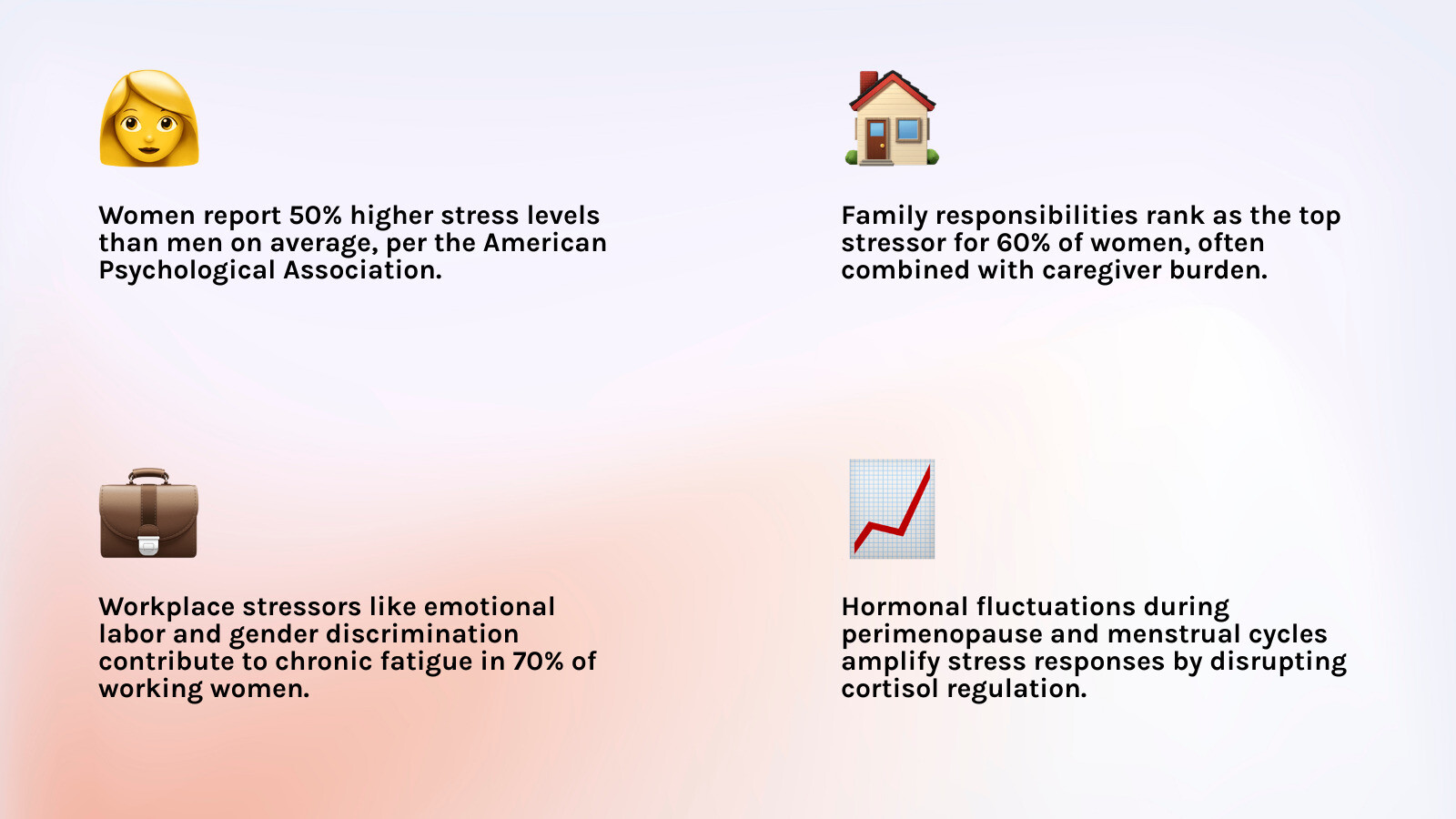
According to the American Psychological Association, women consistently report higher average stress levels than men. They are more likely to say they needed more emotional support, feel more unsettled by financial worries, and rank family responsibilities as a major source of stress. And yet, many women don’t seek help until they are running on empty.
That’s exactly the gap that specialized stress counseling for women is designed to fill.
The Subtle and Physical Manifestations of Stress in Women
When we think of stress, we often think of a busy calendar or a looming deadline. But for women, stress is rarely just “in the head.” It lives in the body. Because women are often socialized to “push through” and prioritize others, they may miss the early warning signs until their body starts shouting.

Chronic Fatigue and Sleep Disturbances
One of the most common signs is a type of exhaustion that feels heavy. You might find yourself “tired but wired,” too exhausted to function during the day, yet unable to quiet your mind at night. Stress and sleep are deeply linked; chronic stress keeps the sympathetic nervous system activated, making it nearly impossible to reach the deep, restorative stages of rest.
Irritability and Emotional Flatness
Do you find yourself snapping at a partner for a minor dishwashing error? Or perhaps you feel “emotionally flat,” as if you’re moving through life in a functional freeze. This irritability isn’t a personality flaw; it’s a sign that your emotional bandwidth is maxed out.
The Gut-Brain Connection: IBS and Digestive Issues
The female gut is highly responsive to emotional shifts. According to the Cleveland Clinic, stress can lead to digestive problems like Irritable Bowel Syndrome (IBS), nausea, and changes in appetite. When the brain is under siege, the digestive system often takes the hit.
Muscle Tension and Pain
Many women carry their stress in their shoulders, neck, and back. This chronic muscle tension is a leading cause of tension headaches and migraines. Understanding the science of stress reveals that when the body perceives a threat, it tenses up to protect itself. Over months or years, this “armor” leads to chronic pain.
Why Women are Prone to Chronic Stress and Burnout
It isn’t a coincidence that women feel more stressed. It is the result of a complex intersection of biological factors, societal roles, and internal expectations.
- The Caregiver Burden & Emotional Labor: Women often act as the “emotional anchor” for their families. This involves the “invisible work,” such as remembering birthdays, managing household schedules, and soothing everyone else’s big feelings. This constant state of being “on” leads to a unique type of depletion.
- “Good Girl Syndrome” & Perfectionism: Many women are raised to be accommodating, competent, and helpful. This leads to a difficulty saying “no,” even when their plate is overflowing. The internal belief that one’s worth is tied to productivity or being “liked” creates a cycle of over-functioning.
- Hormonal Fluctuations: From the monthly menstrual cycle to pregnancy and the long transition of perimenopause, hormonal shifts significantly impact how women experience and regulate stress.
- Workplace Realities: Despite progress, women still face the gender pay gap and workplace discrimination. Balancing a high-pressure career while managing the majority of domestic labor is a recipe for burnout.
Knowing stress vs burnout is crucial. While stress feels like “too much,” burnout feels like “not enough,” meaning not enough energy, not enough care, and a total sense of detachment.
How Stress Counseling for Women Facilitates Lasting Change
If you’ve tried spa days, gym memberships, and self-help books but still feel overwhelmed, it’s because those are temporary fixes for a systemic problem. Stress counseling for women goes deeper.

Therapy provides a dedicated space where you don’t have to be the “strong one.” It allows for root cause identification, uncovering the “old stories” or societal pressures that drive your need to over-commit. By working with a professional, you can move from a state of survival to one of thriving.
The Benefits of Specialized Stress Counseling for Women
Specialized therapy for stress offers more than general advice. It provides identity-affirming care that acknowledges the unique realities of being a woman today. It helps you:
- Identify Triggers: Learn to recognize the triggers before they lead to a meltdown.
- Build Resilience: Develop the emotional tools to handle life’s transitions without losing yourself.
- Culturally Sensitive Support: For women of color or those from diverse backgrounds, therapy can address the added layers of systemic stress and cultural expectations.
What to Expect in Stress Counseling for Women
When finding a therapist for stress, you might encounter several effective modalities:
- Cognitive Behavioral Therapy (CBT): Helps you challenge the “inner critic” and reframe negative thinking loops.
- Dialectical Behavior Therapy (DBT): Provides concrete skills for emotion regulation and setting firm boundaries.
- Somatic Awareness: Teaches you how to listen to your body’s signals and “complete” the stress cycle rather than just pushing through it.
Proven Stress Management Techniques and Lifestyle Changes
While therapy helps with chronic stress, there are also immediate changes you can implement to support your nervous system.
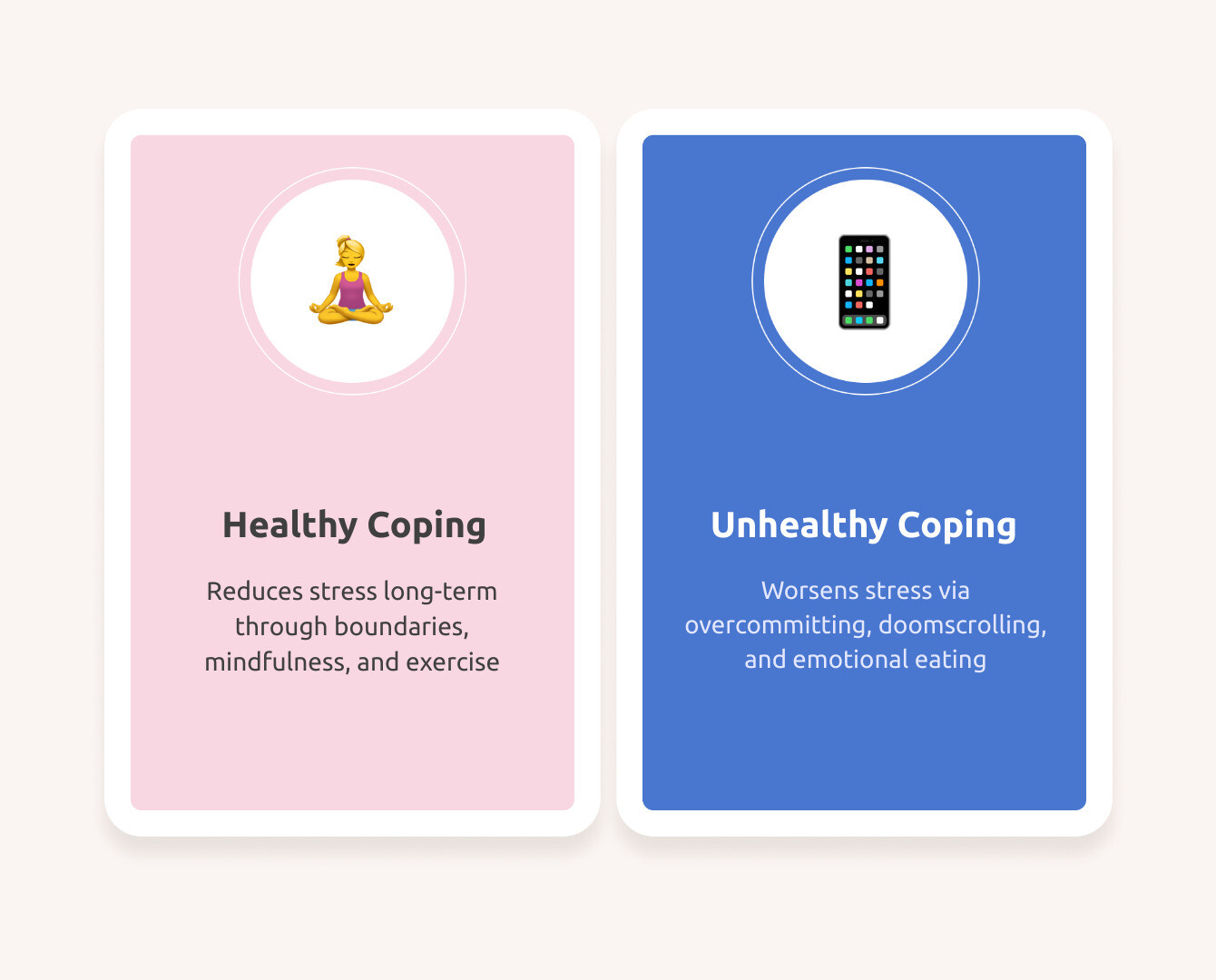
| Healthy Coping Mechanisms | Unhealthy Coping Mechanisms |
|---|---|
| Setting clear boundaries | Over-committing (“Yes” to everything) |
| Mindfulness and deep breathing | Doomscrolling or “numbing” with tech |
| Regular physical activity | Emotional eating or excessive caffeine |
| Prioritizing 7 to 9 hours of sleep | Working through breaks and lunch |
The Power of “No”
One of the most effective stress management techniques is learning the importance of saying no. Every time you say “yes” to an obligation you don’t have space for, you are saying “no” to your own peace of mind.
Movement and Nutrition
Exercise can help alleviate stress by releasing endorphins and helping the body process cortisol. Additionally, fueling your body with a balanced diet, such as the Mediterranean diet, provides the nutrients your brain needs to maintain focus and mood stability.
Implementing a Daily Routine for Long-Term Relief
Building a daily routine isn’t about adding more to your to-do list; it’s about creating a framework that protects your energy.
- Morning Rituals: Start with 5 minutes of mindfulness rather than checking your phone.
- Micro-Breaks: Use quick stress-busting activities like 2-minute breathing exercises throughout the day.
- Sleep Hygiene: Aim for 7 to 9 hours of rest. Keep devices out of the bedroom to ensure your brain can actually power down.
Frequently Asked Questions about Stress in Women
What is the difference between everyday stress and burnout?
Everyday stress is usually tied to a specific demand (like a big project). Once the project is done, the stress subsides. Burnout is a cumulative state of emotional exhaustion. You feel detached, cynical, and as if your efforts don’t matter. Understanding the types of stress can help you realize when you’ve crossed the line into burnout.
How do hormonal changes like menopause impact stress levels?
Hormonal shifts during perimenopause and menopause affect the endocrine system and cortisol regulation. This can lead to “brain fog,” increased anxiety, and a lower tolerance for stressors that you used to handle with ease. It is a biological reality, not a personal failing.
When should I seek professional stress counseling?
If stress is impacting your daily functioning, causing strain in your relationships, or leading to declining physical health, it is time to seek help. You don’t need to wait for a total breakdown. Following 7 steps to manage stress is a great start, but a therapist provides the expert guidance to make those steps stick.
Conclusion
Stress is an inevitable part of life, but it doesn’t have to be the defining feature of yours. You deserve to feel vibrant, not just functional.
At Collective Counseling Solutions, we specialize in connecting women with licensed therapists who understand these unique challenges. Whether you prefer in-person sessions or the convenience of teletherapy, we simplify the process of finding a skilled provider who accepts your insurance.
Ready to get matched with support that fits your needs? Find a therapist through Collective Counseling Solutions and take the next step toward feeling more balanced.
Don’t wait until you’re running on fumes. Reclaim your balance and start your journey toward healing today by exploring our therapy for stress services. You’ve taken care of everyone else. Now it’s time to take care of you.