

Stress Management Group Therapy
Stress management group therapy is a structured, therapist led program where a small group of people learn evidence based skills to reduce stress, manage anxiety, and build lasting coping habits together.
Here is a quick look at what it offers:
- Shared support: You learn alongside others facing similar struggles, which reduces isolation
- Evidence based skills: Sessions teach proven techniques like deep breathing, progressive muscle relaxation, and cognitive restructuring
- Accountability: The group format keeps you motivated to practice between sessions
- Guided by a licensed therapist: A trained professional leads every session and tracks your progress
- Flexible formats: Programs are available in person or online, typically running 4 to 10 weeks
Many adults today feel stretched thin. Work, family, and daily responsibilities pile up, and stress shifts from temporary to chronic. When that happens, it does not just affect your mood. It affects your sleep, your focus, your relationships, and your physical health.
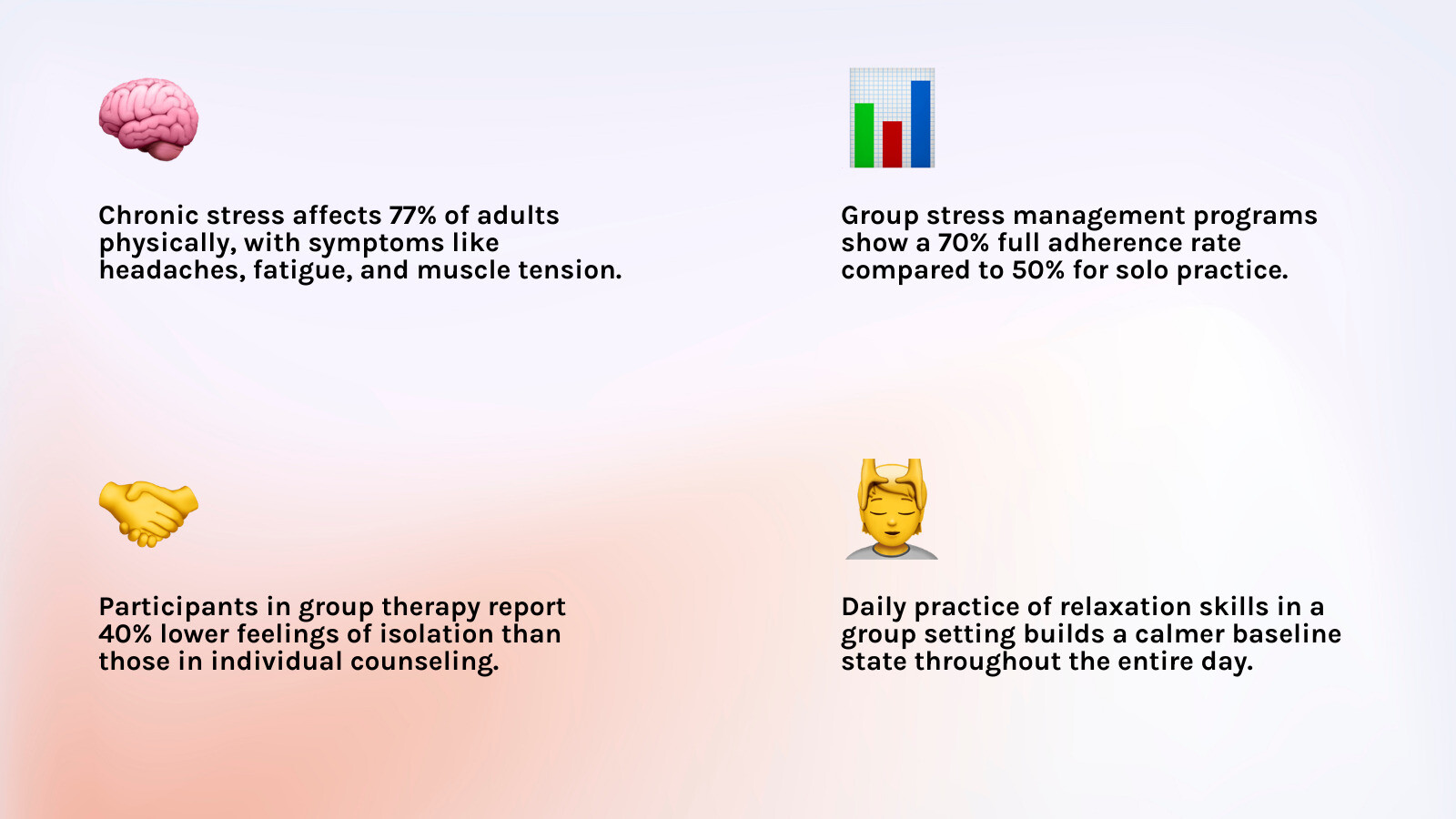
Research shows that regular, daily practice of relaxation skills leads to a calmer baseline state throughout the entire day, not just during a session. And when those skills are learned in a group setting, people tend to stick with them. One randomized pilot study found that participants in group stress training had a 70% full adherence rate, compared to 50% for people working through programs alone.
Group therapy is not just a budget friendly alternative to individual counseling. It is its own powerful format with unique benefits that one on one sessions simply cannot replicate.
Stress management group therapy terms made easy:
- counseling sessions for stress
- daily stress management counseling
- licensed therapist stress management
Group Therapy Overview

At its core, stress management group therapy is an interactive space designed to help individuals understand their nervous system and build practical tools for daily life. While many people think of therapy as a private conversation behind closed doors, group therapy brings a dynamic and collaborative element to healing. It is a structured environment where a licensed therapist guides participants through educational modules and hands on exercises.
In a group setting, participants do not just listen to a lecture. They actively share their daily struggles, discuss their stress triggers, and practice relaxation techniques in real time. This structure leverages group dynamics to help members build emotional regulation skills. When individuals see their peers trying a new breathing exercise or challenging a stressful thought, it normalizes the experience of learning. This collective environment makes it much easier to absorb new coping strategies.
For those who are deciding which path is right for them, exploring the differences between formats is highly beneficial. To understand how these dynamics function, individuals can read More info about individual versus group therapy to find the format that aligns with their personal goals.
Group Therapy versus Individual Counseling
The primary difference between group therapy and individual counseling lies in the source of feedback and support. In individual therapy, the relationship is entirely focused on the single client and the therapist. This allows for deep customization, but it lacks the real world social element of a group.
Group therapy introduces social connection as a core healing tool. Participants quickly realize that they are not alone in their experiences. Hearing another person describe the exact same feeling of being overwhelmed provides instant relief. Furthermore, group therapy is highly cost effective, allowing individuals to access professional mental health support at a lower cost per session.
The group environment also fosters collective growth. Members learn from the triumphs and setbacks of others. If one participant shares a creative way they managed their time or set a boundary at work, the entire group benefits from that practical wisdom. To learn more about how professional guidance can help manage daily pressures, individuals can find More info about therapy for stress.
Core Benefits
Participating in a structured stress group offers several unique advantages that build long term resilience:
- Reduced Isolation: Chronic stress often makes people withdraw from their social circles, leading to intense loneliness. Group therapy acts as an immediate antidote to isolation by surrounding participants with peers who truly understand.
- Enhanced Accountability: It is easy to skip practicing relaxation exercises when working alone. In a group, knowing that peers will ask about homework progress motivates participants to stay consistent.
- Validation: Hearing others share their vulnerabilities validates a person’s inner struggles. It helps individuals realize that their stress is a normal response to heavy life demands, not a personal failure.
- Coping Skills Development: Groups provide a safe laboratory to practice communication, boundary setting, and somatic relaxation before applying them in high pressure real world scenarios.
To understand how these group benefits target the wear and tear of long term pressure on the body, individuals can discover More info about how therapy helps with chronic stress.
Evidence Based Group Techniques
The most successful stress management groups do not rely on simple advice. Instead, they utilize evidence based techniques that target both the mind and the body. These interventions are designed to lower physiological arousal and help participants regain a sense of calm control.

Cognitive Behavioral Strategies
Cognitive Behavioral Therapy principles are highly effective when integrated into group training. A central concept of CBT is that our thoughts, feelings, and behaviors are deeply interconnected. When individuals experience high stress, they often fall victim to Automatic Negative Thoughts. These are rapid, unhelpful interpretations of events that fuel anxiety and tension.
In a group setting, therapists teach cognitive restructuring. This process involves identifying these negative thoughts, examining the evidence for and against them, and replacing them with realistic, balanced perspectives. Group members assist each other in this process by offering alternative viewpoints that an individual might be too overwhelmed to see.
For instance, if a member believes they must perform every task perfectly, the group can help them reframe this expectation into a healthier, more compassionate goal. Research shows that this structured approach is incredibly powerful. To explore the clinical evidence, individuals can review the Scientific research on group stress management versus group CBT. For additional strategies on shifting unhelpful thinking patterns, see More info about strategies for stress management.
Somatic and Relaxation Techniques
While cognitive strategies address the mind, somatic techniques target the physical body. When stress triggers the fight or flight response, the body experiences muscle tension, shallow breathing, and an elevated heart rate. Group therapy sessions dedicate time to practicing physical relaxation methods together, ensuring participants learn the correct physical form.
Some of the most common somatic techniques taught in groups include:
- Calm Breathing: Participants learn to focus on the exhalation phase of breathing. Slowing down the exhale and pausing before the next breath signals the nervous system to relax and lowers excess oxygen in the muscles.
- Progressive Muscle Relaxation: This technique involves tensing specific muscle groups at fifty percent effort for ten seconds, followed by thirty seconds of conscious relaxation to release deep physical tension.
- Grounding Techniques: Exercises like the five four three two one method help individuals anchor themselves in the present moment by naming five things they can see, four they can touch, three they can hear, two they can smell, and one they can taste.
- Guided Imagery: Facilitators lead the group through vivid mental journeys to peaceful environments, helping to lower blood pressure and induce a state of deep mental rest.
To explore these physical exercises in greater detail, read More info about effective strategies for stress management. Facilitators and participants can also use this free Stress and coping workshop guide for additional stress management exercises.
Group Program Structure
A professional stress management group is carefully planned to ensure optimal learning and safety. Therapists structure these programs with clear session outlines, set durations, and weekly homework assignments to help participants integrate skills into their daily routines.
Groups are generally structured as either open or closed formats. Understanding how these formats operate helps individuals choose the right environment for their healing journey.
| Feature | Open Therapy Groups | Closed Therapy Groups |
|---|---|---|
| Participant Consistency | New members can join at any session | The same members stay together for the entire duration |
| Group Cohesion | Dynamic shifts as new people enter | High trust and deep intimacy build over time |
| Curriculum Flow | Standalone weekly topics | Sequential, building on previous weeks |
| Typical Duration | Ongoing, drop in style | Structured, usually six to ten weeks |
Tracking Progress
To ensure that the techniques are actually working, therapists use standardized tools to track progress. One of the most common tools is the Subjective Units of Distress Scale.
The scale acts as a personal emotional thermometer ranging from zero to one hundred. A score of zero represents complete relaxation and peace, while a score of one hundred represents the highest level of distress or panic an individual has ever experienced.
During group sessions, participants rate their distress levels before and after practicing a relaxation technique. This immediate feedback helps individuals realize which specific exercises are most effective for their unique nervous systems. To see how tracking and structured online groups compare to individual digital formats, individuals can read the Scientific research on online group stress management training.
Overcoming Roadblocks
Learning relaxation techniques is like learning to play an instrument; it requires regular practice outside of the weekly group sessions. However, participants often encounter common roadblocks when trying to practice at home.
Some of the most frequent challenges include:
- Lack of Time: Participants often feel too busy to practice. Group leaders help members overcome this by encouraging short, micro practices, such as taking three calm breaths before starting a car or during a work break.
- Low Motivation: When stress levels are high, finding the energy to practice is difficult. The group format provides a built in support system where peers encourage consistency.
- Increased Anxiety During Relaxation: Some individuals experience paradoxical anxiety when they attempt to quiet their minds. Therapists guide participants through this by shifting focus to active somatic techniques like progressive muscle relaxation or grounding, rather than silent meditation.
To reinforce practice between sessions, therapists often provide portable tools like wallet cards or relaxation logs. These small reminders help participants track their daily exercises and stay focused on their goals. For more insights on navigating these personal challenges, see More info about overcoming stress with counseling.
Frequently Asked Questions
Ideal Candidates
Group stress therapy is ideal for adults, university students, and veterans who are experiencing chronic stress, generalized anxiety, or burnout. It is highly beneficial for individuals who feel isolated in their struggles and want to learn practical, scientifically proven coping skills in a supportive environment.
University students often face intense academic and social transitions. Research shows that group cognitive behavioral stress training significantly reduces anxiety and enhances psychological hardiness among students. Similarly, veterans managing high physiological arousal find that group relaxation programs help lower their daily stress baseline.
Program Duration
Most structured stress management groups run for eight to ten weeks. Sessions are held once a week and typically last ninety minutes. This duration allows the group to build strong trust, cover a comprehensive curriculum, and give participants ample time to practice their new skills between meetings.
Online versus In Person Therapy
Yes, modern teletherapy is highly effective. Clinical studies comparing videoconference based groups with individual online programs show that group formats lead to significantly higher adherence rates. Participants in online groups appreciate the convenience of attending from home while still experiencing the powerful peer resonance and social support of a traditional group.
Conclusion
Managing chronic stress is not something that has to be done alone. Participating in stress management group therapy provides the professional guidance, peer support, and practical tools needed to find balance and cultivate lasting resilience.
Ready to take the next step toward feeling calmer and more supported? Collective Counseling Solutions can help you connect with a licensed, insurance-accepting therapist for in-person or teletherapy care. Explore your options for stress management therapy and find a therapist who fits your needs.
Collective Counseling Solutions simplifies the journey by connecting individuals with highly skilled, licensed therapists who accept insurance, offering both in person and convenient teletherapy options. Taking the first step toward a calmer, steadier life is easy. To find the right fit, individuals can find a therapist and begin their healing journey today.