
Understanding Communication Barriers in Relationships
Marriage counseling for communication helps couples resolve recurring friction by replacing reactive habits with structured dialogue tools, such as active listening, emotional validation, and deescalation techniques. Working with a licensed therapist creates a secure environment to identify destructive conversational patterns, express underlying feelings safely, and rebuild mutual understanding.
Every relationship encounters conversational friction, but persistent communication barriers can slowly erode emotional intimacy. When daily discussions consistently devolve into misunderstandings, partners often feel isolated within their shared lives. Unspoken expectations, differing upbringings, and unaddressed emotional injuries frequently contribute to this friction.
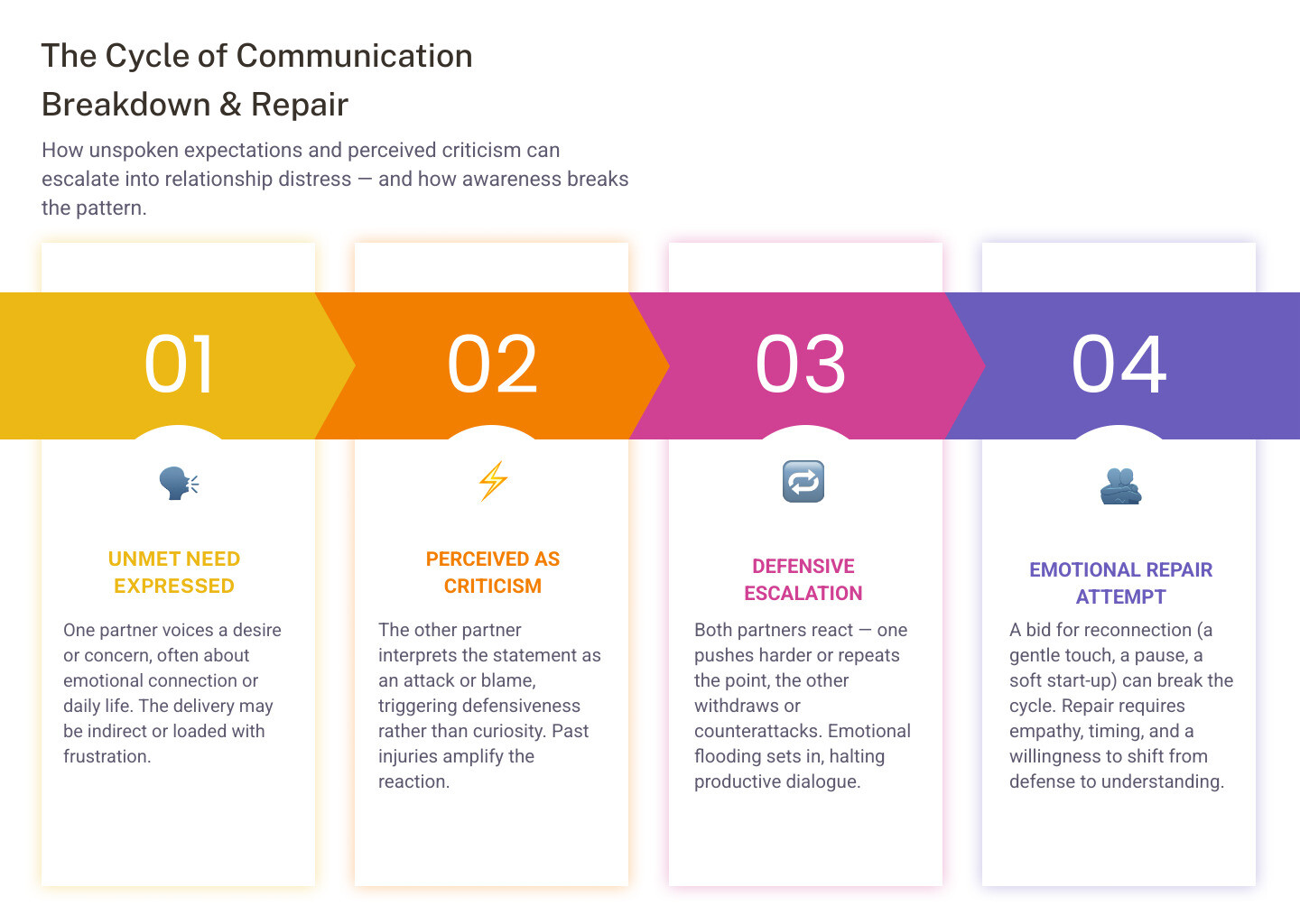
Over time, small misunderstandings can build into significant relationship distress. One partner might express an unmet need, which the other perceives as criticism. This perception triggers defensiveness, prompting the first partner to push harder or withdraw entirely. Recognizing this pattern is the first step toward dismantling conversational walls.
Signs You Need Marriage Counseling for Communication Issues
Conversational friction is normal, but certain patterns signal that routine disagreements have evolved into deeper relational challenges. Couples often benefit from professional intervention when they notice the presence of specific destructive habits.
- Criticism: Attacking a partner’s character or personality rather than addressing a specific behavior.
- Defensive responses: Denying responsibility, making excuses, or immediately counterattacking when a concern is raised.
- Contempt: Speaking from a place of superiority using sarcasm, eye rolling, mockery, or insults.
- Stonewalling: Completely withdrawing from an interaction, shutting down emotionally, or walking away without acknowledging the partner.
- Perpetual conflict: Having the exact same unresolved argument repeatedly without reaching a new understanding or compromise.
When these behaviors become the default reaction during disagreements, learning how to know when it’s time for professional support can prevent further emotional distance and help restore mutual trust.
Self Guided Exercises vs. Professional Relational Support
Many couples attempt to improve their dialogue through books, podcasts, or online exercises. While self help resources offer valuable insights, they are sometimes insufficient when emotional wounds are deep or physiological flooding occurs rapidly.
| Feature | Self Guided Exercises | Professional Clinical Counseling |
|---|---|---|
| Pacing | Self directed; easy to abandon during high conflict | Structured sessions with clear boundaries and steady guidance |
| Neutral Mediation | None; partners often debate who is right | A licensed therapist provides objective, nonjudgmental mediation |
| Emotional Safety | High risk of retriggering old arguments | Therapist deescalates tension and creates a secure environment |
| Customization | Generalized advice and generic prompts | Tailored interventions addressing specific relational histories |
| Accountability | Relies entirely on personal discipline | Regular appointments encourage consistent behavioral changes |
Self guided practice works well when both partners feel safe, calm, and mutually motivated. However, when conversations reliably end in shouting or complete silence, a trained therapist offers the external containment necessary for real progress.
Core Techniques in Marriage Counseling for Communication
Clinical communication counseling introduces structured, repeatable exercises designed to replace reactive habits with intentional dialogue. Rather than leaving conversations to chance, partners learn clear frameworks that promote mutual understanding.
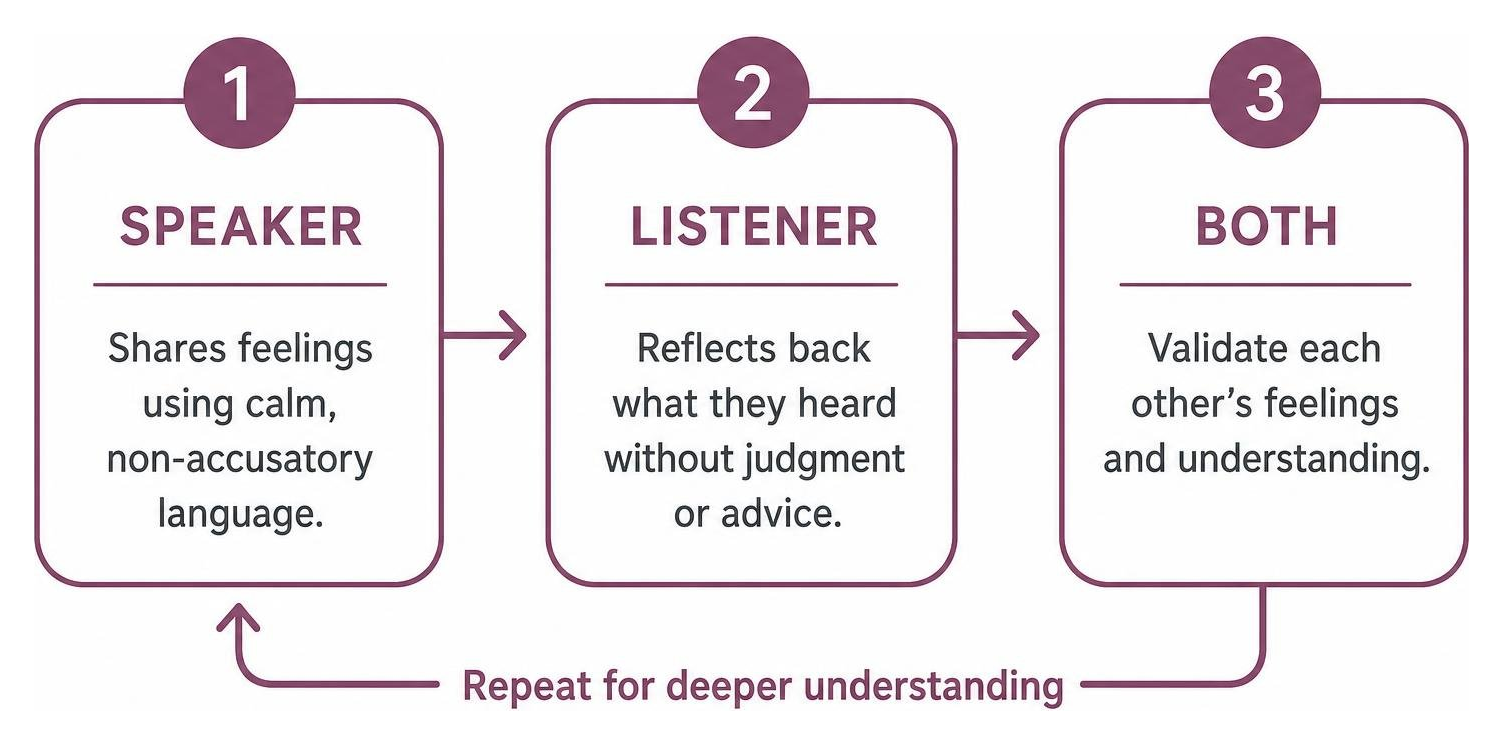
A foundational framework used in therapy is the speaker listener technique. In this exercise, one partner holds the floor as the speaker, focusing on sharing thoughts and emotions using nonaccusatory language. The other partner acts solely as the listener, summarizing what they heard without offering counterarguments, rebuttals, or unsolicited advice. This structure ensures both individuals feel acknowledged before problem solving begins. Research on communication patterns in couples reinforces the importance of how partners express concerns, respond to tension, and repair misunderstandings.
Another essential skill is the gentle start-up. Starting a conversation with blame can increase the likelihood of a defensive reaction. A gentle start-up focuses on describing a specific situation, stating personal feelings, and making a clear, positive request for what is needed going forward.
The Stress Reducing Conversation Technique
External stressors from work, financial pressures, or extended family frequently spill into romantic partnerships. When individuals carry workday tension home, minor domestic issues can quickly turn into major arguments.
The stress reducing conversation is a daily, twenty minute routine where partners take turns discussing external stressors outside the relationship. The rules of this exercise are simple yet powerful:
- Focus entirely on outside stress rather than relationship issues.
- Listen attentively without offering immediate solutions or unsolicited advice.
- Show genuine empathy and take your partner’s side.
- Adopt an attitude of unity against the external problem.
Practicing this routine helps couples decompress and strengthens mutual support. Integrating regular check ins alongside family and couples stress management counseling helps safeguard romantic relationships against external pressures.
Constructive Dialogue Tools: “I” Statements and Love Maps
Shifting language from accusatory phrasing to vulnerable expression is central to effective communication counseling. Using “I” statements allows individuals to share their emotional truth without triggering defensiveness in their partner.
- Accusatory: “You never pay attention to me when I talk.”
- Constructive “I” Statement: “I feel disconnected when we look at our phones during dinner, and I would love some uninterrupted time to talk.”
Along with clear statements, therapists help couples build and update their internal maps of one another’s psychological worlds. This involves staying curious about a partner’s current goals, worries, hopes, and values. Because people evolve over time, continuously updating these mental maps prevents assumptions and deepens emotional intimacy.
Recognizing and Turning Toward Bids for Connection
Throughout each day, partners make small, subtle bids for attention, affection, or engagement. A bid can be a verbal question, a shared sigh, a gentle touch, or pointing out something interesting out the window.
Couples have three main ways of responding to these micro connections:
- Turning toward: Acknowledging the bid with warmth, eye contact, or a supportive response.
- Turning away: Ignoring the bid, failing to hear it, or remaining distracted by devices or tasks.
- Turning against: Reacting with irritation, annoyance, or hostility to the bid.
Consistently turning toward small bids creates a deep reservoir of positive sentiment. Marriage counseling helps partners recognize these subtle moments and respond with supportive engagement.
How Therapy Fosters Emotional Vulnerability and Safety
True communication requires emotional vulnerability, which can only flourish in an environment of psychological safety. When past discussions have resulted in emotional pain or rejection, individuals naturally build protective defenses.

A licensed marriage therapist acts as an objective guide who maintains conversational boundaries, deescalates rising emotional intensity, and models constructive responses. Through specialized communication counseling, couples discover that expressing underlying emotions, such as fear, sadness, or loneliness, often brings them closer together than focusing solely on surface frustrations.
What to Expect During Marriage Counseling for Communication
Entering counseling can feel intimidating if partners do not know what lies ahead. Understanding the general flow of therapy can ease anxiety and set realistic expectations for the journey.
Initially, the therapist conducts an intake assessment to understand the relationship history, current pain points, and individual family backgrounds. Subsequent sessions focus on real time conversational practice. Rather than simply discussing past events, partners are guided to talk directly to one another in the room, with the therapist intervening to correct harmful habits and introduce effective techniques. Reviewing a guide on what happens in couples therapy offers additional clarity on the overall therapeutic process.
Sustaining Healthy Communication in Daily Life
The true measure of successful therapy lies in applying newly acquired skills outside the clinical office. Long term relationship health requires deliberate, ongoing maintenance.
Couples can sustain positive momentum by scheduling regular weekly check ins to discuss logistics, emotional needs, and upcoming stressors before tensions build up. Additionally, implementing a structured time out protocol is crucial for moments of emotional flooding. When heart rates rise and constructive dialogue becomes impossible, agreeing to pause for twenty minutes allows physiological regulation before calmly revisiting the topic.
Consistently applying these strategies makes resolving recurring relationship conflict far more manageable and prevents old behavioral cycles from returning.
Flexible Therapy Options for Modern Couples
Demanding work schedules, childcare logistics, and personal commitments can make attending traditional in office therapy challenging. Fortunately, modern mental health care offers accessible solutions to fit diverse lifestyles.
Embracing online couples therapy allows partners to attend sessions together from the comfort of their home or join from separate locations during work breaks. Checking your insurance benefits can help you understand whether and under what circumstances your plan may cover couples therapy.
Frequently Asked Questions About Couples Communication
How long does it take for counseling to improve communication?
The timeline for noticeable improvement varies depending on the severity of relational distress, the frequency of sessions, and each partner’s willingness to practice skills between appointments. Many couples experience positive shifts in conversational tone and deescalation within eight to twelve structured sessions. Research on dyadic communication during couple therapy also shows that communication patterns can improve during structured treatment, although complex dynamics or deeply entrenched habits may require longer therapeutic engagement to solidify lasting change.
What are the main signs that communication counseling is working?
Progress in counseling rarely means disagreements disappear completely. Instead, success is reflected in how disagreements are handled:
- Arguments deescalate faster without turning into explosive fights.
- Both partners repair emotional ruptures sooner after a misunderstanding.
- Defensiveness decreases, replaced by active listening and empathy.
- Discussions feel safer, calmer, and more collaborative.
Can counseling help if only one partner is willing to work on communication?
While relationship counseling is most effective when both individuals participate actively, individual counseling can still create positive relational ripples. When one partner shifts their communication style, sets healthy boundaries, and responds with calm clarity instead of reactivity, the entire relationship dynamic often begins to shift.
Conclusion
Healthy communication is the foundation of a resilient, fulfilling marriage. It is not an innate talent that couples either have or lack, but a practical set of skills that can be learned, practiced, and refined over time. By replacing destructive conversational habits with active listening, emotional validation, and structured repair tools, partners can transform recurring conflict into opportunities for deeper connection.
When you are ready to strengthen your partnership and build a safer space for open dialogue, Collective Counseling Solutions is here to support your journey. You can schedule an appointment for couples therapy with an experienced, insurance friendly therapist dedicated to helping you and your partner thrive together.