

Why Relationship Counseling for Young Couples Is a Smart Proactive Step
Relationship counseling for young couples is professional support that helps partners strengthen communication, understand emotional patterns, manage conflict, and make thoughtful decisions about their future together. It benefits young partners by giving them practical tools before small frustrations become lasting relationship habits.
A common myth suggests that therapy is only meant for partnerships on the edge of separation. In reality, many clinicians note that couples often wait years before seeking therapy for ongoing issues. During that time, small misunderstandings often calcify into entrenched resentment, defensive habits, and emotional detachment.
Choosing counseling early serves as preventative mental healthcare. Young adulthood is a pivotal developmental phase where individuals actively shape their identity, values, and relational habits. Entering therapy proactively helps both partners uncover foundational attachment patterns, build emotional regulation tools, and cultivate long term relational resilience. By destigmatizing therapy early, partners create a joint culture of curiosity, emotional vulnerability, and collaboration rather than waiting for distress to overwhelm them.
Is Relationship Counseling for Young Couples Only for Major Crises?
Many partners wonder is it healthy to go to couples therapy when things seem generally fine. The answer is an emphatic yes. Relationship maintenance is just as valuable as crisis repair.
Couples often benefit from early support because it provides conflict de escalation tools before high stakes disagreements occur. When stress from external demands enters the home, learning why family and couples stress management counseling is a game changer helps partners protect their emotional safety. Counseling creates a dedicated container where minor frustrations can be addressed constructively before transforming into pervasive relationship strain.
Navigating Life Transitions in Your 20s and 30s
Young adults in their twenties and thirties face unique cultural, occupational, and economic pressures. Juggling entry level jobs, rapid career building, student debt, and shifting social circles can leave little bandwidth for emotional attunement. Moving in together brings new friction points, from managing chores to navigating differing personal standards for cleanliness and downtime.
These overlapping transitions often spark couples therapy conflict around autonomy, shared finances, and future life planning. Modern relationship dynamics also require setting clear boundaries around social media usage, digital accessibility, and work life balance. Relationship counseling assists partners in co creating clear, flexible agreements so they can navigate these evolving chapters as a unified team.
Key Signs It Is Time to Seek Couples Counseling
Recognizing subtle indicators of disconnection allows partners to seek help before relational bonds weaken significantly. When partners find themselves asking do we need couples therapy, the answer often lies in the quality of daily interactions rather than the sheer volume of fights.
Common signs that indicate a need for professional guidance include:
- Having recurring circular arguments about chores, money, or habits without ever reaching a resolution.
- Emotional withdrawal, extended silences, or feeling like roommates rather than romantic partners.
- Walking on eggshells to avoid triggering defensiveness or moodiness.
- Sudden shifts in physical affection, emotional intimacy, or sexual desire.
- Relying on passive aggressive remarks or silent treatment instead of direct requests.
Communication Breakdowns and Mismatched Conflict Styles
One of the most frequent challenges in early relationships is the clash of mismatched communication styles. For instance, one partner may need to talk through feelings immediately while the other becomes overwhelmed and needs time to process alone. The first partner may interpret silence as abandonment, while the other may experience rapid conversation as pressure.
Engaging in couples therapy communication teaches partners how to interrupt these exhausting pursue withdraw patterns. In therapy, partners practice active listening, learn to recognize physical signs of emotional flooding, and replace defensive reactions with validating responses.
Rebuilding Trust After Relational Ruptures
Trust can be broken by significant crises as well as subtle, recurring breaches of boundaries. Digital indiscretions, emotional unfaithfulness, financial dishonesty, or broken commitments can shake the foundation of a partnership. Navigating couples therapy infidelity requires professional structure to move through initial shock, establish transparency, and understand the vulnerabilities that preceded the rupture.
Through targeted guidance, couples can rebuild trust and connection through marriage relationship counseling by transforming painful ruptures into opportunities for deeper emotional honesty. A therapist helps both individuals explore core wounds, articulate genuine apologies, and establish safe boundaries for lasting recovery.
Core Modalities and Formats in Young Relationship Therapy
Licensed clinicians employ structured, evidence supported frameworks to guide couples toward healthier dynamics. Two of the most widely respected modalities are Emotionally Focused Therapy (EFT) and the Gottman Method.
Emotionally Focused Therapy, grounded in attachment theory, helps partners identify their underlying emotional needs and rewire negative interaction cycles. Research indicates that Emotionally Focused Therapy helps many couples create more secure emotional bonds. The Gottman Method uses comprehensive behavioral assessments and concrete skill building exercises to enhance friendship, manage conflict, and build shared meaning.
| Modality / Format | Primary Objective | Best Suited For | Typical Structure |
|---|---|---|---|
| Emotionally Focused Therapy (EFT) | Identify attachment wounds and reshape emotional bonds | Couples stuck in recurring defensive cycles | Weekly sessions focusing on emotional attunement |
| Gottman Method | Strengthen communication, friendship, and conflict management | Partners seeking concrete tools and metrics | Assessment followed by structured behavioral exercises |
| Premarital Counseling | Proactively align values, goals, and expectations | Engaged, cohabiting, or newly committed couples | Short term format spanning several weeks or months |
| Teletherapy / Online | Deliver flexible therapeutic care via video | Busy schedules, long distance, or remote partners | Flexible virtual sessions with secure video platforms |
| Relationship Education | Teach foundational communication and stress tools | Couples seeking accessible workshop skill building | Multi session group workshops |
Exploring Premarital Counseling and Skill Building Programs
Premarital therapy is not exclusive to engaged couples planning traditional weddings; it provides immense value for any committed partners preparing for long term life partnership. Enrolling in couples therapy premarital allows partners to openly discuss family of origin patterns, debt, career priorities, and parenting values before major commitments are finalized.
Premarital therapy serves as proactive resilience building for modern couples of all commitment styles, with many couples finishing their foundational work in just a few months. For those seeking alternative educational formats, relationship education workshops can offer structured communication and stress management skill building.
Online vs. In Person Options for Busy Partners
Modern young adults often balance non traditional work hours, graduate education, or long distance arrangements. Engaging in couples therapy online offers remarkable convenience without sacrificing clinical effectiveness.
Teletherapy eliminates commute times, reduces scheduling friction, and allows partners to join the same virtual counseling room from separate physical locations. This accessibility ensures that busy partners can consistently prioritize relationship care amidst demanding daily routines.
How to Navigate Costs, Expectations, and Partner Hesitation

Concerns regarding therapy expenses frequently deter young adults from reaching out. However, many licensed providers and practices accept health plans, significantly reducing out of pocket expenses.
Navigating couples therapy insurance begins with reviewing plan details, checking behavioral health benefits, and confirming in network provider options. Many practices also offer sliding scale fee structures or provide superbills for potential out of network reimbursement, making professional care accessible across various financial stages.
What to Expect in Relationship Counseling for Young Couples
Entering your initial counseling appointments can feel intimidating, but understanding the general roadmap alleviates anxiety. Familiarizing yourself with what happens in couples therapy helps set grounded, achievable goals.
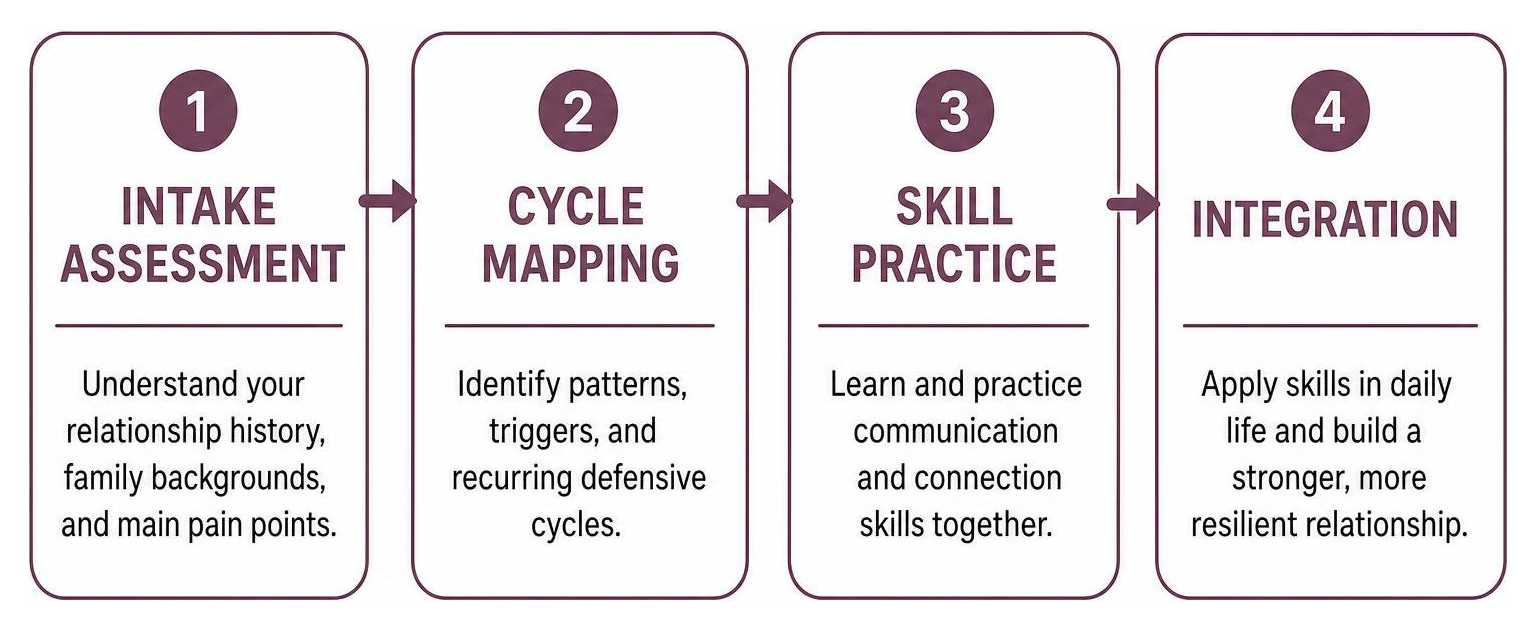
During early sessions, clinicians conduct comprehensive intake assessments to understand your relationship history, family backgrounds, and main pain points. Preparing specific questions to ask in couples therapy regarding the therapist’s modality and experience with young couples ensures a strong therapeutic fit. Throughout the process, discovering what do couples do in therapy will demystify the work, which revolves around guided dialogues, identifying emotional triggers, and completing actionable between session exercises.
Maximizing Results When One Partner Is Reluctant
It is common for one partner to feel hesitant about starting therapy due to fears of being blamed or judged by the therapist. Reluctance often softens when counseling is framed as a collaborative team effort to improve the relationship dynamic rather than an intervention to fix one person.
To make sessions as effective as possible:
- Approach sessions without defensiveness: Listen to understand your partner rather than preparing a rebuttal.
- Commit to radical honesty: Meaningful progress requires bringing authentic thoughts and vulnerabilities into the room.
- Practice between session tools: Integrate mindfulness pauses and communication frameworks into your daily routines.
- Consider individual counseling if needed: If one partner firmly declines joint sessions, pursuing individual therapy can still positively shift relational dynamics by enhancing personal self awareness and boundary setting.
Frequently Asked Questions About Relationship Counseling
Is couples therapy suitable for dating or unmarried partners?
Yes. Relationship counseling is highly beneficial for dating, cohabiting, and non married partners. You do not need a marriage certificate or shared property to invest in communication tools, emotional attunement, and healthy conflict strategies. Many dating couples utilize therapy to determine long term compatibility and deepen emotional safety.
How long does relationship therapy typically take to show results?
Therapy duration varies based on the couple’s specific goals and the complexity of their concerns. While specialized premarital or short term educational programs often conclude in a few months, deeper relational repair may take six months to a year of consistent work. Many partners begin noticing improved communication and reduced tension within the first few sessions.
What should you do if your partner refuses to attend therapy?
You cannot force an unwilling partner to participate in counseling. If your partner declines, attending individual therapy is a constructive and empowering next step. Working with an individual therapist helps you clarify personal values, develop healthy boundaries, and understand your role in relational cycles, which can inspire positive changes across the relationship.
Conclusion

Investing in your partnership early lays the groundwork for lasting connection, mutual respect, and emotional resilience. You do not have to wait until communication breaks down completely to seek professional support. Collective Counseling Solutions simplifies access to skilled, insurance accepting therapists who offer both virtual and in person sessions tailored to your lifestyle. Taking a proactive step with couples therapy empowers you and your partner to build a strong, joyful foundation for the years ahead.