

Stress Therapy Telehealth Options for Busy Professionals
Stress therapy telehealth options let you meet with a licensed therapist by secure video, phone, or messaging from a private place that fits your schedule. The best fit depends on whether you need insurance coverage, fast appointment access, a specific therapy style, or care that can also include psychiatric support.
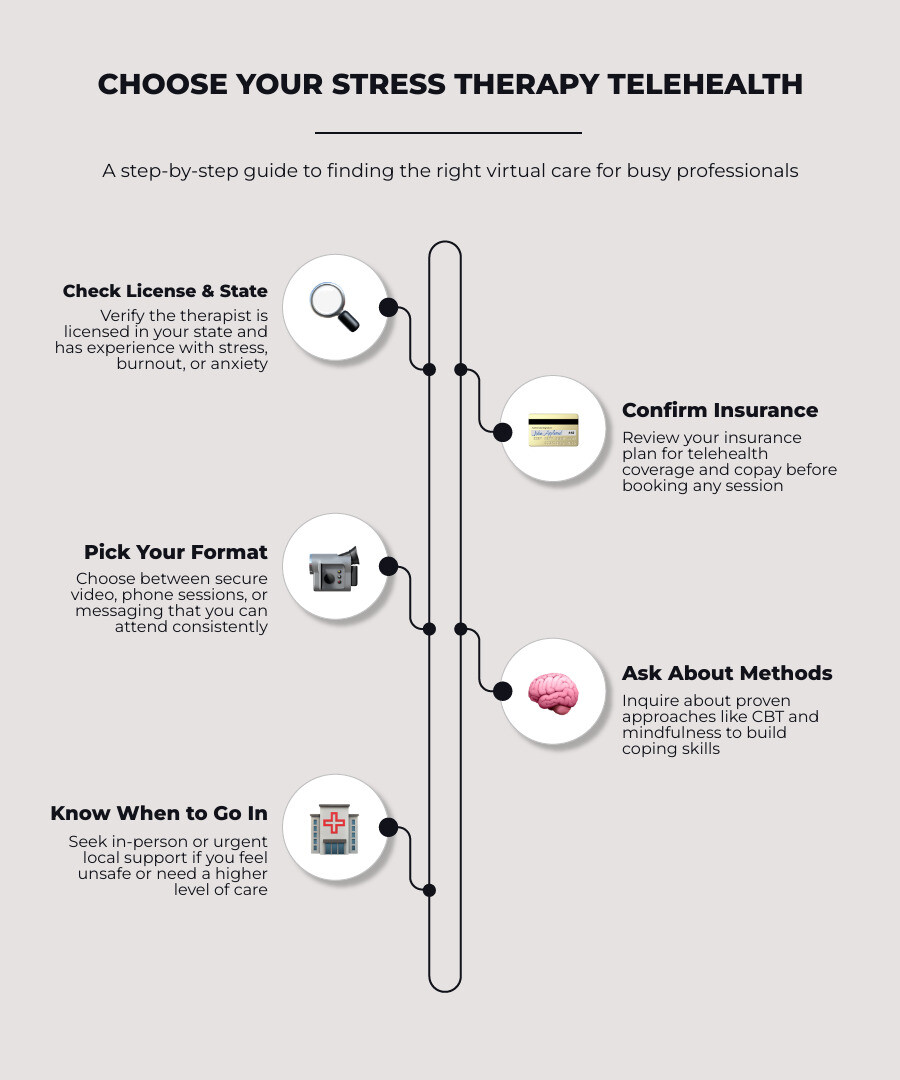
- Look for a licensed therapist in your state who has experience with stress, burnout, or anxiety.
- Check insurance coverage and your expected copay before booking.
- Choose a format you can use consistently, such as video sessions, phone sessions, or secure messaging.
- Ask about CBT, mindfulness, and other proven approaches for building coping skills.
- Consider in person or urgent local support if you feel unsafe or need a higher level of care.
Telehealth is not a lesser version of therapy. It is a different way to access it. Many people find remote sessions easier to keep because there is no commute, and research suggests online care can be as effective as in person therapy for many clients.
This guide compares the main types of virtual stress care, what to look for in a provider, and how to choose an option that supports real, lasting relief.
Stress therapy telehealth options terms you need:
- licensed therapist stress management
- stress counseling insurance covered
- stress management therapy techniques
Understanding Virtual Care: How Telehealth Treats Stress and Burnout
Virtual mental health services have transformed how people address acute stress, ongoing work strain, and nervous system regulation. When individuals experience continuous pressure, their bodies remain in an elevated state of alert. Over time, this constant activation can lead to sleep disruption, cognitive fatigue, emotional exhaustion, and physical strain. Seeking Online Therapy for Stress offers a structured way to interrupt this cycle without the logistical hurdles of traveling to a physical office.
Clinical research continues to confirm clinical parity between digital sessions and traditional clinic visits. Sixty four percent of survey respondents report that virtual care is equally effective as in person therapy, while twenty one percent find it even more effective than their previous in person experiences. Independent reviews like the Best Online Therapy Platforms guide emphasize that virtual care provides meaningful symptom reduction when delivered by qualified clinicians. Understanding how therapy helps with chronic stress allows individuals to take active control of their psychological well being through targeted, evidence based care.
Evidence Based Modalities Delivered Remotely
Licensed teletherapists utilize a wide array of evidence based modalities designed to address the psychological and physiological aspects of strain:
- Cognitive Behavioral Therapy (CBT): Examines the direct link between automatic thoughts, emotional reactions, and behavioral patterns. Clinicians help clients identify cognitive distortions such as catastrophizing and replace them with adaptive thinking.
- Mindfulness and Somatic Techniques: Guided grounding exercises, diaphragmatic breathing, and progressive muscle relaxation help calm nervous system activation during moments of acute pressure.
- Acceptance and Commitment Therapy (ACT): Encourages psychological flexibility, helping clients accept difficult emotions while committing to actions aligned with personal values.
Exploring the ultimate guide to stress management therapy techniques reveals how these methods provide practical tools that clients can apply immediately in their daily routines.
Virtual Therapy vs. In Person Care for Stress Relief
The therapeutic alliance formed between a client and their provider remains the primary driver of positive clinical outcomes. Studies confirm that warm, empathetic connections flourish through secure video platforms just as readily as they do on a physical couch.
Virtual appointments remove major accessibility barriers like sitting in traffic, arranging child care, or taking extensive time away from work. This session flexibility helps people attend their appointments consistently, which reinforces long term habit changes. For those who wonder about common misconceptions, reviewing the most frequently asked questions about online therapy can clarify how confidential remote sessions deliver reliable support.
Comparing the Best Stress Therapy Telehealth Options
Navigating virtual mental health models involves evaluating delivery structures, provider credentials, and payment formats.

Pay Per Session Insurance Networks vs. Subscription Care
The telehealth landscape is primarily divided into two operating structures:
- Pay Per Session Insurance Networks: These practices connect clients with credentialed clinicians and bill health insurance directly for each individual visit. This model is ideal for people using commercial insurance, Medicaid, or Medicare benefits, as it minimizes out of pocket costs to a predictable copay.
- Subscription Care Services: These platforms charge a recurring weekly or monthly membership fee. While subscriptions often include perks like text based messaging or interactive digital worksheets, they may operate outside insurance networks, requiring out of pocket payment.
Choosing dedicated stress management therapy through an insurance backed network often provides greater long term affordability and clinical continuity.
| Care Model | Payment Structure | Insurance Acceptance | Best Suited For |
|---|---|---|---|
| Pay Per Session Network | Billed per individual appointment | Extensive commercial, Medicaid, Medicare | Clients seeking direct insurance billing and consistent, deep therapeutic care |
| Monthly Subscription | Recurring periodic membership fee | Often limited or out of pocket only | Individuals wanting supplemental texting tools or rapid, flexible matching |
| Integrated Telehealth Clinic | Pay-as-you-go or insurance claims | Mixed network participation | People needing combined talk therapy and psychiatric evaluations |
Specialized Formats: Group Support, Psychiatry, and Self Guided Tools
Comprehensive virtual care often extends beyond individual talk therapy. Many networks provide psychiatric evaluations and medical consultations when biological factors require coordinated management.
Supplemental tools can also reinforce skill development between appointments:
- Structured digital workbooks and mood tracking logs
- Interactive exercises that teach emotional regulation
- Clinician led group cohorts for shared learning
Reviewing an essential guide to stress management group therapy provides insight into how communal environments help reduce isolation while teaching practical coping skills.
Navigating Costs and Logistics for Remote Stress Treatment
Understanding administrative processes, payment structures, and scheduling logistics ensures a smooth path to care.

Cost and Insurance Coverage for Stress Therapy Telehealth Options
Financial transparency is essential when beginning mental health care. Most insurance plans cover virtual appointments with the same benefits and copay structures as in office visits. Depending on your specific policy, copays can be quite low, making ongoing treatment accessible.
For those without active insurance coverage, private pay rates vary depending on clinician credentials and session duration. Many private pay clients also use health savings accounts (HSA) or flexible spending accounts (FSA) to manage costs, or submit documentation to their insurance providers for possible out of network reimbursement. Connecting with specialized online anxiety counseling helps ensure you receive tailored care that matches your clinical goals and financial needs.
How to Evaluate Stress Therapy Telehealth Options for Your Schedule
When evaluating different stress therapy telehealth options, consider the following factors:
- Intake Turnaround: Many telehealth practices complete onboarding quickly, with high percentages of clients attending their first session within a few days of registration.
- Licensing and Location: Telehealth providers must hold active licenses in the state where the client is physically present during sessions. State compacts have made it easier for providers to practice across state lines, expanding provider options.
- Provider Fit: A successful therapeutic relationship requires mutual trust. Look for a provider whose background aligns with your background, personal identity, and specific goals.
Learning more about the best counseling paths for daily stress management will help you clarify your treatment priorities before your first appointment.
Maximizing Your Telehealth Sessions for Sustainable Stress Relief
Getting the most out of virtual care requires intentional preparation and clear boundaries.
Preparing for Your First Remote Consultation
To set yourself up for a successful first session, consider these practical steps:
- Optimize Your Environment: Choose a quiet, private space where you can speak openly without interruptions. Use headphones to enhance audio clarity and preserve confidentiality.
- Test Your Technology: Confirm your camera, microphone, and internet connection are functioning smoothly well before the scheduled start time.
- Clarify Your Goals: Take a few moments to outline what brings you to therapy, key stressors you want to address, and specific outcomes you hope to achieve.
Following simple tips to make virtual therapy work for you ensures your home environment is fully supportive of deep emotional work.
Recognizing When In Person Care Is Necessary
While virtual sessions are highly effective for everyday stress, work burnout, and mild to moderate anxiety, telehealth may have limitations for certain situations. In person care or specialized hybrid treatment may be more suitable for:
- Severe, acute clinical crises requiring intensive stabilization
- Complex medical or psychiatric conditions requiring hands on physical monitoring
- Highly specialized somatic therapies that benefit from direct physical presence
Recognizing your specific care needs ensures you select the safest, most supportive treatment setting.
Frequently Asked Questions About Virtual Stress Management
Can telehealth providers prescribe medication for acute stress or anxiety?
Yes, appropriately licensed medical providers, such as psychiatrists and psychiatric nurse practitioners, can evaluate mental health symptoms and prescribe approved medications through secure video appointments. They monitor effectiveness and adjust treatment plans over time. Combining clinical talk therapy, such as specialized therapy for anxiety online, with psychiatric guidance provides a comprehensive path to symptom relief.
How secure and private are virtual stress therapy sessions?
Reputable telehealth platforms comply with HIPAA standards and utilize end to end encryption to protect client privacy. Clinicians conduct sessions from confidential, private locations, and all digital records are stored within secure patient portals.
How quickly can I start seeing a virtual stress therapist?
Intake processing for virtual practices is typically fast. Many clients are matched with a licensed professional and attend their initial consultation within a few business days of completing their intake paperwork.
Conclusion
Finding meaningful relief from chronic tension begins with choosing a care format that respects your time, budget, and personal goals. Virtual platforms remove the friction of travel and scheduling conflicts, making consistent personal growth possible from home.
Collective Counseling Solutions simplifies this process by connecting you with compassionate, highly skilled clinicians who accept your insurance. Whether you are navigating professional burnout, life transitions, or persistent worry, dedicated therapy for stress can help you build sustainable emotional resilience. Reach out today to match with a provider and take the first step toward lasting calm.