

What Are Stress Management Therapy Techniques?
Stress management therapy techniques are structured, evidence-based methods used to reduce the impact of stress on your mind and body. Here are the most effective ones:
- Cognitive Behavioral Therapy (CBT): Identifies and changes negative thought patterns that fuel stress
- Mindfulness-Based Stress Reduction (MBSR): Uses meditation, body scans, and gentle movement to build present-moment awareness
- Progressive Muscle Relaxation (PMR): Systematically tenses and releases muscle groups to reduce physical tension
- Box Breathing: A structured breathing technique that calms the nervous system quickly
- Guided Imagery: Uses vivid mental visualization to shift focus away from stressors
- Acceptance and Commitment Therapy (ACT): Teaches acceptance of difficult thoughts rather than fighting them
- Cognitive Restructuring: Replaces distorted thinking with more realistic, balanced perspectives
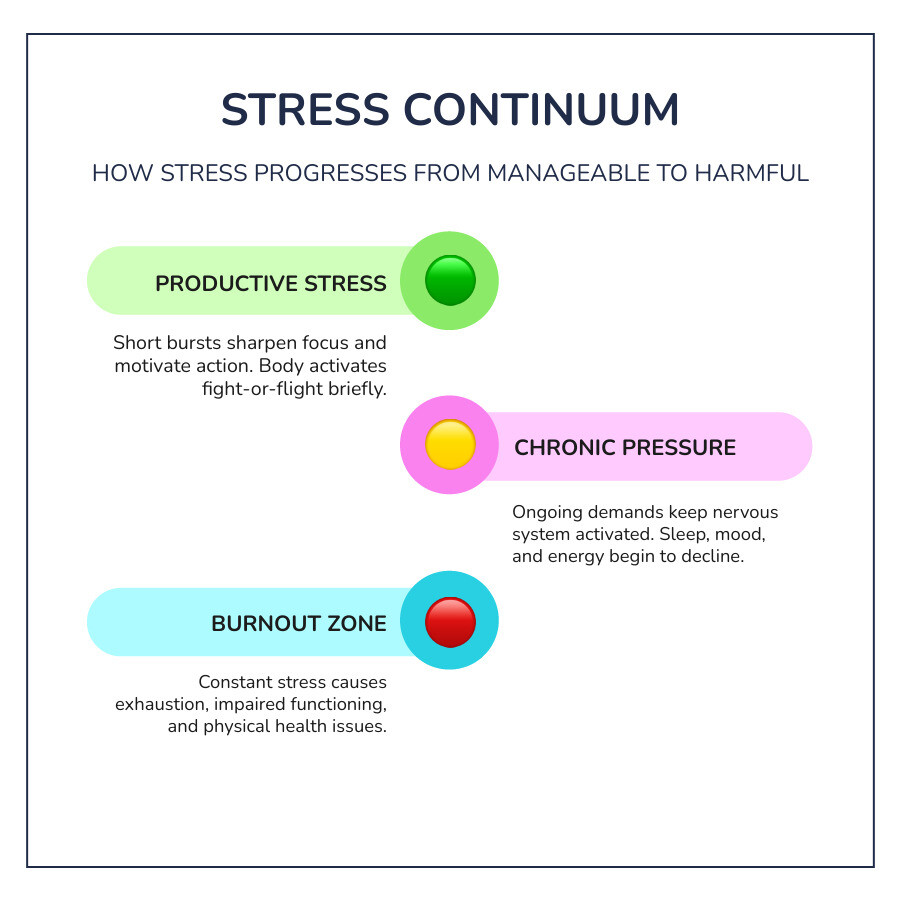
Stress is a normal part of life. Work, deadlines, finances, relationships, daily demands pull us in every direction. A small amount of stress can actually sharpen focus and motivate action. But when stress becomes constant, it stops being useful and starts causing real harm to your health, sleep, and relationships.
Your body responds to perceived threats with a fight or flight response. That reaction was designed for short bursts of danger, not ongoing pressure. When it stays switched on too long, things start to break down, physically and emotionally.
That is where stress management therapy techniques come in. These are not just quick fixes or generic self-help tips. They are proven methods, many of them used by licensed therapists, that change how your brain and body respond to stress at a deeper level.
Explore more about stress management therapy techniques:
Understanding Stress and the Need for Professional Support

To effectively manage stress, it helps to understand what is happening inside your nervous system. Stress is not a one size fits all experience. It generally falls into two categories: acute stress and chronic stress.
Acute stress is short term and intense. It is the sudden jolt of adrenaline you feel when you almost get into a car accident, give a major presentation at work, or have a brief argument. Once the event passes, your body naturally returns to its baseline state.
Chronic stress is a completely different story. This type of stress is long lasting and persistent. It is caused by ongoing pressures such as a difficult job, financial worries, or long term relationship struggles. Because chronic stress builds up gradually, many people get used to the constant discomfort. It becomes their new normal, and they may not even realize how much damage it is doing.
Over time, chronic stress takes a heavy toll on both physical and mental health. Physically, it can manifest as frequent headaches, chronic fatigue, muscle tension, and stomach issues. Psychologically, it wears down your emotional resilience, making you more vulnerable to anxiety and depression. Research shows that prolonged stress can even affect brain development, particularly in the amygdala, which regulates emotions, and the prefrontal cortex, which handles decision making.
While general self care is important, chronic stress often requires clinical intervention. Working with a professional allows you to address the root causes of your stress rather than just treating the surface symptoms. You can explore how professional guidance helps by reading about How Therapy Helps with Chronic Stress.
Understanding the physiological mechanisms of stress is key to learning how to reverse them. For a deeper look at the medical and clinical aspects of stress, you can review the clinical guidelines on Stress Management StatPearls NCBI Bookshelf.
Evidence Based Stress Management Therapy Techniques

When it comes to treating stress, therapists rely on evidence based practices. These are therapeutic modalities that have been rigorously tested and proven to work in clinical studies. Unlike generic relaxation tips, clinical stress therapy focuses on changing deep seated habits, neural pathways, and behavioral patterns.
The clinical significance of these techniques cannot be overstated. When practiced regularly, they actually alter brain chemistry, lowering stress hormones and strengthening the areas of the brain responsible for emotional regulation. This is why therapy is so effective for building long term resilience.
There are several highly respected therapeutic modalities used to treat stress. Each approach offers unique tools to help you regain control over your life. To discover some of the most common approaches used by professionals, you can explore these 4 Stress Management Techniques.
Cognitive Behavioral Stress Management Therapy Techniques
Cognitive Behavioral Therapy, commonly known as CBT, is widely regarded as one of the most effective treatments for stress and anxiety. It is a structured, goal oriented, and practical form of talk therapy. The core philosophy of CBT is that your thoughts, feelings, and behaviors are deeply interconnected. It is often not the stressful event itself that causes emotional distress, but rather how you interpret that event.
At the heart of CBT is a process called cognitive restructuring. This technique helps you identify and challenge negative automatic thoughts. These are the split second thoughts that pop into your head during a stressful situation, which are often distorted or exaggerated.
CBT helps you recognize common cognitive distortions, such as:
- Catastrophizing: Assuming the worst possible outcome will happen.
- Emotional Reasoning: Believing that because you feel overwhelmed, the situation must be completely hopeless.
- All or Nothing Thinking: Viewing things in black and white terms, where any minor mistake is seen as a total failure.
Through cognitive restructuring, you learn to pause, examine the evidence for your negative thoughts, and replace them with more realistic, balanced perspectives. This shift in thinking directly reduces your emotional and physical stress response.
To understand the clinical framework of this approach, you can read more about Cognitive Behavior Therapy StatPearls NCBI Bookshelf. For details on how CBT is structured in a clinical setting, you can also review the resource on Cognitive behavioral therapy Mayo Clinic.
Research consistently supports the power of changing your thoughts to manage stress. For example, a study on occupational stress found that training employees in cognitive techniques significantly reduced exhaustion and stress reactivity. You can read the full study at Frontiers | Beneficial effects of a cognitive-behavioral occupational stress management group training: the mediating role of changing cognitions.
Mindfulness Based Stress Reduction and Stress Management Therapy Techniques
Another highly effective approach is Mindfulness Based Stress Reduction, or MBSR. Developed by Jon Kabat Zinn, MBSR combines mindfulness meditation, body awareness, and gentle yoga to help individuals manage stress, pain, and illness.
Mindfulness is the practice of bringing your attention to the present moment without judgment. Research suggests that mindfulness is both a genetic trait and a skill that can be developed. In fact, studies show that trait mindfulness is about 32 percent heritable, meaning that 66 percent of the variance is due to environmental factors. This is excellent news because it means mindfulness is a skill that almost anyone can learn and strengthen with practice.
In an MBSR program, participants are taught three formal techniques:
- The Body Scan: A practice where you lie down and systematically bring nonjudgmental attention to every region of your body, releasing physical tension as you go.
- Sitting Meditation: A practice of sitting quietly and observing your breath, thoughts, and sensations as they arise and pass, helping you develop a stable perspective.
- Gentle Yoga: Mindful, slow movements that build awareness of your body in space and help release physical blockages.
These practices have been shown to reduce the activation of the hypothalamic pituitary adrenal axis, which is the system responsible for releasing stress hormones. By calming this system, mindfulness helps lower blood pressure, reduce inflammation, and improve overall well being.
For a comprehensive analysis of how mindfulness compares to other therapeutic approaches for managing stress, you can read the meta analysis on Mindfulness-based interventions and cognitive behavioral therapy for depression, anxiety, and stress in adults with chronic conditions: a stratified subgroup meta-analysis | npj Mental Health Research.
Practical Relaxation and Somatic Strategies
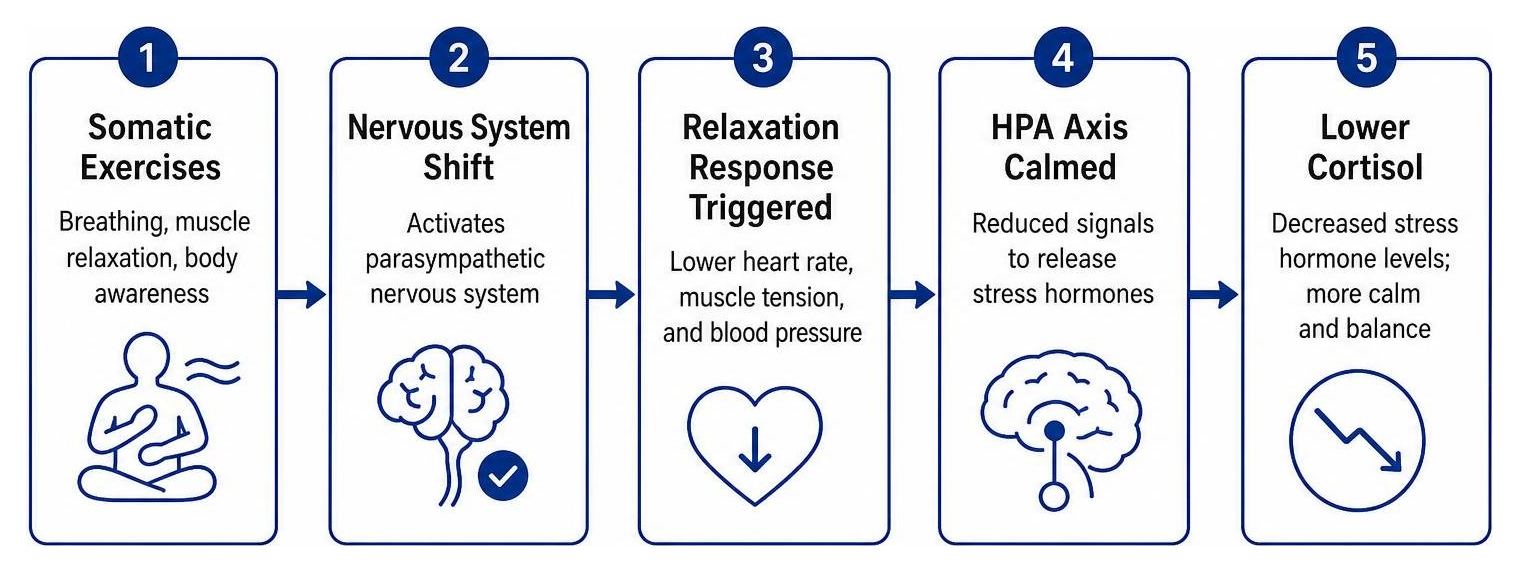
While cognitive techniques work from the top down by changing your thoughts, somatic strategies work from the bottom up by calming your physical body first. When you are stressed, your body is flooded with cortisol and adrenaline. Somatic exercises trigger the relaxation response, which is a state of deep physical rest that actively reverses the fight or flight response.
By learning to control your physical response to stress, you can quickly lower your heart rate, reduce muscle tension, and bring your mind back to a state of calm. To explore how to integrate these physical techniques into your life, check out these Strategies for Stress Management.
For a complete clinical overview of how relaxation techniques affect the body and mind, you can refer to the medical resource on Relaxation Techniques StatPearls NCBI Bookshelf.
Somatic and Breathing Exercises
Somatic exercises are incredibly practical because they can be done anywhere, at any time, without any special equipment. Here are four highly effective somatic techniques that you can use immediately during stressful moments:
- Box Breathing: This technique is used by high stress professionals to stay calm under pressure. To practice it, inhale slowly for a count of four, hold your breath for a count of four, exhale completely for a count of four, and hold your breath empty for a count of four. Repeat this cycle several times.
- Progressive Muscle Relaxation (PMR): PMR involves systematically tensing specific muscle groups for five seconds and then consciously releasing the tension for ten seconds. By working your way from your toes up to your head, you can release deep physical tension and teach your body what true relaxation feels like.
- Guided Imagery: This technique involves closing your eyes and visualizing a peaceful, calming environment in vivid detail. By engaging all five senses, what you see, hear, smell, touch, and taste, you can trick your brain into a state of calm, as the brain does not easily distinguish between a real experience and a vividly imagined one.
- Sensory Inputs: Using your physical senses is a powerful way to ground yourself in the present moment. You can splash cold water on your face, listen to calming music, or focus on the physical sensation of holding a warm cup of tea to quickly interrupt a stress spiral.
Lifestyle Integration and Daily Stress Management
For stress management therapy techniques to be truly effective over the long term, they must be integrated into your daily routine. Managing stress is not a one time event; it is a daily practice.
Your physical habits play a massive role in how well your body handles stress. Three key lifestyle factors include:
- Physical Activity – Regular exercise is one of the most important things you can do for your health. Aiming for about 2.5 hours of moderate physical activity per week, which can be broken down into 20 to 30 minutes a day, helps pump up feel good endorphins and naturally lowers stress hormones.
- Sleep Hygiene – Adults need between 7 and 9 hours of quality sleep each night. Creating a cool, dark, and quiet bedroom environment, and keeping electronic screens out of the bedroom, can dramatically improve your sleep quality and your ability to cope with daily stress.
- Social Support – Cultivating close relationships with friends, family, or community groups provides an emotional safety net. Sharing your worries with trusted people helps lighten your mental load.
To learn more about building a healthy daily routine that keeps stress at bay, read about 5 Effective Strategies for Stress Management.
For official public health guidance on healthy coping mechanisms, you can visit the government resource on Managing Stress | Mental Health – CDC. For additional practical everyday tips, you can also explore Stress Management: Strategies to Deal with Stress – HelpGuide.org.
Building Long Term Resilience
Beyond physical habits, building long term resilience involves developing healthy mental and behavioral boundaries.
Effective time management is a great place to start. Many people experience stress because they overcommit. By learning to prioritize important tasks, break large projects into smaller steps, and focus on completing work to an acceptable level rather than chasing perfection, you can significantly reduce your daily mental load.
Another powerful tool is gratitude practice. Research shows that practicing gratitude every day is one of the best kept secrets for reducing stress and improving emotional well being. You can practice gratitude by keeping a daily positive journal, writing down three things you are thankful for, or verbally expressing appreciation to the people in your life.
Finally, assertiveness training teaches you how to say no and set healthy boundaries. Learning to delegate tasks and protect your personal time prevents the inner conflict that comes from always putting others’ needs ahead of your own.
To start building these habits today, take a look at the 7 Steps to Manage Stress.
Frequently Asked Questions About Stress Therapy
What is the difference between general stress relief and stress therapy?
General stress relief refers to temporary activities that help you relax in the moment, such as taking a hot bath, going for a walk, or listening to your favorite music. While these activities are wonderful and highly recommended, they only provide temporary relief from symptoms.
Stress therapy, on the other hand, involves working with a licensed professional to learn clinical interventions. Therapy helps you identify the underlying triggers of your stress, understand your behavioral patterns, and develop sustainable coping skills. It is a structured process designed to create long term changes in how you perceive and react to challenges.
How does cognitive restructuring help with daily stress?
Cognitive restructuring changes your thought patterns. When a stressful event occurs, your brain automatically performs a cognitive appraisal, evaluating how threatening the situation is and whether you have the resources to handle it.
If your appraisal is distorted by negative thinking, your body will trigger a severe stress response. Cognitive restructuring teaches you to challenge those distorted thoughts and replace them with realistic, balanced alternatives. By changing how you interpret the situation, you naturally reduce your emotional distress and physical tension.
When is it time to seek professional help for stress?
It is time to seek professional help when your daily functioning is impaired, when self care strategies are no longer working, or when you feel constantly overwhelmed, trapped, or exhausted. If stress is causing chronic sleep issues, physical pain, or strain in your relationships, working with a therapist can provide the support you need to heal.
If you are ready to take the next step, you can read about what to look for in a provider by visiting Finding a Therapist for Stress: Things to Consider.
Conclusion
Prioritizing your mental well being is one of the most important decisions you can make. While stress is an inevitable part of life, living in a constant state of overwhelm is not. By practicing evidence based stress management therapy techniques, you can protect your physical health, restore your emotional balance, and reclaim your peace of mind.
If you are ready to explore professional support, Collective Counseling Solutions is here to help. They simplify the process of connecting with highly skilled, licensed therapists who accept insurance. Whether you prefer the convenience of teletherapy or the personal connection of in person sessions, they can match you with a provider tailored to your unique needs.
To learn more about how professional support can help you manage stress, you can explore their dedicated resources on Therapy for Stress and Stress Management. If you are navigating stress within your relationships, you may also find it helpful to read about Why Family and Couples Stress Management Counseling is a Game Changer.
Do not wait for stress to take over your life. Take the first step toward a healthier, happier you and find a therapist with Collective Counseling Solutions today.