

Finding the Right Therapy for Depression
Therapy for Depression helps you understand the thoughts, behaviors, relationships, and life stresses that may keep depression going. A licensed therapist can help you build practical coping skills, track progress, and choose a care plan that fits your symptoms and schedule.
For many people with mild or moderate depression, evidence based therapy such as cognitive behavioral therapy, behavioral activation, or interpersonal therapy can be an effective first step. When depression is more severe, long lasting, or makes daily life very hard, therapy and medication may work better together.
Depression is treatable, and you do not need to figure it out alone. Care may happen in person or through secure video sessions. The best option is one you can attend consistently and feel comfortable using.
This guide explains the main therapy options, when combined care may help, how long treatment can take, and when urgent professional support is needed.
Core Modalities and Approaches in Therapy for Depression
Clinical depression affects approximately nine percent of adults annually. Major medical organizations recommend several evidence based psychological treatments to alleviate symptoms and restore emotional balance. Working with a skilled clinician allows individuals to identify specific emotional triggers and develop sustainable daily habits.
| Modality | Primary Therapeutic Focus | Average Session Commitment | Core Benefits |
|---|---|---|---|
| Behavioral Therapy | Activity scheduling and reducing avoidance behaviors | 20 to 24 weekly sessions | Restores routine, counters lethargy, and enhances positive reinforcement |
| Cognitive Therapy | Identifying and reframing automatic negative thoughts | 8 to 28 weekly sessions | Modifies core beliefs and reduces cognitive distortions |
| Cognitive Behavioral Therapy (CBT) | Integrated cognitive restructuring and behavioral activation | 6 to 20 weekly sessions | Builds durable coping mechanisms with proven long term relapse prevention |
A comprehensive toolkit of Practical tools used in depression therapy ensures that clients have tangible exercises to utilize between clinical appointments.
How Cognitive Behavioral Therapy for Depression Works
Cognitive behavioral therapy operates on the principle that interconnected thought patterns, emotional responses, and daily behaviors influence one another. When an individual encounters a challenging life event, automated cognitive distortions can reinforce feelings of worthlessness and emotional exhaustion.
During structured sessions, clients learn to evaluate internal assumptions through collaborative inquiry and structured thought records. Rather than accepting distressing beliefs as absolute truths, individuals gather concrete evidence to reshape unhelpful thoughts.
A comprehensive clinical meta-analysis on cognitive behavior therapy efficacy spanning hundreds of clinical trials demonstrates that response rates for cognitive behavioral interventions consistently range from 61 percent to 87 percent across diverse patient populations.
Therapists also integrate behavioral activation to systematically dismantle social withdrawal. By scheduling manageable, meaningful activities, individuals break the cycle of isolation. Gaining an understanding of What depression therapy is really like helps remove uncertainty for individuals beginning their mental health journey.
Interpersonal, Mindfulness, and Psychodynamic Approaches
Beyond cognitive behavioral methods, several other evidence based psychotherapies offer meaningful support:
- Interpersonal Psychotherapy (IPT): Focuses directly on relational dynamics, social roles, and life changes. IPT typically spans 16 to 20 sessions and targets four specific interpersonal areas: resolving role disputes, navigating significant life transitions, processing unresolved grief, and addressing social isolation.
- Mindfulness Based Cognitive Therapy (MBCT): Combines traditional cognitive exercises with mindfulness practices like guided meditation and body scans. Typically structured as an eight week program, MBCT trains the mind to observe difficult emotions without judgment, teaching individuals that thoughts are mental events rather than factual definitions of reality.
- Psychodynamic Therapy: Examines how early life experiences, unconscious emotional patterns, and past relationships influence current behavioral struggles. Sessions provide a safe environment to explore long standing emotional conflicts and develop greater self awareness.
Clients experiencing milder symptoms often benefit from targeted early intervention, and exploring specialized options like Therapy for Depression Mild Depression provides a focused foundation for recovery.
Comparing Therapy and Medication for Clinical Depression
A thorough clinical evaluation outlined in Management of Depression in Adults: A Review highlights that both psychotherapy and standard medication classes serve as effective initial treatment pathways. The choice between approaches depends on symptom severity, personal preferences, and clinical history.

Short Term Symptom Relief vs. Long Term Coping Mechanisms
Antidepressant medications modify neurotransmitter availability within neural circuits to alleviate acute depressive distress. While medical treatments can provide helpful physical symptom relief, research indicates that traditional medication approaches provide full relief in only about one third of individuals initially.
Psychotherapy creates lasting changes in brain connectivity by strengthening prefrontal cognitive regulation over emotional centers. While medication offers symptom management during active use, psychotherapy equips individuals with cognitive resilience and problem solving skills that remain protective long after sessions conclude. Learning to navigate challenging mornings When getting out of bed feels impossible relies heavily on the self activation techniques developed in talk therapy.
When Combined Treatment Is Recommended
Clinical guidelines detailed in Major depressive disorder in adults: Approach to initial management establish that combining psychotherapy with medication management produces significantly higher rates of recovery than single modality approaches for moderate to severe depressive episodes.
Combined treatment is particularly beneficial for:
- Chronic depressive conditions lasting longer than six months
- Depressive episodes with marked functional impairment
- Situations where initial single approach interventions have not provided sufficient relief
Coordinated care between psychotherapists and medical providers ensures that biological stabilization and cognitive skill building occur simultaneously, leading to optimal therapeutic outcomes.
Treatment Phases, Duration, and Recovery Timelines

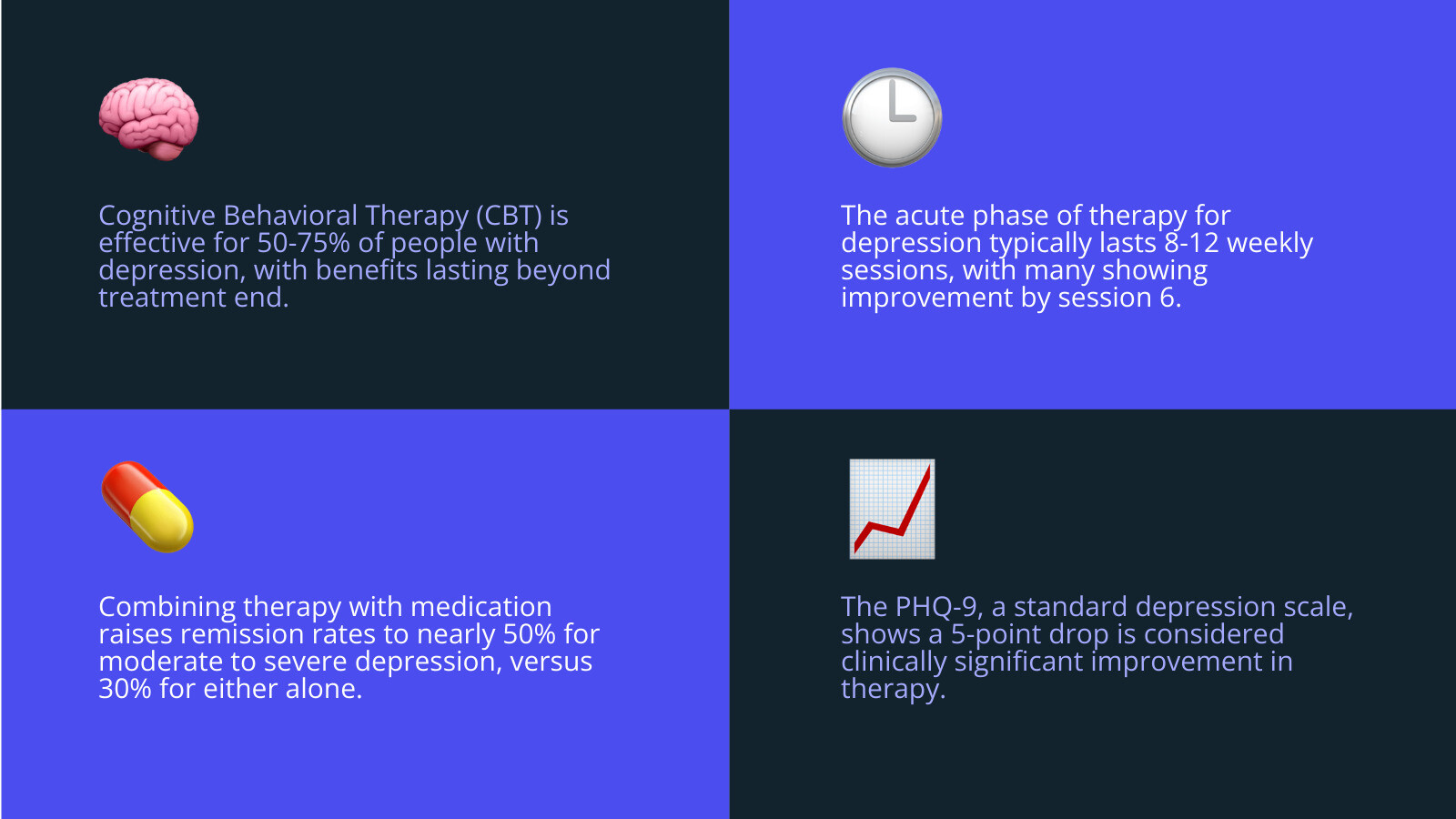
Therapeutic recovery follows a structured progression rather than an overnight change. Clinicians utilize validated instruments such as the Patient Health Questionnaire (PHQ 9) and the Hamilton Rating Scale to monitor progress across distinct treatment milestones.
Navigating the Phases of Therapy for Depression
Depression care is divided into three key stages:
- Acute Phase (6 to 8 Weeks): Focuses on reducing distressing symptoms and establishing a secure therapeutic relationship. Approximately 50 percent of patients experience significant symptom improvement within 15 to 20 structured sessions.
- Continuation Phase (4 to 9 Months): Continues after initial symptom remission to consolidate gains and prevent early relapse. Research indicates that continuing supportive care for at least four months after symptoms subside significantly protects against future depressive recurrence.
- Maintenance Phase: Involves periodic booster sessions to help clients manage ongoing life transitions. Individuals managing demanding careers often seek strategies found in Therapy for Depression High-Functioning to maintain balance while excelling professionally.
Safe Discontinuation and the Risks of Abrupt Cessation
Stopping depression treatments abruptly can lead to clinical complications. As detailed in the Diagnosis and treatment – Mayo Clinic guide, suddenly ending medical treatments or talk therapy can cause rapid symptom rebound.
Discontinuation of medical therapies should always involve a gradual, stepwise dose reduction managed by a qualified healthcare provider over several weeks or months. Gradually tapering ensures the body adapts smoothly and allows therapists to monitor for any returning depressive symptoms.
Advanced Interventions for Treatment Resistant Depression
When standard first line interventions do not yield adequate results, advanced medical and neuromodulation treatments offer renewed hope. Clinical research shows that fewer than two percent of individuals find success with a third or fourth traditional oral medication attempt alone, making alternative modalities essential.
Transcranial Magnetic Stimulation and Accelerated Protocols
Repetitive Transcranial Magnetic Stimulation (rTMS) is an evidence based, noninvasive procedure that utilizes focused magnetic fields to stimulate underactive neurons in the dorsolateral prefrontal cortex.
- Standard rTMS protocols achieve clinical response in roughly 50 percent of individuals and complete symptom remission in over 30 percent.
- Combining TMS sessions directly with psychotherapy increases response rates to approximately 66 percent and remission rates to 55 percent.
- Accelerated protocols, such as the SAINT protocol using advanced neuroimaging, deliver targeted stimulation across five consecutive days. Clinical trials demonstrate an 85.7 percent response rate and a 78.6 percent remission rate, with 60 percent of patients maintaining remission at one month.
- Electroconvulsive therapy remains a valuable hospital based option for severe, nonresponsive episodes, achieving an 80 percent response rate and a 65 percent remission rate within four weeks.
Advanced Medical Therapies and Medication Augmentation
Supervised rapid acting medical interventions target neural receptors to promote synaptic connections in the brain.
Approximately 60 percent of patients experience meaningful symptom improvement within three days of an initial supervised session, with around 40 percent sustaining benefits at one month. Over longer periods, response rates adjust to approximately 26 percent at six months, demonstrating the vital importance of pairing biological interventions with long term talk therapy. Prescribers may also augment standard regimens with mood stabilizers or non antidepressant agents to improve overall therapeutic response.
Complementary Self Care and Lifestyle Strategies
Clinical therapy is reinforced when supported by healthy everyday routines. Recognizing early shifts in mood outlined in What are the signs and symptoms of depression? helps individuals implement timely lifestyle adjustments.
- Physical Movement: Regular aerobic exercise stimulates the release of brain derived neurotrophic factor (BDNF) and endorphins, promoting neural health and elevating mood.
- Nutritional Support: Following an anti inflammatory dietary pattern, such as the Mediterranean diet rich in whole grains, lean proteins, and vegetables, supports gut brain communication.
- Sleep Regularity: Sleep disturbances affect up to 90 percent of people experiencing depression, while 40 percent of individuals with chronic insomnia meet criteria for clinical depression. Establishing consistent sleep schedules and relaxing evening habits directly aids emotional regulation.
Light Therapy and Mind Body Integration
Bright light therapy involves daily morning exposure to a specialized 10,000 lux light box for 30 minutes. This practice regulates internal circadian timing and improves depressive symptoms in 50 percent to 60 percent of individuals.
Those experiencing seasonal mood shifts can explore targeted care pathways via Therapy for Depression Seasonal to maintain stability throughout changing seasons. Integrating mindfulness meditation, gentle yoga, and breathing exercises further enhances autonomic nervous system balance.
Delivery Formats: In Person vs. Online Therapy
Modern mental health care provides flexible delivery formats tailored to personal schedules and comfort levels. Comprehensive studies confirm that licensed teletherapy delivers clinical outcomes comparable to traditional in office sessions for depression.

Clients can connect through secure video platforms from home or attend sessions at a comfortable outpatient office. Reviewing options for Therapy for Depression Online enables individuals to choose a format that fits their lifestyle while working with experienced, credentialed clinicians.
Frequently Asked Questions About Depression Treatment
How do I know if therapy is working for my depression?
Therapeutic progress is reflected in gradual improvements in daily functioning, increased energy levels, enhanced emotional regulation, and a renewed ability to engage in relationships and hobbies. Clinicians regularly utilize screening tools like the PHQ 9 to objectively measure symptom reduction over time.
What should I do if standard antidepressants fail to relieve symptoms?
If initial medical treatments do not produce sufficient relief, consulting with a psychiatric provider to reevaluate the care plan is an important step. Effective options include adjusting the therapeutic modality, adding specialized psychotherapy, exploring medication augmentation, or considering advanced neuromodulation treatments such as TMS.
What signs indicate an immediate need for psychiatric crisis support?
Immediate professional support or urgent medical evaluation is necessary if an individual experiences acute psychotic symptoms, severe inability to manage basic personal self care, or persistent thoughts of self harm. Confidential help is available around the clock by calling or texting 988 in the United States or reaching out to the National Helpline for Mental Health, Drug, Alcohol Issues.
Conclusion
Overcoming depression is a gradual journey that begins with the right professional support. Evidence based psychotherapy provides the insight, emotional tools, and practical strategies needed to navigate life’s challenges and foster enduring emotional health.
Collective Counseling Solutions simplifies the process of finding licensed therapists who accept insurance, offering both in person and virtual care tailored to your unique needs. Taking the step toward healing starts with exploring specialized care through Therapy for Depression to connect with a compassionate professional today.