

Start Marriage With Clearer Conversations
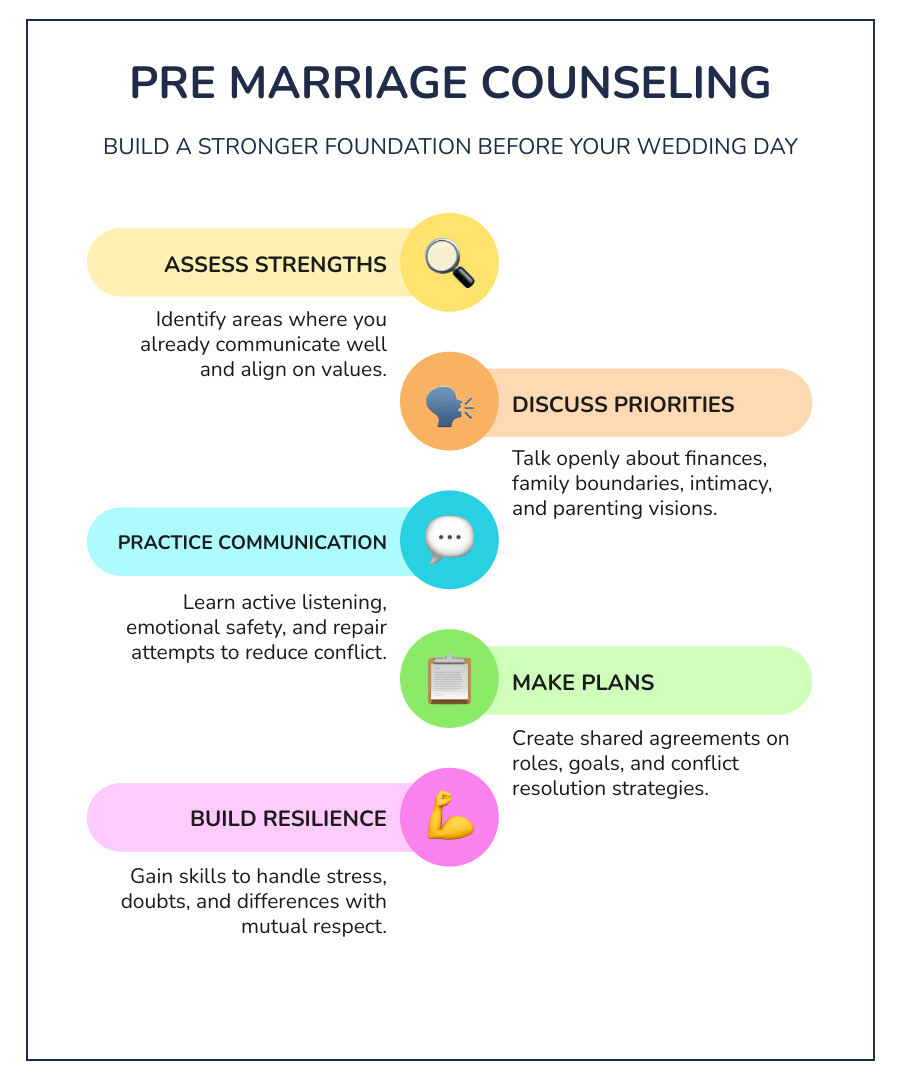
Pre marriage counseling helps you prepare for married life by giving you a calm, structured place to talk through the topics that shape a relationship. Before the wedding, set time aside to discuss money, communication, family boundaries, intimacy, children, values, and how you will handle conflict. A licensed therapist can help both partners speak openly, listen well, and turn hard conversations into shared plans.
This is not only for couples in crisis. It is proactive support for building skills before stress, resentment, or misunderstandings become patterns. Research suggests that premarital counseling and relationship education may help couples strengthen communication, manage conflict, and build skills that support long-term relationship satisfaction.
The goal is not to prove that you agree on everything. It is to understand where you differ, respect each other’s needs, and learn how to make decisions as a team.
Relevant articles related to pre marriage counseling:
What Is Pre Marriage Counseling and Why Does It Matter?
When couples plan a wedding, calendars fill up quickly with tastings, venue tours, floral arrangements, and guest lists. While these details make for a wonderful celebration, the wedding is simply a single day, whereas marriage is intended to last a lifetime. Pre marriage counseling serves as early preventive care, offering structured guidance to help partners transition smoothly from dating or engagement into a lifelong commitment.
Working with a licensed mental health professional provides proactive guidance before everyday marital challenges appear. Rather than waiting for communication breakdowns to turn into resentment, couples use this dedicated space to explore their expectations, relational dynamics, and long term visions. Engaging in dedicated couples therapy pre-marital programs allows both partners to establish a grounded emotional foundation and assess their overall relationship readiness.
Many partners wonder whether seeking guidance before exchanging vows is truly necessary. As highlighted in research asking is premarital counseling worth it, proactive counseling offers substantial preventive value. It allows couples to address sensitive matters with professional facilitation, ensuring both voices are heard and validated before life transitions add external pressure.

How Premarital Counseling May Support a Stronger Marriage
Research on premarital counseling and relationship education suggests that participating couples may experience improvements in communication, conflict management, and relationship satisfaction. Results vary, and counseling does not guarantee a successful marriage.
Premarital counseling can help couples recognize unhealthy communication patterns, practice managing disagreements, and develop skills that may support long term relationship satisfaction. The value of these skills depends on each couple, the counseling approach, and how consistently the skills are practiced.

Core Relationship Skills You Will Build
A central benefit of premarital preparation is the acquisition of practical, repeatable relational habits. Therapists guide couples through structured exercises designed to upgrade interpersonal dynamics:
- Active and Empathetic Listening: Moving beyond simply waiting for a turn to speak, partners learn to listen for underlying emotions, validating each other’s experiences without immediately becoming defensive.
- Constructive Conflict Management: Disagreements are inevitable in every partnership. Structured couples therapy conflict sessions teach couples how to manage differences calmly, avoid destructive criticism, and find workable compromises.
- Emotional Safety and Soft Startups: Beginning difficult conversations gently prevents emotional walls from going up, fostering an environment where both individuals feel secure sharing vulnerable truths.
- Effective Repair Attempts: Couples learn how to spot emotional bids, de escalate rising irritation, and use humor or affection to soothe moments of tension.
- Clear Dialogue Habits: Practicing healthy couples therapy communication strategies transforms vague expectations into clear, respectful requests.
Essential Topics and Critical Questions to Explore
Many couples enter counseling wondering what do couples do in therapy during premarital sessions. The process centers around exploring essential life topics, identifying shared strengths, and asking thoughtful questions to ask in couples therapy. By examining personal attachment styles and family backgrounds, couples gain deep insight into how they relate to one another during times of stress.

Financial Alignment and Career Goals
Money is consistently cited as one of the most common sources of friction in marriage. Counseling gives couples a neutral, judgment free zone to address financial matters openly and build shared financial plans.
During financial alignment conversations, partners explore:
- Spending Philosophies: Identifying whether each partner tends naturally toward saving or spending.
- Shared and Individual Debt: Disclosing student loans, credit balances, or personal obligations with complete transparency.
- Account Management: Deciding whether to maintain separate accounts, merge funds completely, or implement a hybrid arrangement.
- Career Trajectories and Work Life Balance: Aligning expectations regarding work hours, relocations, professional ambitions, and retirement goals.
Family Dynamics, Parenting Visions, and Boundaries
Blending two distinct family backgrounds requires clear boundary setting and intentional tradition making. Couples benefit from understanding how their upbringings shape their present expectations. For those planning to expand their households, learning how 5 key ways your family can benefit from family therapy can offer proactive insight into long term dynamics.
Key areas of focus include:
- Holiday Traditions and In Law Boundaries: Deciding how time will be divided between extended families and establishing healthy limits to protect the marital bond.
- Parenting Philosophies: Discussing whether to have children, ideal family size, disciplinary styles, educational priorities, and caregiving roles.
- Cultural and Spiritual Beliefs: Honoring individual spiritual practices or cultural backgrounds while creating shared household rituals.
Physical Intimacy, Emotional Connection, and Roles
Maintaining intimacy requires ongoing communication and vulnerability. Comprehensive couples therapy helps partners navigate physical and emotional expectations with care and mutual respect.
Partners explore:
- Intimacy Expectations: Discussing physical affection, sexual frequency, and emotional safety with comfort and openness.
- Division of Household Labor: Establishing fair, sustainable agreements regarding daily chores, administrative tasks, and mental load management.
- Independence and Social Needs: Balancing quality time spent together with individual friendships, solo hobbies, and personal space.
Exploring Formats, Costs, and Counseling Options
Premarital education is adaptable to various preferences, schedules, and budgets. Couples can choose between private therapy, structured workshops, or digital tools to support their growth.
Couples often look for modern tools such as the Connected App for Engaged Couples to complete assessments between meetings. Digital tools can complement regular sessions by offering daily conversation prompts.
| Counseling Format | Primary Focus | Best Suited For | Key Advantages |
|---|---|---|---|
| In Person Therapy | Personalized clinical intervention | Couples seeking deep, tailored guidance | High emotional attunement and real time clinical support |
| Online Teletherapy | Remote clinical sessions | Busy professionals and long distance couples | Maximum flexibility without travel requirements |
| Premarital Workshops | Group education and skill building | Couples wanting structured relationship curricula | Collaborative learning environment |
| Digital Preparation Apps | Self guided assessments and prompts | Supplemental practice between appointments | Convenient daily relationship check ins |
Understanding how to navigate coverage is essential for planning care. Insurance coverage for premarital counseling varies by plan and provider. Because premarital counseling is often considered a preventive or relationship-focused service, it may not be covered by health insurance. Couples should verify their benefits and potential out-of-pocket costs before scheduling. Reviewing details on couples therapy insurance helps partners understand benefit verification, out-of-network options, and flexible spending options.
When to Start Pre Marriage Counseling Before Your Wedding
The ideal time to begin premarital counseling is six to nine months prior to the wedding date. Starting early allows partners to work through exercises calmly without the looming deadlines of final wedding preparations.
A standard timeline ensures sufficient space to absorb and apply new relational tools:
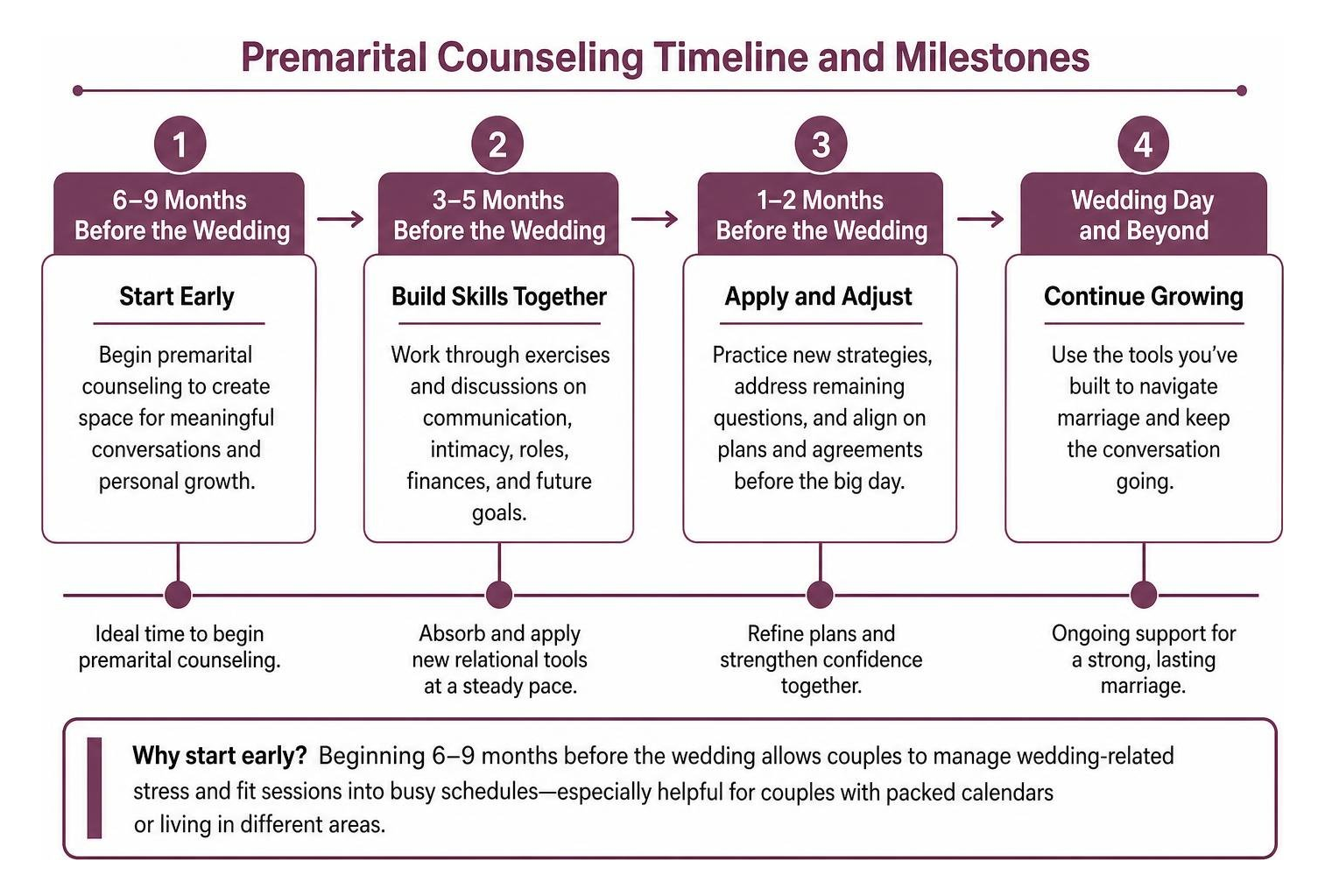
Beginning therapy early also helps manage wedding related stress. For couples managing packed schedules or living in different areas, reading an online couples counseling a complete guide for partners provides actionable steps for fitting sessions into busy routines.
Navigating In Person vs. Online Counseling Formats
Both in-person and online counseling can help couples improve communication, resolve conflicts, and work toward relationship goals. The best format depends on the couple’s needs, preferences, and access to qualified providers. Choosing the best approach depends on work schedules, physical locations, and personal learning preferences. Utilizing modern couples therapy online allows partners to join video sessions from home or separate offices, eliminating travel time while providing direct access to qualified mental health professionals.
Frequently Asked Questions About Premarital Preparation
Can premarital counseling help non traditional or secular couples?
Premarital counseling can be beneficial for couples from a variety of backgrounds, including secular partners, LGBTQ+ couples, intercultural relationships, and blended families. Couples should look for a therapist who respects their values and has experience addressing their specific needs. Secular counseling is available, and religious perspectives can be incorporated when appropriate and desired.
What if counseling uncovers major disagreements or doubts?
Discovering areas of disagreement during counseling is a normal and healthy part of the process. Surfacing hidden differences before marriage is far better than encountering them unexpectedly years later. When partners encounter friction, reading do we need couples therapy how to know when its time can help normalize the experience of working through complex topics with professional guidance.
How many sessions do couples typically need?
Most premarital counseling programs consist of five to ten sessions, depending on the couple’s unique goals. To better understand the typical flow of intake assessments, interactive exercises, and session reviews, exploring what happens in couples therapy provides a clear picture of what to expect throughout the process.
Conclusion
Investing in premarital therapy is one of the most loving and protective decisions an engaged couple can make. By taking the time to understand each other’s communication styles, financial values, and family visions, partners lay the groundwork for long term resilience, mutual trust, and enduring joy.
Collective Counseling Solutions simplifies the process of connecting with licensed, compassionate therapists who accept insurance, offering both in person and virtual support. When you are ready to strengthen your partnership and prepare for a lifetime of shared growth, take the first step and find a therapist today.