

A Hopeful First Step After Infidelity
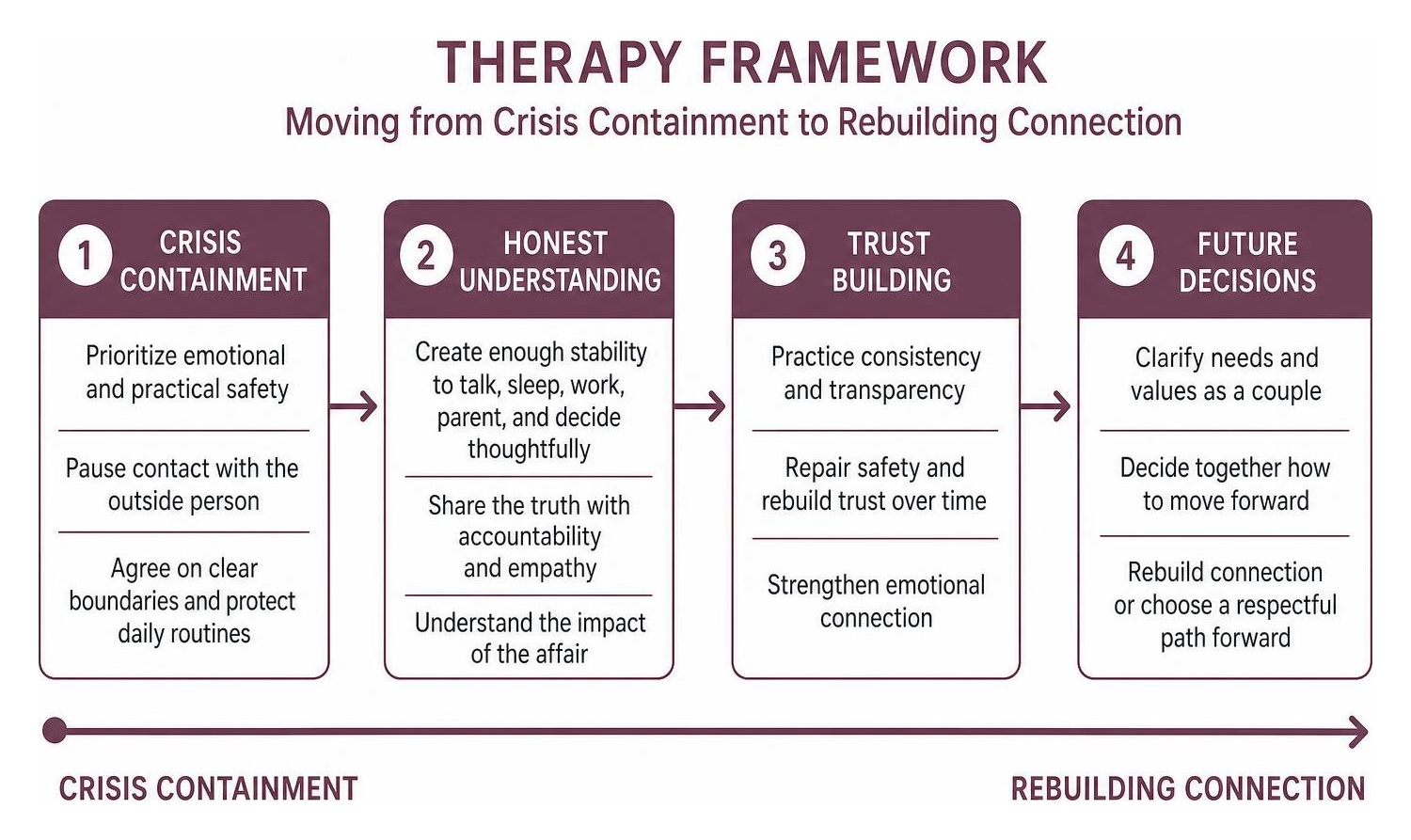
Marriage counseling for infidelity can help you decide what comes next without rushing the answer. Start by creating emotional and practical safety: pause contact with the outside person, agree on clear boundaries, protect daily routines, and work with a therapist who can keep hard conversations from becoming harmful.
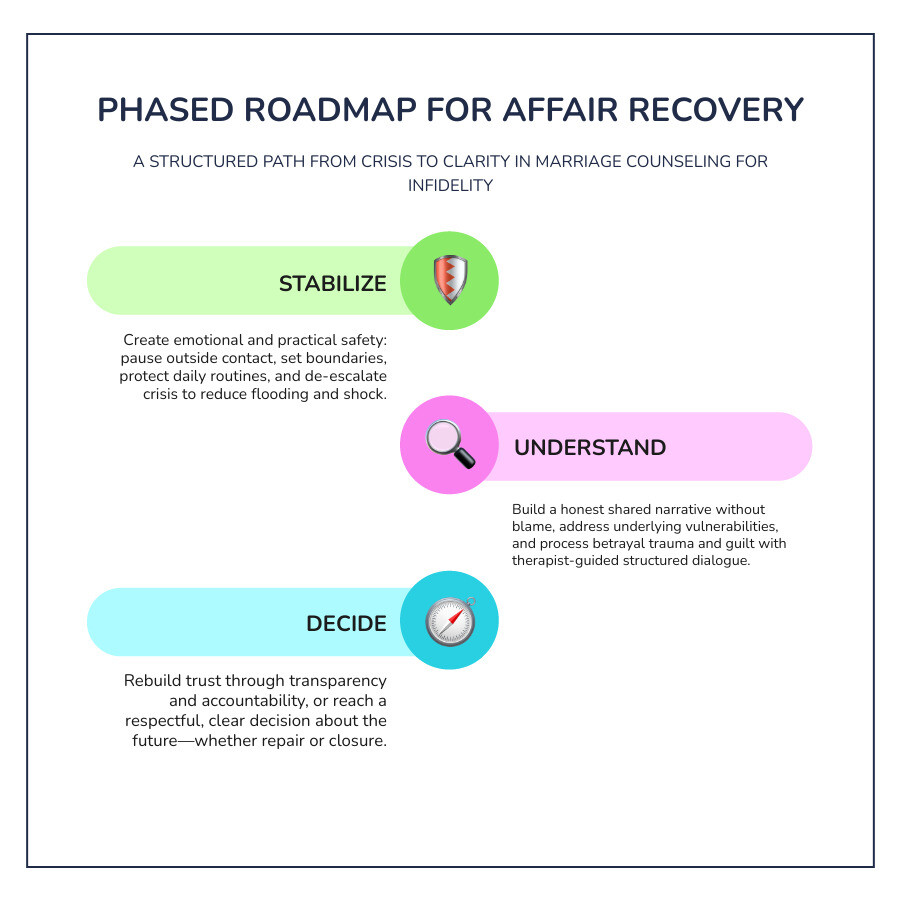
The first goal is not to examine every detail of the affair. It is to help both partners feel steady enough to talk, sleep, work, parent, and make thoughtful choices. From there, counseling can support honest accountability, trust building, and a clearer understanding of what the relationship needs.
Healing is rarely a straight path. The betrayed partner may move between grief, anger, fear, and intrusive thoughts. The partner who had the affair may feel shame, remorse, or defensiveness. With real commitment, patience, and structured support, many couples can repair their relationship or reach a respectful decision about its future.
Terms related to marriage counseling for infidelity:
The Immediate Aftermath: Why Marriage Counseling for Infidelity Prioritizes Emotional Safety First
When an affair is discovered, the world can feel entirely unmoored. The nervous system enters a state of acute crisis, making rational conversation nearly impossible. This is why specialized couples therapy for infidelity Couples therapy for infidelity often begins with stabilization and establishing emotional safety before moving into a detailed exploration of the betrayal.
Without emotional stabilization, conversations quickly devolve into painful cycles of attack and defense. A structured approach ensures that both partners have the psychological safety required to engage in meaningful repair work.
Deescalating Crisis and Establishing Daily Stability
The first priority in therapy is to create clear ground rules for daily interactions. Emotional flooding occurs when distress overwhelms the brain, shutting down logical processing and triggering fight, flight, or freeze responses. During this stage, therapists assist partners in establishing containment strategies so that intense discussions do not consume every waking hour.
Practical ground rules often include:
- Agreeing on designated times to talk rather than allowing arguments to erupt late at night.
- Establishing explicit privacy boundaries regarding family members and social circles.
- Pausing all communication with the outside party immediately.
- Protecting daily routines like work, meals, and parenting responsibilities.
By establishing these boundaries, both individuals can regain basic functioning and create a calm environment for deeper therapeutic exploration.
The Emotional Reality: Processing Betrayal Trauma and Guilt
The discovery of infidelity triggers complex emotional reactions in both people. The injured partner frequently experiences symptoms consistent with acute betrayal trauma, including hypervigilance, sudden mood shifts, and intense grief. Meanwhile, the participating partner often experiences a blend of profound remorse, acute guilt, and defensive shame.
Understanding these divergent emotional realities helps validate the pain of both individuals while fostering genuine empathy.
| Emotional Experience | Betrayed Partner | Partner Who Participated in Infidelity |
|---|---|---|
| Primary Reactions | Shock, intense anger, heartbreak, hypervigilance | Remorse, acute guilt, panic, relief that secrecy ended |
| Cognitive Impact | Intrusive thoughts, obsessive questioning, loss of certainty | Fear of permanent rejection, mental exhaustion, defensiveness |
| Core Need | Complete safety, reassurance, validation of pain | Empathy for remorse, guidance on making amends, shame reduction |
The Core Phases of Affair Recovery in Therapy
Therapeutic recovery follows an evidence based, trauma informed framework designed to move partners from instability toward lasting clarity. This process takes time, intentional effort, and consistent emotional vulnerability. As highlighted by Dr. Marina Rosenthal’s work on infidelity recovery, healing relies on moving through safety, shared understanding, and clear future commitment.
Constructing a Shared Narrative Without Shifting Blame
One essential step in therapy is building a shared narrative about why the infidelity occurred. A shared narrative provides context for the choices made without justifying or excusing the breach of trust. It eliminates destructive gaslighting and allows both partners to agree on the reality of what happened.
Importantly, context is never an excuse. Understanding that a partner felt unseen, lonely, or disconnected explains the conditions surrounding the choice, but the responsibility for seeking an outside connection rests solely with the person who chose that action. When both individuals can talk openly about these factors, healing becomes possible.
Actionable Transparency: Practical Steps to Rebuild Trust
Trust cannot be rebuilt through spoken promises alone; it requires consistent, observable actions over extended periods. Open communication and radical transparency serve as the foundation for renewed emotional security.

Key practices to rebuild trust and connection through marriage relationship counseling include:
- Agreeing on mutually acceptable levels of transparency around communication and digital activity.
- Providing reasonable schedule or whereabouts updates when both partners agree these will help rebuild trust.
- Providing calm, daily reassurances of commitment without waiting to be asked.
- Demonstrating patience whenever the injured partner asks questions about their whereabouts.
Addressing Underlying Marriage Vulnerabilities Without Excuses
Infidelity sometimes occurs in relationships experiencing stagnation, unresolved conflict, or emotional detachment. Exploring these vulnerabilities is essential for preventing future issues, yet it must be done carefully to avoid shifting blame away from the unfaithful choice.
Therapy provides a neutral ground to examine intimacy deficits, emotional distance, and communication breakdowns. Through specialized couples communication therapy, partners learn to voice their needs honestly and resolve underlying dynamics that may have left the relationship vulnerable.
Navigating the Non Linear Healing Journey and Setbacks
Recovery from an affair is rarely a steady, upward climb. It is common to experience rapid progress followed by sudden emotional setbacks. Recognizing that healing operates in waves helps couples stay resilient when difficult days arise.
Managing Triggers, Flashbacks, and Emotional Relapses
Triggers can be sparked by everyday occurrences, such as a specific song, a restaurant, a text tone, or a fleeting memory. When a trigger happens, the betrayed partner may experience an emotional flashback that feels as intense as the initial discovery.

Partners can navigate these triggers using practical strategies:
- Acknowledging the trigger immediately without frustration or minimization.
- Engaging in somatic grounding exercises, such as deep rhythmic breathing and physical grounding.
- Implementing agreed de escalation protocols to pause conversations before emotional flooding occurs.
- Offering gentle physical presence and verbal reassurance until the distress subsides.
Integrating Individual Therapy with Marriage Counseling for Infidelity
While joint sessions focus on relational dynamics, individual counseling offers a safe environment to process personal emotions. The betrayed partner can explore their trauma, grief, and self esteem outside the relational space. Simultaneously, the unfaithful partner can explore underlying motivations, work through personal shame, and build emotional regulation skills.
Understanding what happens in couples therapy helps individuals see how individual growth and joint sessions complement each other to create sustainable relational changes.
Deciding the Future of the Relationship
Not every couple decides to stay together after an affair, and therapy can help clarify the right path forward. Discernment counseling allows partners to explore their options calmly before committing to long term marital repair or a constructive separation.
Research Backed Outcomes: What Happens in Marriage Counseling for Infidelity
Clinical literature offers strong encouragement for couples facing the aftermath of betrayal. Authoritative research on clinical marriage therapy for infidelity highlights that while couples entering therapy after an affair report significant distress initially, dedicated intervention yields remarkable improvements.
Research offers some encouraging findings for couples who choose to work on their relationship after infidelity. In one exploratory study of couples receiving marital therapy, couples affected by infidelity began treatment with greater relationship distress, but those who disclosed the affair before or during therapy showed substantial improvement in relationship satisfaction. Because the study included a relatively small number of couples affected by infidelity, the findings should be viewed as promising rather than a guarantee of any particular outcome.
Assessing Readiness: Distinguishing Commitment to Repair from Punishment
Therapy requires genuine readiness from both individuals. When one partner remains exclusively focused on punishing the other, constructive repair becomes blocked.
Couples can evaluate their readiness by knowing when it’s time for couples therapy and assessing these indicators:
- Both partners want to understand the root causes rather than stay locked in endless blame.
- The unfaithful partner shows sustained remorse and openness to transparency.
- The injured partner desires healing, even if they remain deeply hurt.
- Both individuals are willing to engage in honest, vulnerable self reflection.
Frequently Asked Questions About Healing After an Affair
How long does it take to rebuild trust after infidelity?
Rebuilding trust is an ongoing process that typically requires an extended period of consistent effort. The timeline varies based on the depth of transparency, the emotional support provided, and the commitment of both partners to working through setbacks together.
Can a couple discuss the affair without constantly triggering explosive arguments?
Yes. Utilizing structured dialogues within counseling sessions establishes clear boundaries for difficult topics. Therapists help contain high intensity moments, moderate the flow of questions, and teach emotional regulation techniques that keep conversations calm and productive.
Should we choose online or in person marriage therapy for affair recovery?
Both modalities provide excellent therapeutic outcomes. Many partners appreciate the privacy and comfort of exploring online couples counseling options, while others prefer meeting in a dedicated office setting. Choosing the format that best accommodates your schedule and comfort level is the most effective approach.
Conclusion
Surviving an affair is one of the most demanding challenges a relationship can face, but it does not have to mark the end of your story. Through patience, consistent accountability, and professional guidance, many couples transform their pain into a stronger, more honest partnership. When you are ready to take the next step toward clarity and healing, find a therapist at Collective Counseling Solutions who can support your journey toward renewed trust and mutual connection.