

How Therapy Can Help With Financial Stress
If money worries affect your sleep, mood, or daily life, therapy to help with financial stress can make a meaningful difference. Tell a licensed therapist what feels hardest, whether that is opening bills, making decisions, or talking about money. Together, you can work on managing anxiety and taking small steps instead of avoiding the problem.
Therapy does not pay the bills, but it can make them easier to face. A financial counselor can help you address debt and payment choices. Collective Counseling Solutions connects clients with licensed therapists who accept insurance for in person or teletherapy sessions.
The Psychological and Physical Toll of Financial Hardship
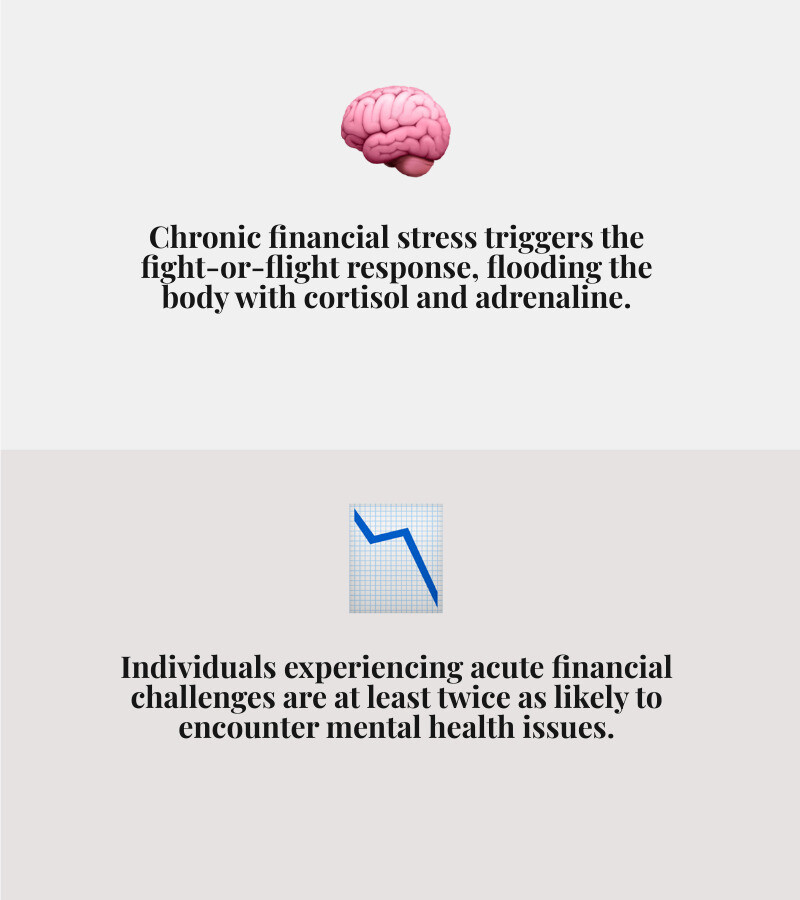
Money is rarely just about numbers on a spreadsheet. In reality, finances are intimately tied to personal safety, shelter, autonomy, and security. When financial stability feels threatened, the body may respond as though it is facing a significant threat. This can activate the fight-or-flight response and increase stress hormones such as cortisol and adrenaline. Over time, prolonged stress can contribute to fatigue, emotional exhaustion, difficulty concentrating, and other physical and psychological symptoms.
The relationship between economic pressure and mental wellbeing is deeply reciprocal. According to research on the health impacts of financial stress, individuals experiencing acute financial challenges are at least twice as likely to encounter mental health issues as those who are not. When mental health declines, managing money becomes exponentially harder. In fact, clinical research indicates that a majority of people find it significantly more difficult to make sound financial decisions during periods of poor mental health.
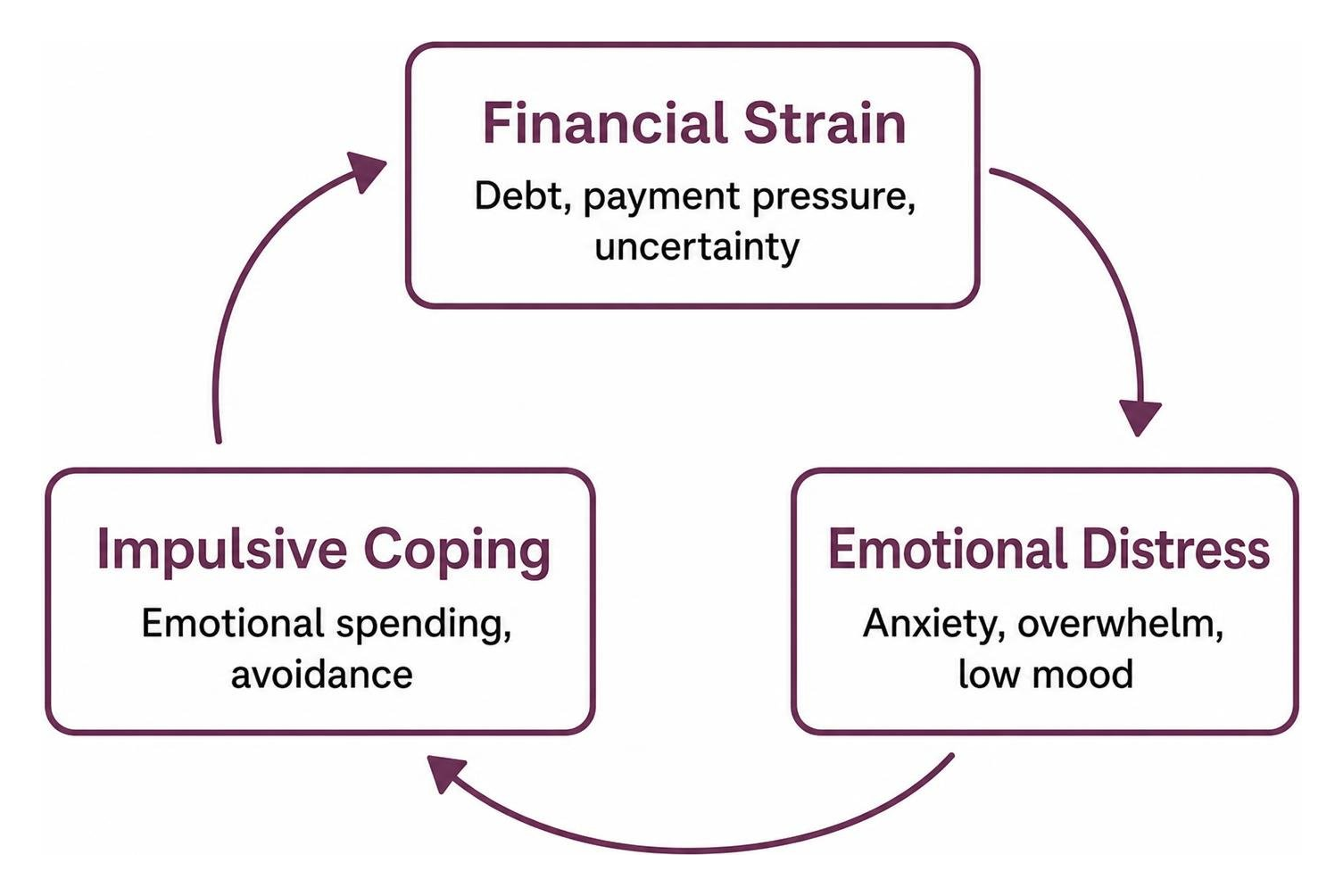
This mutual reinforcement often sparks an emotional spending loop. When an individual feels overwhelmed, anxious, or depressed, the brain naturally craves relief. Engaging in retail purchases provides a temporary surge of dopamine, creating a brief sense of control or pleasure. However, this momentary lift is frequently followed by intense guilt, buyer remorse, and increased financial strain. Learning stress management strategies can help individuals interrupt these self reinforcing emotional cycles before they compound debt.
Everyday Money Concerns vs. Chronic Financial Strain
It is completely normal to experience occasional financial concerns. Deciding whether to dine out, planning a holiday budget, or adjusting personal spending after an unexpected car repair are standard parts of modern life. These acute budgeting moments are temporary and generally resolve once a concrete plan is established.
Chronic financial strain can create an ongoing psychological burden. Persistent concerns about meeting financial obligations may consume mental resources, making it harder to concentrate, plan ahead, and make decisions. For some individuals, prolonged financial stress can interfere with daily functioning and emotional well-being. It becomes difficult to plan ahead, concentrate at work, or regulate emotional responses. This state of nervous system dysregulation makes even minor daily tasks feel monumental.
Somatic and Emotional Warning Signs
Financial anxiety rarely stays confined to the mind. The body frequently sounds the alarm long before an individual consciously acknowledges the depth of their distress.

Chronic financial anxiety often presents through distinct physical and emotional symptoms:
- Tension headaches and muscle stiffness: Persistent clenching of the jaw, neck, and shoulders due to prolonged somatic tension.
- Digestive distress: Frequent stomachaches, nausea, or appetite changes triggered by elevated stress hormones.
- Sleep disruption: Difficulty falling asleep, frequent awakenings, or restless sleep associated with persistent financial worries.
- Depressive symptoms: Feelings of hopelessness, chronic lethargy, and a belief that circumstances will never improve.
- Shame and avoidance: Hiding unopened mail, refusing to check bank balances, and withdrawing from social circles out of fear of financial judgment.
Identifying the Impact on Relationships and Daily Life
Financial strain often places significant pressure on personal relationships. Money is one of the most common topics of disagreement among couples, frequently manifesting as heated arguments, resentment, or communication avoidance. When partners have different attitudes toward spending, or when debt mounts, emotional safety within the partnership can erode.
In severe cases, distress leads to financial infidelity, such as hiding credit cards, concealing purchases, or secretly borrowing money to cover past expenses. Beyond romantic partnerships, individuals often withdraw from friends and family because social events carry an expectation of spending. Furthermore, mounting bills can lead to healthcare rationing, where individuals delay medical appointments or skip therapy sessions because they fear the out of pocket costs.
| Dynamic | Constructive Financial Conversations | Distress Driven Conflict |
|---|---|---|
| Communication Style | Calm, scheduled discussions with clear agendas | Reactive arguments triggered by unexpected expenses |
| Emotional Focus | Collaborative problem solving and mutual support | Blame, defensiveness, and personal criticism |
| Transparency | Open sharing of accounts, debt, and shared goals | Concealing purchases, secret debts, and avoidance |
| Mindset | Viewing money as a practical tool to manage together | Viewing money as a measure of personal worth or control |
How to Support a Loved One Experiencing Financial Distress
Watching a family member or friend navigate financial hardship can feel challenging. While the instinct is often to offer immediate financial advice or step in with quick fixes, unsolicited guidance frequently increases feelings of shame.
The most effective way to help is through empathetic, nonjudgmental listening. Validate their emotional reality by acknowledging how exhausting financial uncertainty can be. Avoid making comments about past purchasing choices or offering simplistic budgeting tips. Instead, encourage open conversation, suggest free and relaxing activities you can enjoy together, and gently normalize the process of seeking specialized emotional or counseling support.
How to Access Financial Stress Therapy Help and Professional Support
When money worries begin to erode your physical health, self-esteem, or relationships, relying solely on willpower is rarely enough. Navigating acute economic pressure requires emotional regulation, cognitive clarity, and targeted behavioral change. Counseling for stress can help individuals explore fears, emotional patterns, and difficult experiences associated with financial uncertainty while developing practical strategies for managing anxiety, reducing avoidance, and improving daily functioning.
Clinical therapists focus on the mental and emotional drivers behind money behaviors, helping clients reduce anxiety and resolve shame. In contrast, accredited financial counselors assist with practical elements like negotiating payment terms, consolidating debt, and structuring cash flow. Combining therapeutic care with practical financial guidance provides a comprehensive path toward stability.
When to Seek Financial Stress Therapy Help for Money Related Anxiety
It is wise to seek professional therapy to help with financial stress when emotional distress interferes with your ability to function. Clear indicators that professional psychological care is warranted include:
- Experiencing panic attacks, chest tightness, or hyperventilation when opening utility bills or checking bank balances.
- Living with persistent insomnia or recurring nightmares centered on money and economic survival.
- Engaging in compulsive retail shopping or gambling to self soothe negative emotional states.
- Feeling complete psychological paralysis that prevents you from filing taxes, paying rent, or answering essential phone calls.
- Noticing that financial friction is causing severe relationship conflict, emotional withdrawal, or domestic estrangement.
Evidence Based Modalities: How Therapy Helps with Financial Stress
Licensed therapists may use evidence-based approaches to help clients manage anxiety, challenge unhelpful thought patterns, and develop healthier responses to financial stress. Learning stress-management therapy techniques empowers individuals to change their relationship with uncertainty.
Cognitive Behavioral Therapy (CBT) helps identify and reframe cognitive distortions around wealth, self worth, and catastrophe. Clients learn to recognize black and white thinking, such as believing that a single unexpected bill guarantees ruin, and replace those thoughts with grounded, actionable perspectives.
Acceptance and Commitment Therapy (ACT) aids individuals in accepting difficult emotions without letting panic dictate their choices, aligning day-to-day spending with core personal values rather than fleeting impulses. Relaxation techniques, such as progressive muscle relaxation and paced breathing, may help reduce physical tension and feelings of anxiety, making it easier to approach stressful financial tasks.
Practical Behavioral Interventions and Graded Exposure
Graded exposure is one therapeutic strategy that may help individuals gradually reduce avoidance of anxiety-provoking financial tasks. Avoidance temporarily reduces anxiety, but over time, it makes the avoided task feel increasingly terrifying. In a clinical setting, a therapist guides the client through a structured hierarchy of financial tasks, beginning with low-stress activities and gradually progressing to more complex challenges.
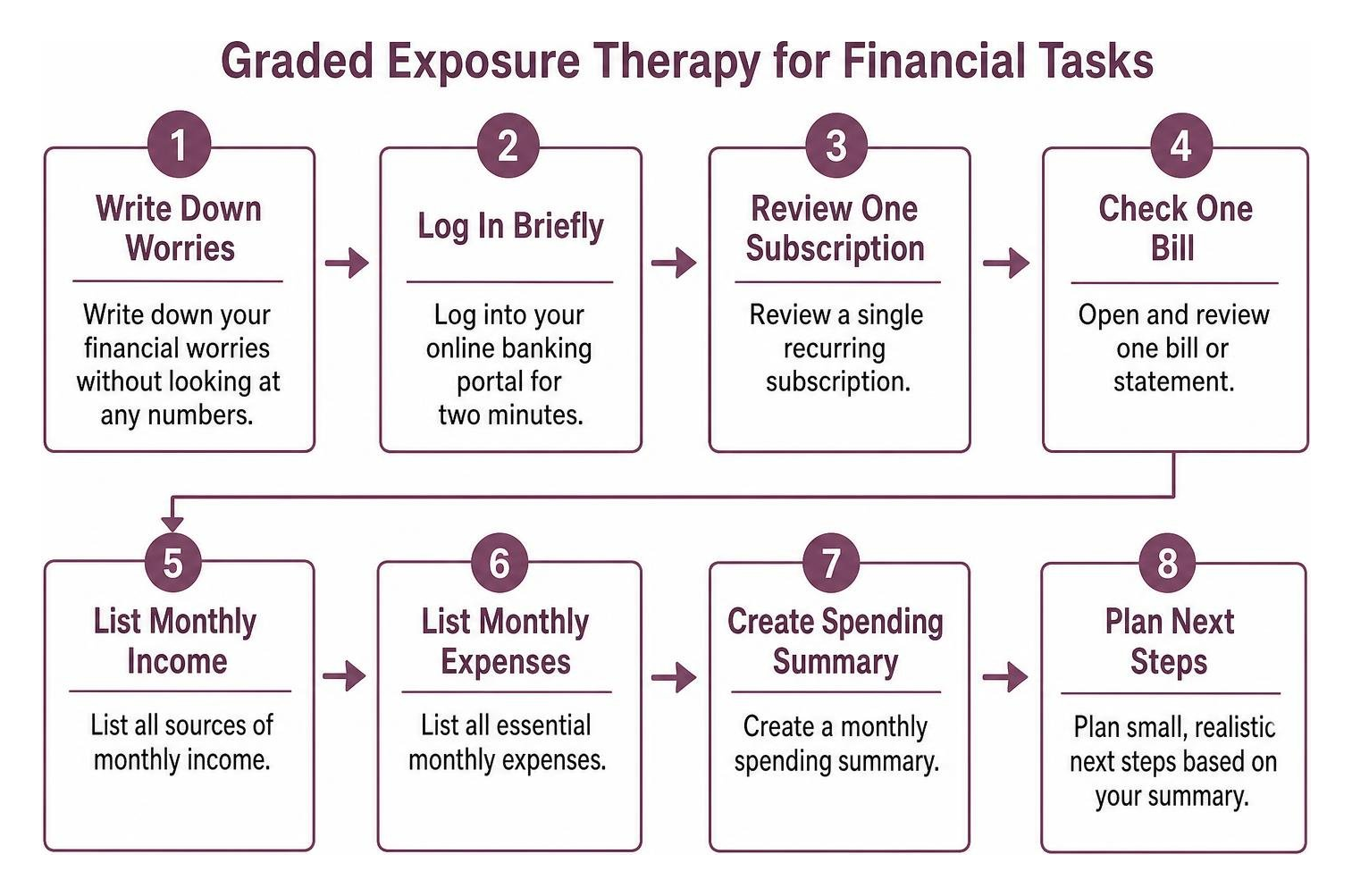
Breaking overwhelming financial responsibilities into smaller, manageable steps may make them feel less intimidating and easier to approach. A client might begin simply by writing down their financial worries without looking at any numbers. Once their physiological arousal decreases, they move on to logging into their online banking portal for two minutes, reviewing a single recurring subscription, and eventually creating a monthly spending summary.
When combined with mindfulness and other coping strategies, this approach may help build confidence, improve self-efficacy, and gradually reduce avoidance behaviors.
Overcoming Cost Barriers: Affordable Care and Insurance Options
A common paradox of financial distress is feeling unable to afford the very mental health care that provides relief. Although therapy costs can present a barrier, several options may make mental health care more accessible. Depending on eligibility and availability, individuals may use insurance benefits, community mental health programs, sliding-scale services, or workplace assistance programs.
Many community mental health clinics provide care on an income adjusted basis, and workplace Employee Assistance Programs often supply short term counseling sessions at no cost to staff members. Furthermore, understanding how to find an in network therapist makes accessing private, licensed practitioners straightforward.
Collective Counseling Solutions simplifies this entire journey by matching clients with licensed therapists who accept insurance. Whether you prefer in-person visits or teletherapy sessions, verifying your insurance benefits can help you understand potential costs, including deductibles, copayments, coinsurance, and any applicable coverage limitations.
Free and Low Cost Support Services and Helplines
If you are experiencing immediate distress or need immediate financial guidance, several dedicated resources provide confidential, cost free assistance:
- Crisis Text Line: Text HOME to 741741 to connect with a trained volunteer crisis counselor for free, confidential, 24/7 mental health support.
- National Foundation for Credit Counseling (NFCC): A nationwide network of nonprofit credit counseling organizations offering financial education, budgeting assistance, and debt management guidance. Many member agencies provide free initial credit counseling, although fees may apply to certain services.
- 211 Helpline: Dial 211 or visit their official directory to discover local community grants, food assistance, utility relief vouchers, and emergency housing programs.
Frequently Asked Questions About Financial Stress and Therapy
What is the difference between a financial counselor and a financial therapist?
A financial counselor is a financial professional trained to analyze credit reports, design debt payoff strategies, negotiate with creditors, and build realistic spending budgets. A financial therapist is a professional who focuses on the emotional, behavioral, and relational aspects of money management. Financial therapists may come from mental health or financial planning backgrounds, and their qualifications and licenses vary. Licensed mental health professionals with relevant training can help individuals address anxiety, shame, and other psychological concerns related to money.
Can therapy really help if my money problems are situational?
Yes. While therapy cannot change economic inflation or instantly generate income. Therapy can help individuals develop healthier responses to financial uncertainty by teaching emotional regulation techniques, addressing unhelpful thought patterns, and supporting more thoughtful decision-making. By dismantling avoidance behaviors, therapy enables you to face practical financial tasks with calm, objective focus.
How do I know if my insurance covers therapy for financial anxiety?
Many health insurance plans include coverage for medically necessary mental health services, although benefits vary by plan. When financial stress contributes to symptoms that meet the criteria for a diagnosable mental health condition, therapy may be covered according to the plan’s requirements. Financial stress alone does not automatically establish a covered diagnosis. Contact your insurance provider to verify your mental health benefits, deductible, copayments, provider network, and any other coverage requirements.
Conclusion
Financial anxiety can make you feel trapped in an endless loop of worry, avoidance, and physical exhaustion. However, you do not have to carry this psychological weight alone. By separating your innate personal worth from your bank balance and addressing the emotional triggers behind economic distress, you can cultivate long term mental resilience and regain control over your daily life.
Collective Counseling Solutions is dedicated to making quality mental health care accessible by connecting you with compassionate, licensed providers who accept your insurance. Explore our specialized therapy for stress to match with an experienced therapist and begin your journey toward emotional peace and financial clarity today.